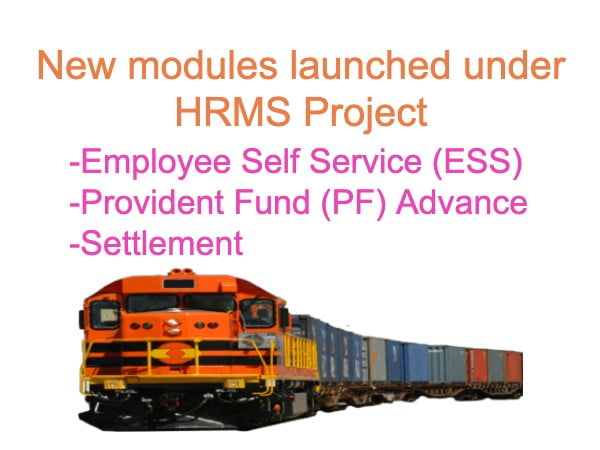
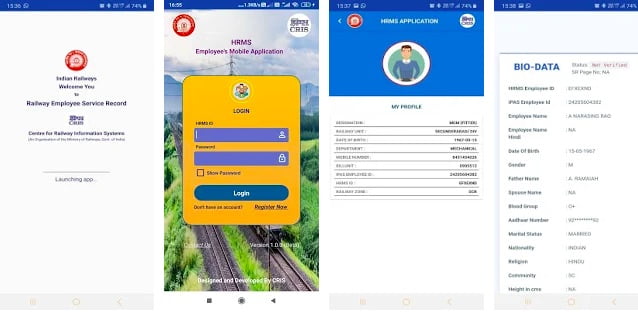
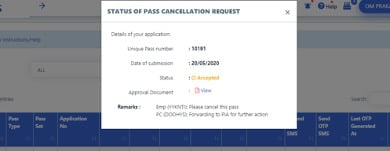
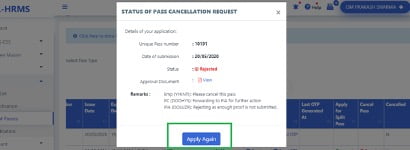
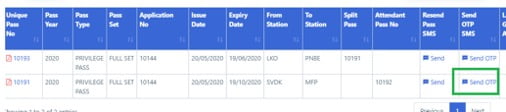
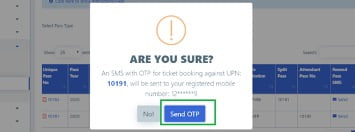
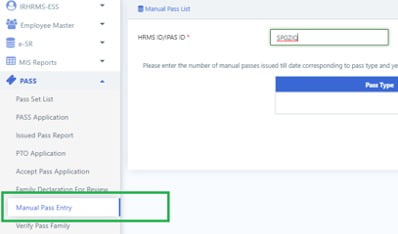
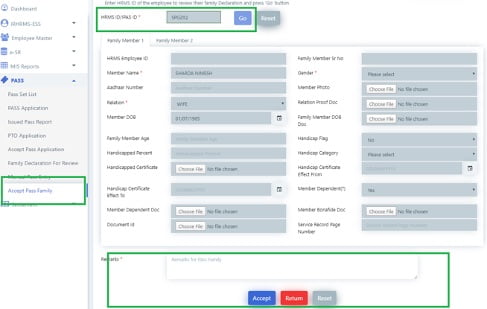
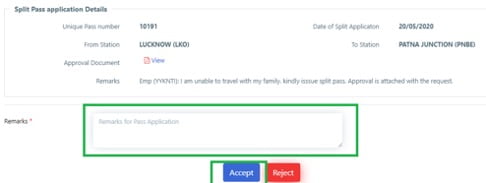
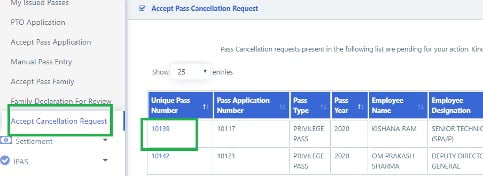
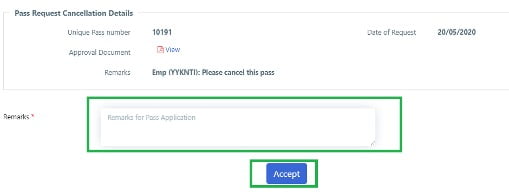
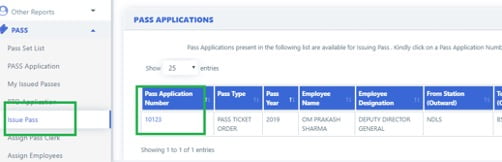
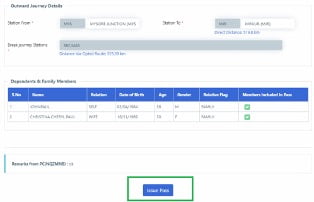
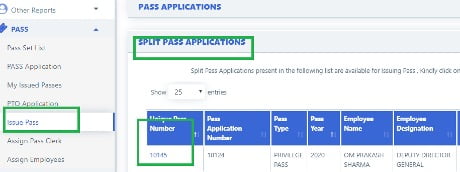
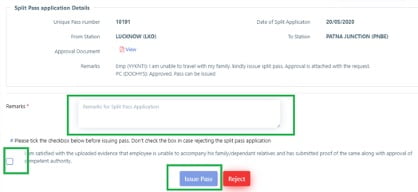
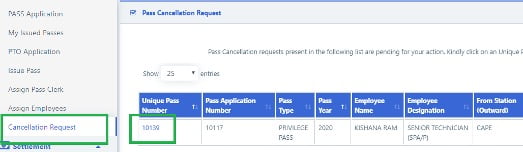
This is the Tutorial for Pass Admin on how to create user for Pass clerks and Pass Issuing Authorities and tagging them with the employees in ePass Module of HRMS. In this video Sh. Swapnil, OS, Personnel Department, Asansol Division has explained all the steps for creating user for Pass clerks and Pass Issuing Authorities (PIA).
Tutorial for Pass Clerk & Employee in ePass on HRMS
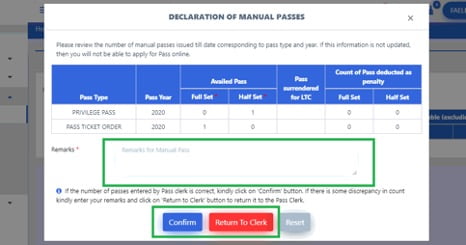
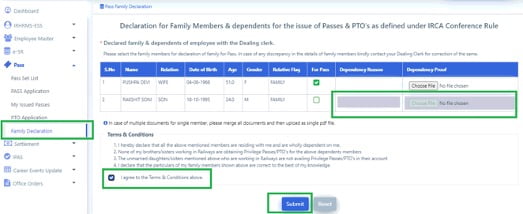
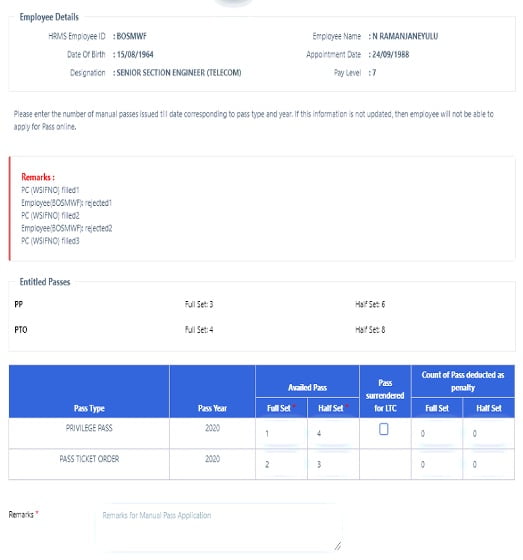
This tutorial covers how the Pass Clerk will feed the manual pass & PTO availed by an employee and how the Employee will confirm the details and submit pass declaration. website:- hrms.indianrail.gov.in/HRMS.
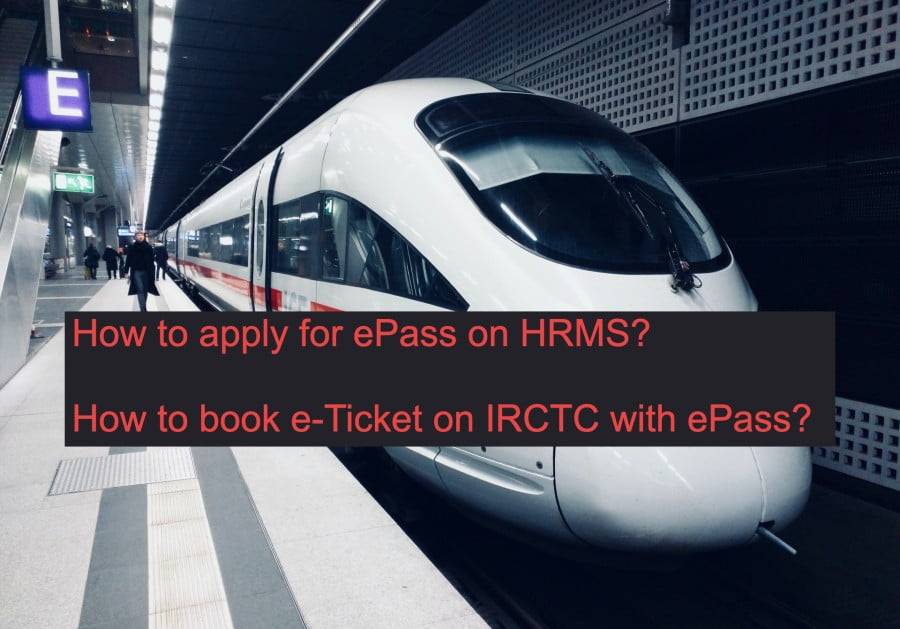
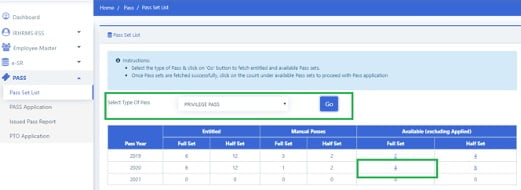
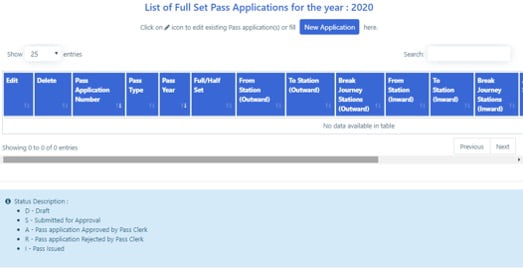
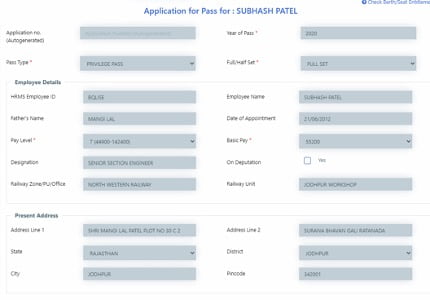
1. How to apply for ePass on HRMS? 2. How to book eTicket on IRCTC using ePass.
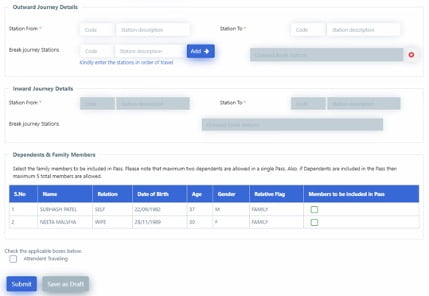
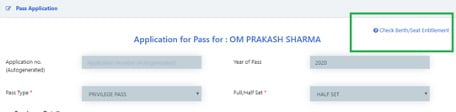
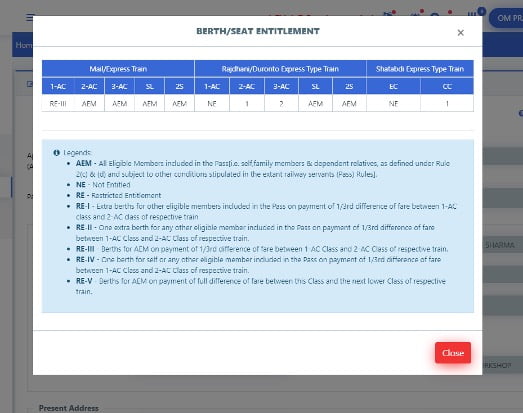
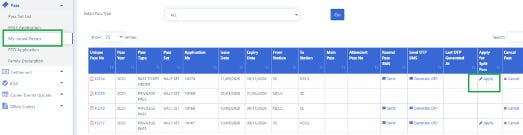
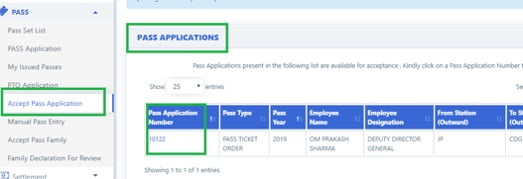
In this video, it has been demonstrated how an employee will apply for ePass, how the Pass Clerk will process the application before the PIA issues the pass and how to book a eTicket in IRCTC using the ePass. This video has been prepared jointly by the PC, PIA and the employee all of whom has been inspired by the Unit Admin or DPO(IC)/ASN.
Ministry of Railways has recently invited Request for Qualifications (RFQ) for private participation for operation of passenger train services over 109 Origin Destination(OD) pairs of routes through introduction of 151 modern Trains (Rakes).
151 Trains to be run by Private operators once the selection process is over, would be over and above the already existing trains .
The 109 OD Pairs have been formed into 12 Clusters across the Indian Railway network. Each Train shall have a minimum of 16 coaches.
These trains are going to run on the routes where there the demand for trains are already higher than the existing capacity.
Here is the list of routes which have been identified for these 151 private trains; proposed time that these private trains will take; schedule of these private trains.
Check the full list of private train routes, proposed originating & destination stations and the proposed departure and arrival timings
Cluster 1: Mumbai – 1
Full list of Private Trains from Mumbai with proposed departure and arrival timings-
Train from Kalburgi to Mumbai in 9 hours (21:00 to 06:00)
Train from Mumbai to Kalburgi in 8 hours and 40 minutes (06:15 to 14:55)
Train from Mumbai to Nagpur in 10 hours and 30 minutes (07:35 to 18:05)
Train from Nagpur to Mumbai in 11 hours and 05 minutes (20:55 to 08:00)
Train from Mumbai to Madgaon in 7 hours and 15 minutes (10:25 to 17:40)
Train from Madgaon to Mumbai in 7 hours and 20 minutes (21:40 to 05:00)
Train from Mumbai to Nagpur in 10 hours and 20 minutes (13:10 to 23:30)
Train from Nagpur to Mumbai in 10 hours and 35 minutes (20:55 to 07:30)
Train from Mumbai to Varanasi in 24 hours and 45 minutes (05:45 to 06:30)
Train from Varanasi to Mumbai in 25 hours (08:40 to 09:40 the next day)
Train from Mumbai to Kanpur in 22 hours (16:10 to 14:10)
Train from Kanpur to Mumbai in 21 hours and 50 minutes (17:55 to 15:45)
Train from Mumbai to Howrah in 25 hours (14:15 to 15:15 the next day)
Train from Howrah to Mumbai in 25 hours (22:40 to 23:40 the next day)
Train from Mumbai to Nanded in 11 hours (23:00 to 10:00)
Train from Nanded to Mumbai in 11 hours and 30 minutes (23:30 to 11:00)
Private trains timings from Mumbai…
SN
Cluster Number
Cluster Name
Originating Station (Time of Departure)
Days of Operation
Destination Station (Time of Arrival)
Running Time
Running Days of
Distance(KM)
Frequency per week
1
Cluster 1
Mumbai 1
Kalburgi(Gulbarga) (2100)
Except Wednesday
Mumbai Area (06:00)
09:00
Except Thursday
497
6 Days
2
Cluster 1
Mumbai 1
Mumbai Area (06:15)
Except Thursday
Kalburgi(Gulbarga) (1455)
08:40
Except Thursday
497
6 Days
3
Cluster 1
Mumbai 1
Mumbai Area (07:35)
Except Thursday
Nagpur(1805)
10:35
Except Thursday
820
6 Days
4
Cluster 1
Mumbai 1
Nagpur(2055)
Except Thursday
Mumbai Area (08:00)
11:05
Except Friday
820
6 Days
5
Cluster 1
Mumbai 1
Mumbai Area (10:25)
Except Wednesday
Madgaon (1740)
07:15
Except Wednesday
520
6 Days
6
Cluster 1
Mumbai 1
Madgaon (2140)
Except Wednesday
Mumbai Area (05:00)
07:20
Except Thursday
520
6 Days
7
Cluster 1
Mumbai 1
Mumbai Area (13:10)
Wednesday
Nagpur (2330)
10:20
Wednesday
820
Weekly
8
Cluster 1
Mumbai 1
Nagpur (2055)
Thursday
Mumbai Area (07:30)
10:35
Friday
820
Weekly
9
Cluster 1
Mumbai 1
Mumbai Area (05:45)
Daily
Varanasi Area (06:30)
24:45
Daily
1496
Daily
10
Cluster 1
Mumbai 1
Varanasi Area (08:40)
Daily
Mumbai Area (09:40)
25:00
Daily
1496
Daily
11
Cluster 1
Mumbai 1
Mumbai Area (16:10)
Daily
Kanpur (1410)
22:00
Daily
1341
Daily
12
Cluster 1
Mumbai 1
Kanpur (1755)
Daily
Mumbai Area (15:45)
21:50
Daily
1341
Daily
13
Cluster 1
Mumbai 1
Mumbai Area (14:15)
Daily
Howrah Area (15:15)
25:00
Daily
1943
Daily
14
Cluster 1
Mumbai 1
Howrah Area (22:40)
Daily
Mumbai Area (23:40)
25:00
Daily
1943
Daily
15
Cluster 1
Mumbai 1
Mumbai Area (23:00)
M, W, F
Nanded (1000)
11:00
Tu, Th, Sa
610
Tri Weekly
16
Cluster 1
Mumbai 1
Nanded (2330)
TU, TH,
Mumbai Area (11:00)
11:30
W, F, Su
610
Tri Weekly
Cluster 2: Mumbai – 2
Full list of Private Trains from Mumbai with proposed departure and arrival timings-
Train from Mumbai Central to New Delhi in 15 hours (16:00 to 07:00)
Train from New Delhi to Mumbai Central in 15 hours and 15 minutes (14:45 to 06:00)
Train from Mumbai to Ahmedabad in 6 hours and 15 minutes (23:45 to 06:00)
Train from Ahmedabad to Mumbai in 6 hours and 15 minutes (07:40 to 13:55)
Train from Surat to Mumbai in 3 hours (07:00 to 10:00)
Train from Mumbai to Surat in 3 hours (15:30 to 18:30)
Train from Mumbai to Vadodara in 4 hours and 15 minutes (11:50 to 16:05)
Train from Vadodara to Mumbai in 4 hours and 55 minutes (18:05 to 23:00)
Train from Mumbai to Akola in 14 hours and 30 minutes (23:00 to 14:00)
Train from Akola to Mumbai in 13 hours and 50 minutes (15:15 to 05:05)
Train from Mumbai to Nandurbar in 7 hours (06:10 to 13:10)
Train from Nandurbar to Mumbai in 7 hours and 25 minutes (15:50 to 23:15)
Train from Surat to Varanasi in 23 hours (08:20 to 07:20)
Train from Varanasi to Surat in 23 hours and 45 minutes (09:00 to 08:45)
Train from Surat to Patna in 28 hours and 50 minutes (08:10 to 13:00)
Train from Patna to Surat in 27 hours and 10 minutes (14:45 to 17:55)
Train from Mumbai to Delhi in 15 hours and 15 minutes (15:25 to 06:40)
Train from Delhi to Mumbai in 15 hours and 35 minutes (13:25 to 05:00)
Train from Indore to Danapur in 25 hours and 35 minutes (14:25 to 16:00)
Train from Danapur to Indore in 26 hours and 50 minutes (17:40 to 20:30)
Train from Mumbai to Shirdi in 8 hours and 15 minutes (20:00 to 04:15)
Train from Shirdi to Mumbai in 8 hours and 05 minutes (07:50 to 15:55)
Train from Mumbai to Indore in 14 hours (20:00 to 10:00)
Train from Indore to Mumbai in 14 hours (17:00 to 07:00)
Private trains timings from Mumbai…
SN
Cluster Number
Cluster Name
Originating Station (Time of Departure)
Days of Operation
Destination Station (Time of Arrival)
Running Time
Running Days of
Distance (KM)
Frequency per week
17
Cluster 2
Mumbai 2
Mumbai Central (1600)
Daily
New Delhi (0700)
15:00
Daily
1384
Daily
18
Cluster 2
Mumbai 2
New Delhi (1445)
Daily
Mumbai Central (0600)
15:15
Daily
1384
Daily
19
Cluster 2
Mumbai 2
Mumbai Area (2345)
Daily
Ahmedabad Area (0600)
06:15
Daily
483
Daily
20
Cluster 2
Mumbai 2
Ahmedabad Area (0740)
Daily
Mumbai Area (1355)
06:15
Daily
483
Daily
21
Cluster 2
Mumbai 2
Surat Area (0700)
Daily
Mumbai Area (1000)
03:00
Daily
263
Daily
22
Cluster 2
Mumbai 2
Mumbai Area (1530)
Daily
Surat Area (1830)
03:00
Daily
263
Daily
23
Cluster 2
Mumbai 2
Mumbai Area (1150)
Daily
Vadodara (1605)
04:15
Daily
386
Daily
24
Cluster 2
Mumbai 2
Vadodara (1805)
Daily
Mumbai Area (2300)
04:55
Daily
386
Daily
25
Cluster 2
Mumbai 2
Mumbai Area(2330)
TU,F, SU
Akola (1400)
14:30
W,SA, M
713
Triweekly
26
Cluster 2
Mumbai 2
Akola (1515)
W,SA, M
Mumbai Area (0505)
13:50
TU, TH, SU
713
Triweekly
27
Cluster 2
Mumbai 2
Mumbai Area (0610)
TH,F,SU, TU
Nandurbar (1310)
07:00
TH,F,SU,T U
410
4 days
28
Cluster 2
Mumbai 2
Nandurbar (1550)
TH,F,SU, TU
Mumbai Area 2315
07:25
TH,F,SU,T U
410
4 days
29
Cluster 2
Mumbai 2
Surat Area (0820)
M
Varanasi Area (0720)
23:00
TU
1370
Weekly
30
Cluster 2
Mumbai 2
Varanasi Area (0900)
TU
Surat Area (0845)
23:45
W
1370
Weekly
31
Cluster 2
Mumbai 2
Surat Area (0810)
F
Patna (1300)
28:50
SA
1679
Weekly
32
Cluster 2
Mumbai 2
Patna (1445)
S A
Surat Area (1755)
27:10
SU
1679
Weekly
33
Cluster 2
Mumbai 2
Mumbai Area (1525)
Daily
Delhi Area (0640)
15:15
Daily
1384
Daily
34
Cluster 2
Mumbai 2
Delhi Area (1325)
Daily
Mumbai Area (0500)
15:35
Daily
1384
Daily
35
Cluster 2
Mumbai 2
Indore (1425)
M,W,TH, SA
Danapur (1600)
25:35
TU,TH,F,S U
1256
4 days
36
Cluster 2
Mumbai 2
Danapur (1740)
TU,TH,F, SU
Indore (2030)
26:50
W,F,SA,M
1256
4 days
37
Cluster 2
Mumbai 2
Mumbai Area(2000)
Daily
Shirdi (0415)
08:15
Daily
445
Daily
38
Cluster 2
Mumbai 2
Shirdi (0750)
Daily
Mumbai area(1555)
08:05
Daily
445
Daily
39
Cluster 2
Mumbai 2
Mumbai (2000)
M, W, F
Indore (1000)
14:00
TU, TH, SA
830
Tri weekly
40
Cluster 2
Mumbai 2
Indore (1700)
Tu, Th, Sa
Mumbai (0700)
14:00
W, F, Su
830
Tri weekly
Cluster 3: Delhi-1
Full list of Private Trains from Delhi with proposed departure and arrival timings-
Train from New Delhi to New Rishikesh in 5 hours and 10 minutes (07:50 to 13:00)
Train from New Rishikesh to New Delhi in 5 hours and 10 minutes (15:50 to 20:50)
Train from Indore to Delhi in 11 hours and 05 minutes (23:55 to 11:00)
Train from Delhi to Indore in 10 hours and 45 minutes (13:00 to 23:45)
Train from New Delhi to Varanasi in 11 hours and 45 minutes (23:15 to 11:00)
Train from Varanasi to New Delhi in 11 hours and 45 minutes (18:15 to 06:00)
Train from Anand Vihar to Darbhanga (via BSB-CPR) in 21 hours and 50 minutes (23:10 to 21:00)
Train from Darbhanga (via BSB-CPR) to Anand Vihar in 20 hours and 30 minutes (23:45 to 20:15)
Train from Anand Vihar to Badgam in 16 hours and 50 minutes (15:00 to 07:50)
Train from Badgam to Anand Vihar in 17 hours (14:00 to 07:00)
Train from Lucknow to Delhi in 6 hours and 35 minutes (16:15 to 22:50)
Train from Delhi to Lucknow in 6 hours and 30 minutes (05:20 to 11:50)
Train from Delhi to Sabarmati in 13 hours and 15 minutes (16:15 to 05:30)
Train from Sabarmati to Delhi in 13 hours and 30 minutes (16:20 to 05:20)
Private trains timings from Delhi…
SN
Cluster Number
Cluster Name
Originating Station (Time of Departure)
Days of Operation
Destination Station (Time of Arrival)
Running Time
Running Days of
Distance (KM)
Frequency per week
41
Cluster 3
Delhi 1
New Delhi (0750)
Daily
New Rishikesh (1300)
05:10
Daily
273
Daily
42
Cluster 3
Delhi 1
New Rishikesh (1540)
Daily
New Delhi (2050)
05:10
Daily
273
Daily
43
Cluster 3
Delhi 1
Indore (2355)
Daily
Delhi Area (1100)
11:05
Daily
834
Daily
44
Cluster 3
Delhi 1
Delhi Area (1300)
Daily
Indore (2345)
10:45
Daily
834
Daily
45
Cluster 3
Delhi 1
New Delhi (2315)
Daily
Varanasi Area (1100)
11:45
Daily
755
Daily
46
Cluster 3
Delhi 1
Varanasi Area (1815)
Daily
New Delhi (0600)
11:45
Daily
755
Daily
47
Cluster 3
Delhi 1
Anand Vihar (2310)
Daily
Darbhanga (2100) via BSB-CPR
21:50
Daily
1162
Daily
48
Cluster 3
Delhi 1
Darbhanga (2345) via BSB-CPR
Daily
Anand Vihar (2015)
20:30
daily
1162
Daily
49
Cluster 3
Delhi 1
Anand Vihar(1500)
Daily
Badgam (0750)
16:50
Daily
930
Daily
50
Cluster 3
Delhi 1
Badgam (1400)
Daily
Anand Vihar(0700)
17:00
Daily
930
Daily
51
Cluster 3
Delhi 1
Lucknow Area (1615)
Daily
Delhi Area (2250)
06:35
Daily
523
Daily
52
Cluster 3
Delhi 1
Delhi Area (0520)
Daily
Lucknow Area (1150)
06:30
Daily
523
Daily
53
Cluster 3
Delhi 1
Delhi Area (1615)
Daily
Sabarmati (0530)
13:15
Daily
913
Daily
54
Cluster 3
Delhi 1
Sabarmati (1620)
Daily
Delhi Area (0520)
13:30
Daily
913
Daily
Cluster 4: Delhi-2
Full list of Private Trains from Delhi with proposed departure and arrival timings-
Train from Delhi to Udaipur in 11 hours and 35 minutes (22:25 to 10:00)
Train from Udaipur to Delhi in 11 hours and 45 minutes (16:15 to 04:00)
Train from Guwahati to Delhi in 27 hours (08:30 to 11:30)
Train from Delhi to Guwahati in 27 hours (15:00 to 18:00)
Train from Barauni to Anand Vihar in 22 hours (14:00 to 12:00)
Train from Anand Vihar to Barauni in 21 hours and 30 minutes (15:30 to 13:00)
Train from Pune to Delhi in 19 hours and 20 minutes (18:00 to 13:20)
Train from Delhi to Pune in 19 hours and 40 minutes (15:20 to 11:00)
Train from Kathgodam to Delhi in 6 hours and 15 minutes (23:30 to 05:45)
Train from Delhi to Kathgodam in 4 hours and 40 minutes (09:05 to 13:45)
Train from Delhi to Jodhpur in 10 hours and 30 minutes (22:30 to 09:00)
Train from Jodhpur to Delhi in 10 hours and 30 minutes (22:30 to 09:00)
Private trains timings from Delhi…
SN
Cluster Number
Cluster Name
Originating Station (Time of Departure)
Days of Operation
Destination Station (Time of Arrival)
Running Time
Running Days of
Distance (KM)
Frequency per week
55
Cluster 4
Delhi 2
Delhi Area (2225)
Daily
Udaipur (1000)
11:35
Daily
734
Daily
56
Cluster 4
Delhi 2
Udaipur (1615)
Daily
Delhi Area (0400)
11:45
Daily
734
Daily
57
Cluster 4
Delhi 2
Guwahati (0830)
Daily
Delhi Area (1130)
27:00
Daily
1915
Daily
58
Cluster 4
Delhi 2
Delhi Area (1500)
Daily
Guwahati (1800)
27:00
Daily
1915
Daily
59
Cluster 4
Delhi 2
Barauni (1400)
Daily
Anand Vihar (1200)
22:00
Daily
1097
Daily
60
Cluster 4
Delhi 2
Anand Vihar (1530)
Daily
Barauni (1300)
21:30
Daily
1097
Daily
61
Cluster 4
Delhi 2
Pune Area (1800)
Daily
Delhi Area (1320)
19:20
Daily
1522
Daily
62
Cluster 4
Delhi 2
Delhi Area (1520)
Daily
Pune Area (1100)
19:40
Daily
1522
Daily
63
Cluster 4
Delhi 2
Kathgodam (2330)
Daily
Delhi (0545)
06:15
Daily
281
Daily
64
Cluster 4
Delhi 2
Delhi Area (0905)
Daily
Kathgodam (1345)
04:40
Daily
281
Daily
65
Cluster 4
Delhi 2
Delhi Area (2230)
Daily
Jodhpur (0900)
10:30
Daily
620
Daily
66
Cluster 4
Delhi 2
Jodhpur (2230)
Daily
Delhi (0900)
10:30
Daily
620
Daily
Cluster 5: Chandigarh
Full list of Private Trains from Chandigarh with proposed departure and arrival timings-
Train from Delhi to Amritsar in 5 hours and 35 minutes (17:25 to 23:00)
Train from Amritsar to Delhi in 5 hours and 40 minutes (09:00 to 14:40)
Train from New Delhi to Chandigarh in 3 hours (06:30 to 09:30)
Train from Chandigarh to New Delhi in 3 hours (10:15 to 13:15)
Train from New Delhi to Chandigarh in 3 hours (14:00 to 17:00)
Train from Chandigarh to New Delhi in 3 hours (17:55 to 20:55)
Train from Lucknow to SVDK -Katra in 18 hours and 25 minutes (21:05 to 15:30)
Train from SVDK -Katra to Lucknow in 18 hours (21:30 to 14:30)
Train from Amritsar to Faizabad in 17 hours and 15 minutes (05:00 to 22:15)
Train from Faizabad to Amritsar in 16 hours (05:00 to 21:00)
Train from Varanasi to Bhatinda in 21 hours and 30 minutes (07:30 to 05:00)
Train from Bhatinda to Varanasi in 21 hours (07:00 to 04:00)
Train from Nagpur to Chandigarh in 19 hours and 40 minutes (12:30 to 08:10)
Train from Chandigarh to Nagpur in 21 hours and 25 minutes (14:15 to 11:40)
Train from Bhopal to Mumbai in 15 hours and 30 minutes (18:00 to 09:30)
Train from Mumbai to Bhopal in 13 hours and 20 minutes (10:30 to 23:30)
Train from Bhopal to Pune in 14 hours and 35 minutes (17:55 to 08:20)
Train from Pune to Bhopal in 12 hours and 55 minutes (15:20 to 04:15)
Private trains timings from Chandigarh…
SN
Cluster Number
Cluster Name
Originating Station (Time of Departure)
Days of Operation
Destination Station (Time of Arrival)
Running Time
Running Days of
Distance (KM)
Frequency per week
67
Cluster 5
Chandigarh 1
Delhi Area (1725)
Daily
Amritsar Area (2300)
05:35
Daily
432
Daily
68
Cluster 5
Chandigarh 1
Amritsar Area (0900)
Daily
Delhi Area (1440)
05:40
Daily
432
Daily
69
Cluster 5
Chandigarh 1
New Delhi (0630)
Daily
Chandigarh (0930)
03:00
Daily
266
Daily
70
Cluster 5
Chandigarh 1
Chandigarh (1015)
Daily
New Delhi (1315)
03:00
Daily
266
Daily
71
Cluster 5
Chandigarh 1
New Delhi (1400)
Daily
Chandigarh (1700)
03:00
Daily
266
Daily
72
Cluster 5
Chandigarh 1
Chandigarh (1755)
Daily
New Delhi (2055)
03:00
Daily
266
Daily
73
Cluster 5
Chandigarh 1
Lucknow (2105)
Daily
SVDK -Katra (1530)
18:25
Daily
1055
Daily
74
Cluster 5
Chandigarh 1
SVDK- Katra(2130)
Daily
Lucknow (1430)
18:00
Daily
1055
Daily
75
Cluster 5
Chandigarh 1
Amritsar Area (0500)
W, SU, F
Faizabad(2215)
17:15
W, SU, F
977
Triweekly
76
Cluster 5
Chandigarh 1
Faizabad (0500)
TH, M, SA
Amritsar Area (2100)
16:00
TH, M, SA
977
Triweekly
77
Cluster 5
Chandigarh 1
Varanasi (0730)
Daily
Bhatinda (0500)
21:30
Daily
1108
Daily
78
Cluster 5
Chandigarh 1
Bhatinda (0700)
Daily
Varanasi (0400)
21:00
Daily
1108
Daily
79
Cluster 5
Chandigarh 1
Nagpur (1230)
Daily
Chandigarh (0810)
19:40
Daily
1352
Daily
80
Cluster 5
Chandigarh 1
Chandigarh (1415)
Daily
Nagpur (1140)
21:25
Daily
1352
Daily
81
Cluster 5
Chandigarh 1
Bhopal Area (1800)
Daily
Mumbai Area (0930)
15:30
Daily
918
Daily
82
Cluster 5
Chandigarh 1
Mumbai Area (1030)
Daily
Bhopal Area (2330)
13:20
Daily
918
Daily
83
Cluster 5
Chandigarh 1
Bhopal Area (1755)
W,SU,F
Pune Area (0820)
14:35
TH,M,SA
905
Triweekly
84
Cluster 5
Chandigarh 1
Pune Area (1520)
Th, M, Sa
Bhopal Area (0415)
12:55
F, Tu, Su
905
Triweekly
Cluster 6: Howrah
Full list of Private Trains from Howrah with proposed departure and arrival timings-
Train from Ranchi to Howrah in 7 hours (06:00 to 13:00)
Train from Howrah to Ranchi in 7 hours and 30 minutes (14:30 to 22:00)
Train from Howrah to Pune in 26 hours and 45 minutes (18:10 to 20:55 next day)
Train from Pune to Howrah in 28 hours and 05 minutes (06:55 to 11:00 next day)
Train from Howrah to Chennai in 25 hours and 45 minutes (15:45 to 17:30 next day)
Train from Chennai to Howrah in 26 hours (20:00 to 22:00 next day)
Train from Puri to Howrah in 7 hours (21:30 to 04:30)
Train from Howrah to Puri in 7 hours and 35 minutes (20:40 to 04:15)
Train from Puri to Howrah in 7 hours and 20 minutes (06:00 to 13:20)
Train from Howrah to Puri in 7 hours and 20 minutes (15:00 to 22:20)
Train from Howrah to Ranchi in 6 hours and 50 minutes (05:30 to 12:20)
Train from Ranchi to Howrah in 6 hours and 50 minutes (13:05 to 19:55)
Train from New Bongaigaon to Howrah in 13 hours and 10 minutes (05:20 to 18:30)
Train from Howrah to New Bongaigaon in 13 hours and 30 minutes (07:00 to 20:30)
Train from Howrah to Anand Vihar in 16 hours (16:35 to 09:00)
Train from Anand Vihar to Howrah in 16 hours and 55 minutes (13:05 to 06:00)
Train from Howrah to Varanasi (Via Patna) in 12 hours and 05 minutes (22:40 to 10:45)
Train from Varanasi to Howrah in 12 hours and 50 minutes (16:10 to 05:00)
Train from Sealdah to Guwahati in 17 hours and 10 minutes (23:50 to 17:00)
Train from Guwahati to Sealdah in 16 hours and 30 minutes (21:00 to 13:30)
Train from Howrah to Bhagalpur in 7 hours and 35 minutes (14:35 to 22:10)
Train from Bhagalpur to Howrah in 7 hours and 35 minutes (06:25 to 14:05)
Private trains timings from Howrah…
SN
Cluster Number
Cluster Name
Originating Station (Time of Departure)
Days of Operation
Destination Station (Time of Arrival)
Running Time
Running Days of
Distance (KM)
Frequency per week
85
Cluster 6
Howrah
Raanchi (0600) via Purlia
Daily
Howrah Area (1300)
07:00
Daily
461
Daily
86
Cluster 6
Howrah
Howrah Area (1430)
Daily
Ranchi (2200)
07:30
Daily
461
Daily
87
Cluster 6
Howrah
Howrah Area (1810)
TU, F
Pune (2055)
26:45
W, SA
2020
Biweekly
88
Cluster 6
Howrah
Pune (0655)
TH, SU
Howrah Area (1100)
28:05
F, M
2020
Biweekly
89
Cluster 6
Howrah
Howrah (1545)
Daily
Chennai (1730)
25:45
Daily
1662
Daily
90
Cluster 6
Howrah
Chennai (2000)
Daily
Howrah (2200)
26:00
Daily
1662
Daily
91
Cluster 6
Howrah
Puri (2130)
M, W, F
Howrah Area (0430)
07:00
TU, TH, SA
525
Triweekly
92
Cluster 6
Howrah
Howrah Area (2040)
TU, TH, SA
Puri (0415)
07:35
W, F , SU
525
Triweekly
93
Cluster 6
Howrah
Puri (0600)
Su
Howrah Area (1320)
07:20
SU
525
Weekly
94
Cluster 6
Howrah
Howrah Area (1500)
Su
Puri (2220)
07:20
Su
525
Weekly
95
Cluster 6
Howrah
Howrah Area (0530)
TU, TH, SA
Ranchi (1220)
06:50
TU, TH, SA
525
Triweekly
96
Cluster 6
Howrah
Ranchi (1305)
TU, TH, SA
Howrah Area (1955)
06:50
TU, TH, SA
461
Triweekly
97
Cluster 6
Howrah
New Bongaigaon (0520)
M, TH, SA
Howrah (1830)
13:10
M, TH, SA
812
Triweekly
98
Cluster 6
Howrah
Howrah (0700)
TU, F, SU
New Bongaigaon (2030)
13:30
TU, F, SU
812
Triweekly
99
Cluster 6
Howrah
Howrah (1635)
Daily
Anand Vihar (0900)
16:00
Daily
1445
Daily
100
Cluster 6
Howrah
Anand Vihar (1305)
Daily
Howrah(0600)
16:55
Daily
1445
Daily
101
Cluster 6
Howrah
Howrah (2240)
TU,TH,SA
Varanasi Area (1045) via Patna
12:05
W,F,SU
764
Triweekly
102
Cluster 6
Howrah
Varanasi Area (1610)
W,F,SU
Howrah (0500)
12:50
TH, SA, M
764
Triweekly
103
Cluster 6
Howrah
Sealdah (2350)
SU, W, F
Guwahati (1700)
17:10
M, TH, SA
1020
Triweekly
104
Cluster 6
Howrah
Guwahati (2100)
M, TH, SA
Sealdah (1330)
16:30
TU, F, SU
1020
Triweekly
105
Cluster 6
Howrah
Howrah (1435)
Daily
Bhagalpur (2210)
07:35
Daily
425
Daily
106
Cluster 6
Howrah
Bhagalpur (0625)
Daily
Howrah (1405)
07:35
Daily
425
Daily
Cluster 7: Patna
Full list of Private Trains from Patna with proposed departure and arrival timings-
Train from New Delhi to Patna in 11 hours (12:30 to 23:30)
Train from Patna to New Delhi in 12 hours (22:00 to 10:00)
Train from Gaya to Anand Vihar in 11 hours and 05 minutes (20:35 to 07:40)
Train from Anand Vihar to Gaya in 11 hours and 20 minutes (12:30 to 23:50)
Train from Patna to Mumbai in 28 hours and 50 minutes (23:10 to 04:00 day after the next)
Train from Mumbai to Patna in 26 hours and 45 minutes (14:15 to 17:00 next day)
Train from Darbhanga to Mumbai in 39 hours (16:45 to 07:45 day after next)
Train from Mumbai to Darbhanga in 39 hours and 45 minutes (12:45 to 04:30 day after next)
Train from Darbhanga to Guwahati in 17 hours and 30 minutes (11:00 to 04:30)
Train from Guwahati to Darbhanga in 17 hours (11:30 to 04:30)
Train from Patna to Bangalore in 41 hours and 45 minutes (23:30 to 17:15 day after next)
Train from Bangalore to Patna in 41 hours and 35 minutes (23:15 to 16:50 day after next)
Train from Gorakhpur to Bangalore in 44 hours and 40 minutes (20:35 to 17:15 day after next)
Train from Bangalore to Gorakhpur in 45 hours and 05 minutes (23:15 to 20:20 day after next)
Train from Patna to Pune in 30 hours and 25 minutes (23:10 to 05:05 day after next)
Train from Pune to Patna in 30 hours and 05 minutes (07:05 to 13:30 next day)
Train from Asansol to Surat in 37 hours and 15 minutes (19:45 to 09:00 day after next)
Train from Surat to Asansol in 33 hours and 10 minutes (23:50 to 09:00 day after next)
Train from Asansol to PURI in 10 hours and 35 minutes (19:15 to 05:50)
Train from PURI to Asansol in 10 hours and 30 minutes (07:00 to 17:30)
Private trains timings from Patna…
SN
Cluster Number
Cluster Name
Originating Station (Time of Departure)
Days of Operation
Destination Station (Time of Arrival)
Running Time
Running Days of
Distance (KM)
Frequency per week
107
Cluster 7
Patna
New Delhi (1230)
Daily
Patna (2330)
11:00
Daily
998
Daily
108
Cluster 7
Patna
Patna (2200)
Daily
New Delhi (1000)
12:00
Daily
998
Daily
109
Cluster 7
Patna
Gaya (2035)
M,W,F
Anand Vihar (0740)
11:05
TU,TH,S A
989
Triweekly
110
Cluster 7
Patna
Anand Vihar (1230)
Tu,TH,SA
Gaya (2350)
11:20
W,F,SU
989
Triweekly
111
Cluster 7
Patna
Patna (2310)
F , M
Mumbai Area (0400)
28:50
SU, W
1693
Biweekly
112
Cluster 7
Patna
Mumbai Area (1415)
SU, W
Patna (1700)
26:45
M, TH
1693
Biweekly
113
Cluster 7
Patna
Darbhanga (1645)
SA
Mumbai Area (0745)
39:00
M
2211
Weekly
114
Cluster 7
Patna
Mumbai Area (1245)
M
Darbhanga (0430)
39:45:00
W
2211
Weekly
115
Cluster 7
Patna
Darbhanga (1100)
W
Guwahati (0430)
17:30
TH
904
Weekly
116
Cluster 7
Patna
Guwahati (1130)
TH
Darbhanga (0430)
17:00
F
904
Weekly
117
Cluster 7
Patna
Patna Area (2330)
M ,TU, TH, SA, SU
Bangalore Area (1715)
41:45:00
M ,TU, W, TH, SA,
2305
5 days
118
Cluster 7
Patna
Bangalore Area (2315)
M ,TH, W, F, SA,
Patna Area (1650)
41:35:00
M ,, W, , F, SA, SU,
2305
5 days
119
Cluster 7
Patna
Gorakhpur (2035)
W,F
Bangalore Area (1715)
44:40:00
F,SU
2434
Biweekly
120
Cluster 7
Patna
Bangalore Area (2315)
TU,SU
Gorakhpur (2020)
45:05:00
TH, TU
2434
Biweekly
121
Cluster 7
Patna
Patna (2310)
SA, TU
Pune Area (0515)
30:25:00
M, TH
1755
Biweekly
122
Cluster 7
Patna
Pune Area (0705)
M, TH
Patna (1330)
30:05:00
TU, F
1755
Biweekly
123
Cluster 7
Patna
Asansol (1945)
F
Surat Area (0900)
37:15:00
SU
1845
Weekly
124
Cluster 7
Patna
Surat Area (2350)
SU
Asansol (0900)
33:10:00
TU
1845
Weekly
125
Cluster 7
Patna
Asansol (1915)
TU, W
PURI (0550)
10:35
W, TH
596
Biweekly
126
Cluster 7
Patna
Puri (0700)
W, Th
Asansol (1730)
10:30
W, Th
596
Biweekly
Cluster 8: Prayagraj
Full list of Private Trains from Prayagraj with proposed departure and arrival timings-
Train from Prayagraj to Mumbai in 19 hours and 20 minutes (23:30 to 18:50)
Train from Mumbai to Prayagraj in 18 hours and 55 minutes (23:05 to 18:00)
Train from Prayagraj to Ahmedabad in 21 hours and 20 minutes (07:00 to 04:20)
Train from Ahmedabad to Prayagraj in 23 hours and 10 minutes (06:50 to 06:00)
Train from Prayagraj to Puri in 20 hours and 30 minutes (14:00 to 10:30)
Train from Puri to Prayagraj in 20 hours and 50 minutes (14:00 to 10:50)
Train from Kanpur to New Delhi in 4 hours and 20 minutes (18:40 to 23:00)
Train from New Delhi to Kanpur in 4 hours and 05 minutes (05:20 to 09:25)
Train from Ambala to Manduadih in 15 hours and 05 minutes (19:15 to 10:20)
Train from Manduadih to Ambala in 14 hours and 30 minutes (21:00 to 11:30)
Train from Prayagraj to Pune in 22 hours and 40 minutes (22:20 to 21:00)
Train from Pune to Prayagraj in 22 hours and 40 minutes (22:20 to 21:00)
Train from Gorakhpur to Mumbai in 33 hours and 45 minutes (07:00 to 16:45 next day)
Train from Mumbai to Gorakhpur in 36 hours and 10 minutes (17:50 to 06:00 day after next)
Train from Prayagraj to Bangalore in 36 hours (19:00 to 07:00 day after next)
Train from Bangalore to Prayagraj in 36 hours and 50 minutes (15:30 to 04:20 day after next)
Train from Pune to Dibrugarh in 67 hours (10:30 to 05:30)
Train from Dibrugarh to Pune in 66 hours and 45 minutes (09:45 to 04:30)
Train from Bhopal to Agartala in 52 hours and 30 minutes (17:00 to 21:30)
Train from Agartala to Bhopal in 51 hours and 10 minutes (14:00 to 17:10)
Train from Agartala to Karimganj in 4 hours and 10 minutes (23:50 to 04:00)
Train from Karimganj to Agartala in 3 hours and 45 minutes (07:00 to 10:45)
Train from Bhopal to Rajkot in 18 hours (20:00 to 14:00)
Train from Rajkot to Bhopal in 16 hours and 45 minutes (16:00 to 08:45)
Train from Jhansi to Mumbai in 19 hours and 35 minutes (17:25 to 13:00)
Train from Mumbai to Jhansi in 19 hours and 50 minutes (14:10 to 10:00)
Private trains timings from Prayagraj…
SN
Cluster Number
Cluster Name
Originating Station (Time of Departure)
Days of Operation
Destination Station (Time of Arrival)
Running Time
Running Days of
Distance (KM)
Frequency per week
127
Cluster 8
Prayagraj
Prayagraj Area (2330)
TH, SU
Mumbai Area (1850)
19:20
F, M
1350
Biweekly
128
Cluster 8
Prayagraj
Mumbai Area (2305)
F, M
PrayagrajArea (1800)
18:55
SA, TU
1350
Biweekly
129
Cluster 8
Prayagraj
Prayagraj Area(0700)
M, W
Ahmedabad (0420)
2120
TU,TH
1377
Biweekly
130
Cluster 8
Prayagraj
Ahmedabad (0650)
TU,TH
PrayagrajArea(0600)
23:10
W,F
1377
Biweekly
131
Cluster 8
Prayagraj
PrayagrajArea(1400)
F
Puri (1030)
20:30
SA
1162
Weekly
132
Cluster 8
Prayagraj
Puri (1400)
SA
PrayagrajArea(1050)
20:50
SU
1162
Weekly
133
Cluster 8
Prayagraj
Kanpur (1840)
Daily
New Delhi (2300)
04:20
Daily
440
Daily
134
Cluster 8
Prayagraj
New Delhi (0520)
Daily
Kanpur (0925)
04:05
Daily
440
Daily
135
Cluster 8
Prayagraj
Ambala (1915)
Daily
Manduadih(1020)
15:05
Daily
953
Daily
136
Cluster 8
Prayagraj
Manduadih (2100)
Daily
Ambala (1130)
14:30
Daily
953
Daily
137
Cluster 8
Prayagraj
PrayagrajArea(2220)
M,W,F
Pune Area (2100)
22:40
TU,TH,SA
1415
Triweekly
138
Cluster 8
Prayagraj
Pune Area (2220)
TU,TH,SA
PrayagrajArea(2100)
22:40
W,F,SU
1415
Triweekly
139
Cluster 8
Prayagraj
Gorakhpur (0700)
TU,SU,TH
Mumbai Area (1645)
33:45:00
W, M, F
1960
Triweekly
140
Cluster 8
Prayagraj
Mumbai Area (1750)
W, M,F
Gorakhpur (0600)
36:10:00
F, W, SU
1960
Triweekly
141
Cluster 8
Prayagraj
Prayagraj Area (1900)
TU, SA
Bangalore Area (0700)
36:00:00
M, TH
1928
Biweekly
142
Cluster 8
Prayagraj
Bangalore Area (1530)
TH, M
PrayagrajArea(0420)
36:50:00
W, SA
1928
Biweekly
143
Cluster 8
Prayagraj
Pune (1030)
SU
Dibrugarh (0530)
67:00:00
W
3449
Weekly
144
Cluster 8
Prayagraj
Dibrugarh (0945)
W
Pune (0430)
66:45:00
SA
3449
Weekly
145
Cluster 8
Prayagraj
Bhopal Area (1700)
W
Agartala (2130)
52:30:00
F
2491
Weekly
146
Cluster 8
Prayagraj
Agartala (1400)
SA
Bhopal Area (1710)
51:10:00
M
2491
Weekly
147
Cluster 8
Prayagraj
Agartala (2350)
F
Karimganj (0400)
04:10
SA
205
Weekly
148
Cluster 8
Prayagraj
Karimganj(0700)
SA
Agartala (1045)
03:45
SA
205
Weekly
149
Cluster 8
Prayagraj
Bhopal Area (2000)
M
Rajkot (1400)
18:00
TU
940
Weekly
150
Cluster 8
Prayagraj
Rajkot (1600)
TU
Bhopal Area (0845)
16:45
W
940
Weekly
151
Cluster 8
Prayagraj
Jhansi (1725)
TH, SA, M
Mumbai Area (T) (1300)
19:35
F, SU, TU
1213
Triweekly
152
Cluster 8
Prayagraj
Mumbai Area (T) (1410)
F, Su, Tu
Jhansi (1000)
19:50
Sa, M, W
1213
Triweekly
Cluster 9: Secunderabad
Full list of Private Trains from Secunderabad with proposed departure and arrival timings-
Train from Secunderabad to Srikakulam Via VSKP in 13 hours and 45 minutes (19:45 to 09:30)
Train from Srikakulam Via VSK to Secunderabad in 14 hours (1500 to 05:00)
Train from Secunderabad to Tirupati in 12 hours and 15 minutes (06:00 to 18:15)
Train from Tirupati to Secunderabad in 12 hours and 15 minutes (08:40 to 20:55)
Train from Guntur to Secunderabad in 4 hours and 45 minutes (23:30 to 04:15)
Train from Secunderabad to Guntur in 4 hours and 45 minutes (23:30 to 04:15)
Train from Guntur to Kurnool in 8 hours (06:00 to 14:00)
Train from Kurnool to Guntur in 7 hours and 40 minutes (14:50 to 22:30)
Train from Tirupati Via Secundrabad to Varanasi in 33 hours and 45 minutes (22:00 to 07:45)
Train from Varanasi via Secundrabad to Tirupati in 33 hours and 15 minutes (09:45 to 21:00)
Train from Secundrabad to Mumbai in 11 hours and 20 minutes (22:25 to 09:45)
Train from Mumbai to Secundrabad in 11 hours and 45 minutes (23:35 to 11:20)
Train from Mumbai to Aurangabad in 6 hours (15:45 to 21:45)
Train from Aurangabad to Mumbai in 6 hours and 10 minutes (06:15 to 12:25)
Train from Visakhapatnam to Vijaywada in 6 hours and 05 minutes (08:40 to 14:45)
Train from Vijaywada to Visakhapatnam in 6 hours and 05 minutes (16:00 to 22:05)
Train from Visakhapatnam to Bangalore via Renugunta in 16 hours and 45 minutes (19:45 to 12:30)
Train from Bangalore to Visakhapatnam in 17 hours and 55 minutes (18:00 to 11:55)
Train from Howrah to Secundrabad in 25 hours and 20 minutes (18:40 to 20:00)
Train from Secundrabad to Howrah in 25 hours and 30 minutes (05:00 to 06:30)
Private trains timings from Secunderabad…
SN
Cluster Number
Cluster Name
Originating Station (Time of Departure)
Days of Operation
Destination Station (Time of Arrival)
Running Time
Running Days of
Distance (KM)
Frequency per week
153
Cluster 9
Secunderabad
Secundrabad Area (1945)
Daily
Srikakulam Via VSKP area (0930)
13:45
Daily
773
Daily
154
Cluster 9
Secunderabad
Srikakulam via VSKP area (1500))
Daily
Secundrabad Area (0500)
14:00
Daily
773
Daily
155
Cluster 9
Secunderabad
Secundrabad (0600)
Daily
Tirupati (1815)
12:15
Daily
700
Daily
156
Cluster 9
Secunderabad
Tirupati (0840)
Daily
Secundrabad (2055)
12:15
Daily
700
Daily
157
Cluster 9
Secunderabad
Guntur (2330)
Daily
Secundrabad (0415)
04:45
Daily
304
Daily
158
Cluster 9
Secunderabad
Secundrabad (2330)
Daily
Guntur (0415)
04:45
Daily
304
Daily
159
Cluster 9
Secunderabad
Guntur (0600)
daily
Kurnool (1400)
08:00
daily
387
daily
160
Cluster 9
Secunderabad
Kurnool (1450)
Daily
Guntur (2230)
07:40
Daily
387
Daily
161
Cluster 9
Secunderabad
Tirupati (2200) Via Secundrabad
M,Thu
Varanasi (0745)
33:45:00
W,Sa
2005
Biweekly
162
Cluster 9
Secunderabad
Varanasi (0945) via Secundrabad
W, Sa
Tirupati (2100)
35:15:00
Th, Su
2005
Biweekly
163
Cluster 9
Secunderabad
Secundrabad (2225)
SU,W,F
Mumbai Area (9’45”)
11:20
M,TH, SA
810
Triweekly
164
Cluster 9
Secunderabad
Mumbai Area (2335)
TU, TH, SA
Secundrabad(1120)
11:45
W, F, SU
810
Triweekly
165
Cluster 9
Secunderabad
Mumbai Area (1545)
M
Aurangabad (2145)
06:00
M
355
Weekly
166
Cluster 9
Secunderabad
Aurangabad (0615)
TU
Mumbai Area (1225)
06:10
TU
355
Weekly
167
Cluster 9
Secunderabad
Visakhapatnam (0840)
Daily
Vijaywada (1445)
06:05
Daily
377
Daily
168
Cluster 9
Secunderabad
Vijaywada (1600)
Daily
Visakhapatnam (2205)
06:05
Daily
377
Daily
169
Cluster 9
Secunderabad
Visakhapatnam (1945)
M, W, SA
Bangalore Area (1230) via Renugunta
16:45
TU, TH, SU
990
Triweekly
170
Cluster 9
Secunderabad
Bangalore Area (1800)
TU, TH, SU
Visakhapatnam (1155)
17:55
W, F, M
990
Triweekly
171
Cluster 9
Secunderabad
Howrah Area (1840)
Daily
Secundrabad Area (2000′)
25:20:00
Daily
1577
Daily
172
Cluster 9
Secunderabad
Secundrabad Area (0500)
Daily
Howrah Area (0630)
25:30:00
Daily
1577
Daily
Cluster 10: Jaipur
Full list of Private Trains from Jaipur with proposed departure and arrival timings-
Train from Ajmer to Mumbai in 15 hours and 15 minutes (17:00 to 08:15)
Train from Mumbai to Ajmer in 15 hours and 05 minutes (14:55 to 06:00)
Train from Jaipur to Mumbai in 15 hours and 35 minutes (19:15 to 10:50)
Train from Mumbai to Jaipur in 15 hours and 30 minutes (12:45 to 04:15)
Train from Delhi to Ajmer in 6 hours and 10 minutes (13:50 to 20:00)
Train from Ajmer to Delhi in 6 hours and 25 minutes (05:20 to 11:45)
Train from Bangalore to Jaipur in 41 hours (11:30 to 04:30)
Train from Jaipur to Bangalore in 44 hours (23:15 to 16:15)
Train from Jaipur to Jaisalmer in 11 hours and 50 minutes (09:10 to 21:00)
Train from Jaisalmer to Jaipur in 11 hours and 50 minutes (22:10 to 09:50)
Train from Jaipur to SVDK in 17 hours and 15 minutes (18:20 to 11:35)
Train from SVDK to Jaipur in 15 hours and 45 minutes (22:55 to 14:40)
Train from Kota to Ajmer in 6 hours and 10 minutes (06:20 to 12:30)
Train from Ajmer to Kota in 5 hours and 45 minutes (14:30 to 20:15)
Train from Jodhpur to Chennai in 41 hours and 15 minutes (11:00 to 04:15)
Train from Chennai to Jodhpur in 41 hours and 15 minutes (06:15 to 23:30)
Train from Jodhpur to Sabarmati in 8 hours and 40 minutes (14:00 to 22:40)
Train from Sabarmati to Jaipur in 9 hours (23:30 to 08:30)
Private trains timings from Jaipur…
SN
Cluster Number
Cluster Name
Originating Station (Time of Departure)
Days of Operation
Destination Station (Time of Arrival)
Running Time
Running Days of
Distance (KM)
Frequency per week
173
Cluster 10
Jaipur
Ajmer (1700)
Daily
Mumbai Area (0815)
15:15
Daily
963
Daily
174
Cluster 10
Jaipur
Mumbai Area (1455)
Daily
Ajmer (0600)
15:05
Daily
963
Daily
175
Cluster 10
Jaipur
Jaipur (1915)
M, SA, W
Mumbai Area (1050)
15:35
TU, SU, TH
1156
Biweekly
176
Cluster 10
Jaipur
Mumbai Area (1245)
TU, SU, TH
Jaipur (0415)
15:30
W, M, F
1156
Biweekly
177
Cluster 10
Jaipur
Delhi Area (1350)
Daily
Ajmer (2000)
06:10
Daily
440
Daily
178
Cluster 10
Jaipur
Ajmer (0520)
Daily
Delhi Area (1145)
06:25
Daily
440
Daily
179
Cluster 10
Jaipur
Bangalore Area (1130)
W
Jaipur (0430)
41:00:00
F
2334
Weekly
180
Cluster 10
Jaipur
Jaipur (2315)
SU
Bangalore Area (1615)
44:00:00
TU
2334
Weekly
181
Cluster 10
Jaipur
Jaipur (0910)
F
Jaisalmer (2100)
11:50
F
699
Weekly
182
Cluster 10
Jaipur
Jaisalmer (2210)
F
Jaipur (0950)
11:50
SA
699
Weekly
183
Cluster 10
Jaipur
Jaipur (1820)
Daily
SVDK (1135)
17:15
Daily
953
Daily
184
Cluster 10
Jaipur
SVDK (2255)
Daily
Jaipur (1440)
15:45
Daily
953
Daily
185
Cluster 10
Jaipur
Kota (0620)
Daily
Ajmer (1230)
06:10
Daily
374
Daily
186
Cluster 10
Jaipur
Ajmer (1430)
Daily
Kota (2015)
05:45
Daily
374
Daily
187
Cluster 10
Jaipur
Jodhpur area (1100)
Exc. TU, SU
Chennai (0415)
41:15:00
Exc. TH, TU
2504
5 days
188
Cluster 10
Jaipur
Chennai (0615)
Exc. TH, TU
Jodhpur area (2330)
41:15:00
Exc. SA, TH
2504
5 days
189
Cluster 10
Jaipur
Jodhpur area (1400)
Exc SA
Sabarmati (2240)
08:40
Exc. SA
453
6 days
190
Cluster 10
Jaipur
Sabarmati (2330)
Exc: Sa
Jodhpur area (0830)
09:00
Excuding Sunday
453
6 days
Cluster 11: Chennai
Full list of Private Trains from Channai with proposed departure and arrival timings-
Train from Chennai to Madurai in 6 hours and 15 minutes (16:00 to 22:15)
Train from Madurai to Chennai in 6 hours and 20 minutes (06:00 to 12:20)
Train from Chennai to Mumbai in 23 hours and 10 minutes (15:50 to 15:00)
Train from Mumbai to Chennai in 22 hours and 25 minutes (18:45 to 17:10)
Train from Chennai to Mangalor Jn in 15 hours and 50 minutes (19:10 to 11:00)
Train from Mangalor Jn to Chennai in 15 hours and 35 minutes (17:05 to 08:30)
Train from Puducherry Via Chennai to Secundrabad in 17 hours (14:40 to 07:40)
Train from Secundrabad to Puducherry Via Chennai in 16 hours and 30 minutes (20:10 to 12:40)
Train from Chennai to Coimbatore in 6 hours and 30 minutes (14:00 to 20:30)
Train from Coimbatore to Chennai in 6 hours and 45 minutes (05:00 to 11:45)
Train from Tirunelveli to Chennai in 10 hours (23:30 to 09:30)
Train from Chennai to Tirunelveli in 10 hours and 05 minutes (17:55 to 04:00)
Train from Tirunelveli to Coimbatore in 7 hours and 20 minutes (05:00 to 12:20)
Train from Coimbatore to Tirunelveli in 7 hours and 30 minutes (14:00 to 21:30)
Train from Chennai to Tiruchchirapalli in 4 hours and 15 minutes (17:15 to 21:30)
Train from Tiruchchirapalli to Chennai in 4 hours and 20 minutes (06:00 to 10:20)
Train from Chennai to Kanniyakumari in 11 hours and 45 minutes (16:45 to 04:30)
Train from Kanniyakumari to Chennai in 11 hours and 50 minutes (21:30 to 09:20)
Train from Kanniyakumari to Ernakulam in 6 hours (06:00 to 12:00)
Train from Ernakulam to Kanniyakumari in 6 hours (14:00 to 20:30)
Train from Chennai to Delhi in 27 hours (06:00 to 09:00 next day)
Train from Delhi to Chennai in 28 hours and 25 minutes (15:35 to 20:00)
Train from Kochuveli to Guwahati in 61 hours and 30 minutes (14:30 to 04:00)
Train from Guwahati to Kochuveli in 63 hours and 20 minutes (23:50 to 15:10)
Private trains timings from Chennai…
SN
Cluster Number
Cluster Name
Originating Station (Time of Departure)
Days of Operation
Destination Station (Time of Arrival)
Running Time
Running Days of
Distance (KM)
Frequency per week
191
Cluster 11
Chennai
Chennai Area (1600)
Daily
Madurai (2215)
06:15
Daily
466
Daily
192
Cluster 11
Chennai
Madurai (0600)
Daily
Chennai Area (1220)
06:20
Daily
466
Daily
193
Cluster 11
Chennai
Chennai (1550)
TH, SU
Mumbai Area (1500)
23:10
F, M
1212
Biweekly
194
Cluster 11
Chennai
Mumbai Area (1845)
M , F
Chennai (1710)
22:25
TU, SA
1212
Biweekly
195
Cluster 11
Chennai
Chennai (1910)
TU
Mangalor Jn. (1100)
15:50
W
889
Weekly
196
Cluster 11
Chennai
Mangalor Jn. (1705)
W
Chennai (0830)
15:35
TH
889
Weekly
197
Cluster 11
Chennai
Puducherry Via Chennai (1440)
Daily
Secundrabad Area (0740)
17:00
Daily
894
Daily
198
Cluster 11
Chennai
Secundrabad Area (2010)
Daily
Puducherry Via Chennai (1240)
16:30
Daily
894
Daily
199
Cluster 11
Chennai
Chennai (1400)
Daily
Coimbatore (2030)
06:30
Daily
496
Daily
200
Cluster 11
Chennai
Coimbatore (0500)
Daily
Chennai (1145)
06:45
Daily
496
Daily
201
Cluster 11
Chennai
Tirunelveli (2330)
Daily
Chennai Area (0930)
10:00
Daily
624
Daily
202
Cluster 11
Chennai
Chennai Area (1755)
Daily
Tirunelveli (0400)
10:05
Daily
624
Daily
203
Cluster 11
Chennai
Tirunelveli (0500)
Daily
Coimbatore (1220)
07:20
Daily
459
Daily
204
Cluster 11
Chennai
Coimbatore (1400)
Daily
Tirunelveli (2130)
07:30
Daily
459
Daily
205
Cluster 11
Chennai
Chennai Area (1715)
Daily
Tiruchchirapalli (2130)
04:15
Daily
311
Daily
206
Cluster 11
Chennai
Tiruchchirapalli (0600)
Daily
Chennai Area (1020)
04:20
Daily
311
Daily
207
Cluster 11
Chennai
Chennai Area (1645)
Daily
Kanniyakumari (0430)
11:45
Daily
712
Daily
208
Cluster 11
Chennai
Kanniyakumari (2130)
Daily
Chennai Area (0920)
11:50
Daily
712
Daily
209
Cluster 11
Chennai
Kanniyakumari (0600)
Daily
Ernakulam (1200)
06:00
Daily
310
Daily
210
Cluster 11
Chennai
Ernakulam (1400)
Daily
Kanniyakumari (2030)
06:00
Daily
310
Daily
211
Cluster 11
Chennai
Chennai (0600)
Daily
Delhi Area (0900)
27:00:00
Daily
2184
Daily
212
Cluster 11
Chennai
Delhi Area (1535)
Daily
Chennai (2000)
28:25:00
Daily
2184
Daily
213
Cluster 11
Chennai
Kochuveli (1430)
TH, F, SA
Guwahati (0400)
61:30:00
M, TU, SU
3472
Triweekly
214
Cluster 11
Chennai
Guwahati (2350)
Su, M, Tu
Kochuveli (1510)
63:20:00
Th, F, W
3472
Triweekly
Cluster 12: Bengaluru
Full list of Private Trains from Bengaluru with proposed departure and arrival timings-
Train from Bangalore to Guwahati via Dharmavaram in 58 hours and 30 minutes (12:15 to 22:45)
Train from Guwahati to Bangalore in 57 hours and 10 minutes (23:50 to 09:00)
Train from Mysuru to Bhubaneswar in 27 hours and 30 minutes (19:00 to 22:30)
Train from Bhubaneswar to Mysuru in 26 hours and 15 minutes (04:00 to 06:15)
Train from Delhi to Bangalore in 32 hours and 45 minutes (21:15 to 05:00)
Train from Bangalore to Delhi in 33 hours and 05 minutes (20:15 to 05:20)
Train from Howrah to Bangalore via Dharmavaram in 32 hours and 50 minutes (08:00 to 16:50)
Train from Bangalore to Howrah in 34 hours and 15 minutes (23:45 to 10:00)
Train from Ranchi to Bangalore in 33 hours (06:00 to 15:00)
Train from Bangalore to Ranchi in 34 hours (18:00 to 04:00)
Private trains timings from Bengaluru…
SN
Cluster Number
Cluster Name
Originating Station (Time of Departure)
Days of Operation
Destination Station (Time of Arrival)
Running Time
Running Days of
Distance (KM)
Frequency per week
215
Cluster 12
Bengaluru
Bangalore Area (1215)
SU, M, W
Guwahati (2245) via Dharmavaram
58:30:00
Tue,Wed,,Fri
3183
Triweekly
216
Cluster 12
Bengaluru
Guwahati (2350)
W,Th,SA
Bangalore Area (0900)
57:10:00
Sa,SU,TU
3183
Triweekly
217
Cluster 12
Bengaluru
Mysuru (1900)
Daily
Bhubaneswar (2230)
27:30:00
Daily
1672
Daily
218
Cluster 12
Bengaluru
Bhubaneswar (0400)
Daily
Mysuru(0615)
26:15:00
Daily
1672
Daily
219
Cluster 12
Bengaluru
Delhi Area (2115)
Daily
Bangalore Area (0500)
32:45:00
Daily
2380
Daily
220
Cluster 12
Bengaluru
Bangalore Area (2015)
Daily
Delhi Area (0520)
33:05:00
Daily
2380
Daily
221
Cluster 12
Bengaluru
Howrah Area (0800)
Daily
Bangalore Area (1650) via Dharmavaram
32:50:00
Daily
1932
Daily
222
Cluster 12
Bengaluru
Bangalore Area (2345)
Daily
Howrah Area (1000)
34:15:00
Daily
1932
Daily
223
Cluster 12
Bengaluru
Ranchi Area (0600)
W, SA
Bangalore Area (1500)
33:00:00
TH, SU
1852
Biweekly
224
Cluster 12
Bengaluru
Bangalore Area (1800)
Th, Su
Ranchi Area (0400)
34:00:00
Sa, Tu
1852
Biweekly
Private Trains on Design, Build, Finance and Operate (“DBFO”) PPP basis
Speed 160 KMPH: Private Trains shall be designed for a maximum speed of 160 kmph. There would be a substantial reduction in journey time. The running time taken by a train shall be comparable to or faster than the fastest train of Indian Railways operating in the respective route.
Safety: The safety clearance of trains will be done by Railways only.
Make in India: Majority of Trains to be manufactured in India (Make in India). The private entity shall be responsible for financing, procuring, operation and maintenance of the trains.
(a) whether the Government has decided to hand over the long distance train services to the Private Sector in the Country?
Shri Kodikunnil Suresh, member of the sixteenth Lok Sabha asked the following UNSTARRED questions in the Loksabha on Privatisation of Indian Railway.
Will the Minister of RAILWAYS be pleased to state:
Whether the Government has decided to hand over the long distance train services to the Private Sector in the Country;
If so, the details thereof along with the details of the services, routewise and the name of companies to whom such services are likely to be allocated;
Whether the Government has estimated an income that is to be generated through the Privatization of railways;
if so, the details thereof;
PPP Initiatives in Indian Railway to boost Infrastructure
The information given by the Minister of Railways and Commerce & Industry, Shri Piyush Goyal in a written reply to a question in Rajya Sabha on 16.09.2020 is as below.
It is estimated that Indian Railways would need Capital investment of around ₹ 50 lakh crore upto 2030 for network expansion and capacity augmentation, rolling stock induction and other modernization works to enable better delivery of passenger and freight services and to improve its modal share in transport. To bridge the gap in capital funding and to induct modern technologies and improve efficiencies, it is being planned to use Public
Private Partnership (PPP) model for few initiatives. One of the PPP initiatives is to invite applications to invest and induct modern rakes over selected routes to provide world class services to the passengers.
As part of this initiative, Ministry of Railways have issued 12 Requests for Qualification (RFQs) on 1st July, 2020 for operation of passenger trains over approximately 109 origin destination pairs (divided into 12 clusters) through PPP on Design, Build, Finance and Operate (“DBFO”) basis. The routes are spread across the entire Indian Railway network and the list is available in the public domain.
The details of the participants will be known after the application due date, i.e. 07.10.2020. The selection of the operators will be done through a transparent bidding process and so far, no passenger train service has been allocated to any private company. The revenue which shall be generated under this initiative can be estimated upon the completion of the bidding process.
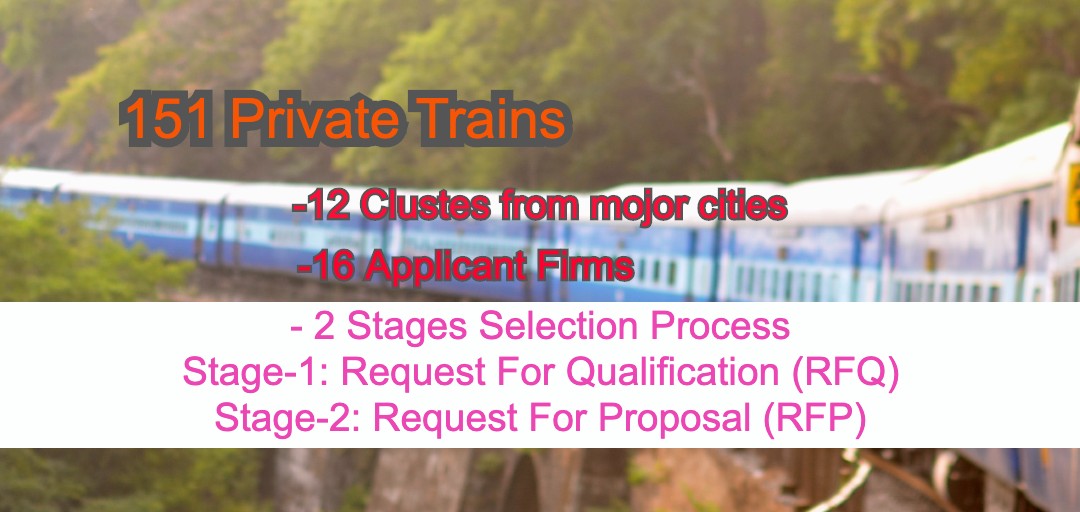
Ministry of Railways has recently invited Request for Qualifications (RFQ) for private participation for operation of passenger train services over 109 Origin Destination(OD) pairs of routes through introduction of 151 modern Trains (Rakes).
As part of the Biding Process, Ministry of Railways has conducted first pre-Application Conference on July 21, 2020 which has received an over-whelming response with participation of around 16 prospective Applicants. The issues and concerns raised by the prospective Applicants were discussed and clarifications were provided by the officials of Ministry of Railways and NITI Aayog for improved clarity on the provisions of RFQ and bidding framework. The queries were mainly related eligibility criteria, bid process, procurement of rakes, operations of trains and composition of clusters.
151 Private Trains to be run by Private operators once the selection process is over, would be over and above the already existing trains .
2 Stage Selection Process: The private entities for undertaking the projected will be selected through a two-stage competitive bidding process comprising of Request for Qualification (RFQ) and Request for Proposal (RFP).
Fixed Haulage charges: There were queries on haulage charges for which Ministry of Railways has replied that haulage charges will be specified upfront and will be suitably indexed for the entire concession period thereby bringing certainty in the haulage charges. The Private Train Operators shall pay to Indian Railways fixed haulage charges, energy charges as per actual consumption and a share in Gross Revenue determined through a transparent bidding process.
Lease or Purchase of Trains: Ministry of Railways has clarified that trains to operated under the project can be either purchased or taken on lease by the private entities.
Equitable Risk: Ministry of Railways has also clarified that risks with regard to operation of trains shall be allocated to the parties in an equitable manner.
Loco Pilots / Guard: The driver and guard of the trains will be Railway officials.
Safety: The safety clearance of trains will be done by Railways only.
Make in India: Majority of Trains to be manufactured in India (Make in India). The private entity shall be responsible for financing, procuring, operation and maintenance of the trains.
Speed 160 KMPH: Private Trains shall be designed for a maximum speed of 160 kmph. The running time taken by a train shall be comparable to or faster than the fastest train of Indian Railways operating in the respective route.
16 Coaches trains: Each Train shall have a minimum of 16 coaches
35 Years: The Concession Period for the project shall be 35 years.
12 Clusters, 10 Cities for originating trains
Cluster 1 (Mumbai 1)
Cluster 2 (Mumbai 2)
Cluster 3 (Delhi 1)
Cluster 4 (Delhi 2)
Cluster 5 (Chandigarh)
Cluster 6 (Howrah)
Cluster 7 (Patna)
Cluster 8 (Prayagraj)
Cluster 9 (Secunderabad)
Cluster 10 (Jaipur)
Cluster 11 (Chennai)
Cluster 12 (Bengaluru)
Why the Private Train Services?:
Indian Railways network is about 68,000 route kilometers. In the year 2018-19, the reserved passenger volume was 16% (0.59 billion) of the total originating non- suburban passengers (3.65 billion). Almost 8.85 crore of waitlisted passengers could not be accommodated.
Ministry of Railways felt the requirement to introduce private participation in passenger train operation which will allow introduction of next generation technology and provision of higher service quality, ensuring use of improved coach technology and reduced journey time.
These train services would be operated on the Indian Railway Network where at present both passenger and freight trains are being operated on the common track. The major trunk routes are saturated and operate at near full capacity.
However, with planned commissioning of Dedicated Freight Corridors in 2021 and other infrastructural works, there would be availability of additional paths for operation of additional passenger services and it would therefore be possible to run additional services utilizing modern trains proposed in the current initiative.
The Objective of running Private Trains:
The objective of this initiative is to introduce modern technology rolling stock with reduced maintenance, reduced transit time, boost job creation, provide enhanced safety, provide world class travel experience to passengers
This is Phase-I process of running of 151 Private Train Services. These 151 private trains will be run in addition to already running private trains like Tejas.
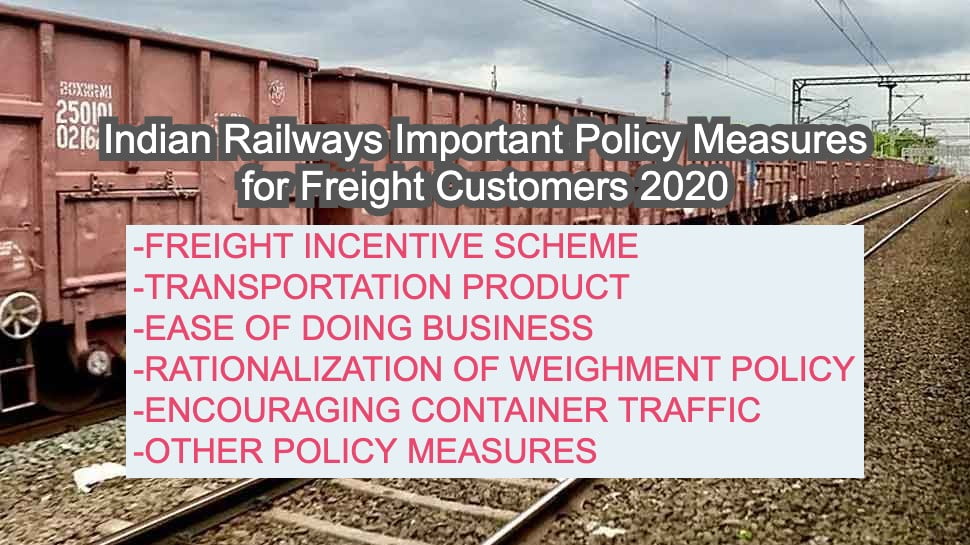
To promote economic activities in the country during covid pandemic, Indian Railways has taken a number of freight policy measures for freight customers. More relaxations have been provided to the customers by slew of incentives announced by Indian Railways. These incentives are expected to boost the economy of the country.
Details of the initiatives duly referring circular/policy letter are given below.
For details of the initiatives, customers may visit the Traffic Commercial Directorate of at Indian Railways website (www.indianrailways.gov.in). Customers may get in touch with Sr. Divisional Commercial Manager at division level or Chief Commercial Manager (FM) at zonal railway level for any freight traffic related query.
Customers may also visit the website of FOIS (www.fois.indianrail.gov.in) to know more about freight traffic and policies.
A. FREIGHT INCENTIVE SCHEMES:
Automatic Freight Rebate Scheme for traffic loaded in Traditional Empty Flow Directions (TEFD)- Railway identifies the routes where it operates a certain number of empty wagons annually. In a endeavor to convert these empty movements to loaded, it offers discounted freight in these empty flow routes, i.e. at Class LR1/Class 100/Class 110 for train load/wagon load, respectively. Discount is granted automatically through system on Railway Receipts itself, i.e., no action to be taken by customer. Details of notified routes and terms & conditions are as per the circular.
Long Term Traffic Contract (LTTC) is a policy which provides freight stability to its customer in the current year of the agreement. It also offers rebate in freight based on incremental growth in Gross Freight Revenue GFR as well as for retention of traffic volumes. Freight rebate is also available for retention of GFR in each year of the agreement period. Customers are required to apply for and sign contracts with Zonal Railways to avail this scheme.
Busy Season Charge which was levied during October-June (with some exceptions) @15% on all goods traffic has been withdrawn from 01.10.2019 for all traffic; except Iron Ore and POL traffic. This has provided a direct huge reduction in freight charges.
Revised Round Trip Tariff (RTT) policy has been implemented from 24.10.2020 and will remain valid upto 23.10.2021. Under this policy, freight discount is granted to traffic if customer offers to book traffic in onwards as well as return direction. The return traffic under this traffic is charged at lower of the two classes of onward vis a vis return traffic, effectively both onwards at return traffic/commodities are charged at lower class among these, subject to terms and conditions applicable, except for coal and coke for which maximum discount is capped at 10%. Rail users desirous of availing incentives under RTT policy shall be required to apply to Zonal Railway.
Incentive to fly ash: 40% discount in freight is granted to fly ash traffic booked in Open Stock; both in bagged condition as well as bulk/loose condition. Fly ash loaded in flat wagons is also granted 40% concession, if loaded in bagged condition. Fly ash in covered wagons in bagged condition is now charged at Class LR1.
Short lead concession has been re-introduced from 01.07.2020 under which discount in freight at the rate of 50%, 25% and 10% is granted to the traffic booked upto 0-50KM, 51-75KM and 76-90 KM respectively except Coal & Coke and Iron ore traffic.Further, Zonal Railways have been empowered to get into long term contracts with customers for short lead traffic.
Concession on long lead traffic has been introduced from 01.07.2020 for Coal & Coke, Iron ore and Iron & Steel traffic under which discount in freight is granted for long lead traffic. Coal & Coke traffic for distance >1400KM is granted 20% concession, Iron & Steel for distance >1600KM and >700KM is granted 20% concession and 15% concession, respectively; and Iron Ore traffic for distance >1500 Km is granted 20% concession. Details may be seen in the circular attached.
Terminal Access Charge(TAC)- Concession @50% has been granted on container traffic handled at Group-III CRTs(Container Rail Terminals). It may be noted that some Railway goods sheds are notified as CRTs which container traffic may use on payment of TAC. Group-III terminals are those that handle less than seven rakes a month. These are categorized by concerned Zonal Railways.
5% concession on Haulage Charge per TEU rates has been permitted on loaded containerswith effect from 04.08.2020 to 30.04.2021. Haulage Charges for containers are levied at different rates for loaded and empty containers & empty wagons. These also vary for different weight slabs in case of loaded containers.
25% concession on Haulage Charge has been permitted in case of empty containers and wagons till 30.04.2021. Haulage Charges for containers are levied at different rates for loaded and empty containers & empty wagons. The current rates are prescribed in Rates Circular No.20 of 2018.
Non-levy of Terminal charges at unloading point for the traffic booked to and from notified alternate goods shed instead of busy goods shed. Terminal charge is otherwise levied at Rs.20 per tonne for goods sheds and PFTs. This intends to offer efficient and faster handling of goods at less busy terminals for benefit of customer. This will also help Indian Railway in better utilization of its terminal infrastructure.
Permissible Carrying Capacity for loading of Pet Coke in Open wagons has been reduced, thereby, reducing the chargeable tonnage per wagon. This has been done with a view to make Pet Coke freight more viable by eliminating the payment of dead freight by customer, as pet coke is high volume-low weight commodity.
Inventive Scheme for loading of Bagged consignment in open and flat wagons – This scheme endeavor to utilize open and flat wagons for loading of commodities that otherwise favour covered wagons.Rebate of 20% on cement, china clay, chemical manure, food grain etc.; and rebate of 30% on fly ash, urea is offered. Further, as industry demanded for permitting large sized bags so that it could result in cost savings to customers, same has been permitted upto 2.5 tons per bag for open wagons (only).
25% concession extended with retrospective effect i.e. from 30.04.2020 from new loading point Lingraj SILO siding of MCL (LSST) for movement of NTPC’s coal traffic over East Coast Railway. This is a special case of MGR(Merry Go Round) operation system for transportation of coal.
Rebate in freight for commodities loaded in privately owned wagons notified for the period from 01.10.2020 to 30.09.2021. These are the private wagons procured before currently prevailing wagon investment schemes.
Debit/Credit system of Demurrage has been permitted in case of private sidings, upto 30.09.2021. Demurrage is a charge levied for detention of wagons beyond permissible free time. It is levied on each case of loading and unloading separately. However, now this policy initiative permits demurrage for private sidings to be charged on monthly basis, and to debit-credit or to adjust the time saved in one wagon against other, subject to laid down terms and conditions.
Free time for loading/unloading increased in case of bagged consignment in open wagons at EOL terminals from three hours to six hours, upto 31.03.2021.
Additional free time of one hour per rake has been permitted for covering open wagons with tarpaulins during loading of loose/bulk commodity (e.g. Coal & Coke etc., for which packing condition P2(a) is prescribed in the Goods Tariff) at all kinds of freight terminals e.g. goods sheds, sidings (including EOL sidings), PFTs etc.
Penalty for overloading- Detention Charge levied @5000/- per overloaded wagon has been withdrawn. Punitive Charge rules have been revised such that on detection of overloading at other than originating point, if customer carries out load adjustment at such point, Punitive Charge will be levied for the distance travelled by the train from originating station to the load adjustment point, rather upto destination point as was the previous rules.
PCC and loading tolerance of BCFC and BCFCM wagons notified. Since these wagons are loaded using precision loading mechanism using controlled discharge techniques, therefore, loading tolerance for these wagons have been reduced. This results in higher permissible carrying capacity(PCC). It benefits both customer and railways by increasing the throughput. These wagons are largely used to carry cement, fly ash etc.
Indian Railway has encouraged full rake load traffic so as to promote efficiency of operations and economy of scale. Standard composition of various type of wagons is laid down in RMC/2020 for block rake/mini rake/two point rake etc. However, certain transportation products have been designed for use of less than full train load traffic, which largely permit booking of piecemeal traffic at trainload rates subject to certain terms and conditions. Details of which are also laid down in aforementioned circular.
Recent relaxations granted in conditions governing these transportation products are as below:
Minimum number of wagons for availingtrainload benefit for BCNHL has been reduced from 57 wagons to 42 wagons initially w.e.f. 16.04.2020 till 30.09.2020. Now further extended upto 31.12.2020.
Distance for operation of Mini Rake (20 wagons) has been increased to 1500KM. Mini rakes have also been permitted beyond 1500KM upto 2000KM and beyond 2000KM on payment of supplementary charge @7.5% and @10%, respectively. This charge is levied on graded manner, i.e. only for the relevant distance. This is valid upto 31.12.2020.
Two point destination terminals should not be more than 500KM apart in lean season as well as in busy season. Further, two point originating terminals should not be more than 500KM apart. This distance restrictions was earlier 200KM. It has now been relaxed to 500KM. The validity of this policy is upto 31.12.2020.
Two point combination for other than covered stock for steel traffic are notified by Railway Board. Recently, 23 new pairs have been included in the list.
Automatic Freight Rebate Scheme for traffic loaded in traditional empty flow direction(TEFD) The scheme lays down minimum number of wagons in a rake that are eligible for availing this scheme. Recently, this number has been reduced to 10 wagons for BCN and BCNHL rakes. BCN and BCNHL are covered wagons usually used for transportation of bagged commodities like food grains, sugar, cement etc.
Running of freight trains over seven CC+8 routes are included over Northern Railway. Higher payload helps railways as well as customers with better stock utilization and higher throughput.
Registration of demand for wagons electronically (e-RD) has been implemented to provide electronic demand note facility through FOIS website wherein, customer can register their demand for wagons electronically. This facility has been extended to Container traffic, Freight Forwarders, Iron & Steel, Iron Ore, Salt and Granite traffic.
Electronic Transmission of Railway Receipt (eT-RR) has been launched to provide paperless transaction system where Railway Receipt is generated and transmitted electronically to customer through FOIS, and even delivery of goods is given through e-surrender of eT-RR. This facility has been extended to container traffic, Freight Forwarders, Iron & Steel, Iron Ore, Salt and Granite traffic.
Terminal Management System (TMS) provides system based preparation of Railway Receipt for freight traffic. Two new features have been added to promote digital working (a) Preparation and submission of online goods balance sheet and (b) System generated Money Receipt for ancillary charges e.g. Demurrage, Wharfage etc.
Online interface to Freight Customers through Freight Operation Information system(FOIS) to provide all requisite information e.g. freight class and rate; position of indent/demand for each station; outstanding indents, shortest/popular routes, terminal handling facilities; freight calculator; facility to track and trace rakes
E-Drishti updation for goods sheds– Zonal Railways have been directed that details of facilities at all goods sheds and recent photographs (including night photographs for lighting levels) be uploaded on E-Drishti portal.
Electronic payment system enables collection of freight charges directly from customer’s bank account. Customers have to enter into tripartite agreements with bank and zonal railways for the same. It enables fast, safe, efficient and transparent mode of payment for freight charges, which normally are large value transactions. In recent past, Automobile Freight Train Operators (AFTOs) have been allowed single agreement e-payment facility with base terminal Railway.
Freight Advance Scheme offers Tariff certainty in lieu of freight advance. Under this scheme, Railway shall accord priority in allocation of rakes within same class to freight customers who have signed agreement. The scheme is open to customers who are e-payment customers for freight payment and have given minimum annual freight revenue of ₹ 500 crore as freight payee in previous calendar year.
Issue of Money Receipt in the name of handling agent of freight customer has been permitted. Handling agents were already recognized as freight payee entity under e-payment agreement. It has now been taken into cognizance that handling agents in certain cases are appointed by customers for payment of demurrage, wharfage and other charges. Now under GST regime, it is important to issue Money Receipt in favour of handling agents, so as to ensure proper implementation of GST and also so that handling agents are able to avail input tax credit as due.
D. CUSTOMER-FRIENDLY RATIONALIZATION OF WEIGHMENT POLICY
Following policy measures have been taken to lower operational time and improve fluidity-
In case of variation between two weighment results of a rake, the weight of second weighment will be the chargeable weight and not the higher of the two. Under previous policy, higher of the two weight readings was taken as final.
On detection of overloading in a rake, if load adjustment is not feasible at originating point, then it may be permitted at nearby location and transit time from weighment point to load adjustment point for levy of Detention Charge has been capped to maximum of two hours plus actual duration of load adjustment. Prior to this modification, the detention charge was levied for actual time taken for rake to transit from overloading detection point to load adjustment point plus actual duration of load adjustment.
Exemption from mandatory weighment has been permitted in case of loading of Standard Bags of uniform size in container, low density commodities like Pet Coke, Met Coke, Chuni and De-oiled cake. The random sample checks at 5% shall continue.
Exemption from mandatory weighment in case of import containerized traffic to eight container operators (CONCOR, GRFL, DLI, Adani, ICT&IPL, HTPL, IILPL and PMLPPL) on the basis of transmission of SMTP details from Custom server to FOIS via EDI. Further, Nepal bound containerized import traffic has also been exempted from mandatory weighment from 02.09.2019 on the basis of Custom document submitted by CONCOR.
Permission to accept weighment done at specific road weighbridge for loading of Granite at certain goods sheds of South Central Railway has been granted on experimental basis. System has been so designed to capture all documents and data in TMS to ensure data retrievability and transparency.
Integration of all weighbridges with FOIS is being taken up on urgent basis. All General Mangers of Zonal Railways have been asked to monitor the progress and ensure implementation.
To promote containerizations following measures have been taken, ninety additional commodities have been de-notified and brought under Haulage Charge per TEU rates. Out of 641 commodities notified in goods tariff, 507 commodities are allowed to move in containers at FAK and 38 commodities at Container Class Rate (by applying 15% concession on applicable class rate).
Chemical Gypsum, a restricted commodity, which was initially allowed to move in containers at CCR upto 20.10.2020. This permission has been extended till further advise
25% concession on Haulage Charge has been permitted in case of empty containers and wagons till 30.04.2021. Haulage Charges for containers are levied at different rates for loaded and empty containers & empty wagons. The current rates are prescribed in Rates Circular No.20 of 2018.
5% concession on Haulage Charge per TEU rates has been permitted on loaded containerswith effect from 04.08.2020 to 30.04.2021. Haulage Charges for containers are levied at different rates for loaded and empty containers & empty wagons. These also vary for different weight slabs in case of loaded containers.
Round trip based charging implemented toprovide an economical and reliable alternative for ultra short lead (upto 50Kms) container traffic which are moving at Haulage Charge per TEU rates, initially valid upto 14.09.2020. Container train operators are required to apply to concerned zonal railways to avail this scheme. This policy has extended upto 30.04.2021
Methodology for levying of Terminal Access Charge from 1.5 times to one time for double operation (i.e. unloading followed by loading) extended till further advice.
Railways are empowered to permit advance Stacking permission at Group-III CRTs for 24 hrs free of charge and, thereafter, on levy of charge @ 20% of prevailing rate of Ground Usage Charge upto five days only. These guidelines are valid from 09.03.2020 upto 08.03.2021.
Liberalization in the guidelines for permitting lift on lift off at Group-I and II CRTs by removing the condition of seven rakes per handling line per month, valid upto 17.12.2020.
In case of iron ore traffic, guidelines have been issued for forfeiture of wagon registration fee if indent is cancelled after allotment of rake in Rake Allotment System.
In case of Military Traffic, the guidelines for coaching train and mixed train has been relaxed. The charge for coaching train shall be levied for actual number of coaches in the train subject to a minimum charge for 10 coaches (instead of 18 coaches) per train. This relaxation is applicable till 31.03.2021 and post which, the charge for coaching train shall be levied for actual number of coaches in the train subject to a minimum charge for 18 coaches per train. In case of mixed train (coaching + goods), the total charge should be worked out for actual number of coaches/wagons used subject to minimum charge for 30 bogie wagons (including a minimum of one coach). This relaxation will remain valid till further advice.
Indian Railway launches digitised online Human Resource Management System (HRMS)
HRMS will impact over 27 lakh families of serving as well as retired employees.
HRMS will increase accountability and transparency in the working of Railways
Move to improve efficiency and productivity of Railway system.
HRMS is a step towards realizing the vision of Hon’ble Prime Minister to transform India into a digitally empowered society and knowledge economy.
HRMS will have a big impact on the functioning of all the employees and will make them more tech savvy.
Indian Railway Launches ESS, PF & Settlement Modules under HRMS
Shri Vinod Kumar Yadav, Chairman & CEO, Railway Board launched following modules of HRMS, useful for railway employees and pensioners on 26.11.2020 via video conferencing.
Employee Self Service (ESS) module enables railway employees to interact with various modules of HRMS including communication regarding change of data.
Provident Fund (PF) Advance Module
Provident Fund (PF) Advance module enables Railway employees to check their PF balance and apply for PF advance online.
Advance processing will be online and employees will also be able to see the status of their PF application online.
Settlement Module
Settlement module digitizes the entire settlement process of retiring employees. Employees can fill their settlement / pension booklet online. Service details are fetched online and pension is processed online completely.
This will eliminate use of paper and it also facilitates monitoring for timely processing of settlement dues of retiring employees.
Earlier Launched HRMS Modules
Prior to these modules, Indian Railways has already launched other modules of HRMS like…
Employee Master module which stores all basic information details of Railway employee,
Electronic Service Record module replacing physical Service Records storing service records of employees in digital format,
Annual Performance Appraisal Report (APAR) module digitizing the complete process of writing annual performance Appraisal of all 12 lakh non gazetted Railway employees,
Electronic Pass module replacing the physical paper pass,
Office Order module meant both for the issue of office Orders and updation of data on joining of new employees, promotion, transfer of employees and retirement of employees in HRMS database. Source: PIB
Human Resource Management System (HRMS) for Railway Employees
Indian Railway has launched completely digitized online Human Resource Management System (HRMS).
Human Resource Management System (HRMS) is a high thrust project for Indian Railways to leverage improved productivity & employee satisfaction.
It is a move to improve efficiency and productivity of Railway system and a step towards realizing the vision of Hon’ble Prime Minister to transform India into a digitally empowered society and knowledge economy.
Human Resource Management System is expected to create a big impact on the functioning of all the employees and will make them more tech savvy.
Indian Railways has completed the RFQ evaluations (Stage-1) for PPP in Passenger Train Operations Project. 151 Trains to be run by Private operators once the selection process is over, would be over and above the already existing trains .
Trains to run on public private partnership mode
These trains will be in addition to the trains already being run by Railways
Private trains to bring modern technology
Introduction of these additional private trains is expected to boost jobs
These trains are going to run on the routes where there the demand for trains are already higher than the existing capacity
The driver and guard of the trains will Railway officials . The safety clearance of trains will be done by Railways only . PIB
Out of 120 applications, 102 applications have been found eligible to participate in the RFP stage.
Ministry of Railways (MOR) had invited Request for Qualifications (RFQ) for private participation in operation of passenger train services over 12 Clusters comprising for more than 150 Origin Destination pair of routes through introduction of 151 modern Trains.
This is the first major initiative of attracting private investment for running Passenger Trains over Indian Railway Network. The project would entail private sector investment of about Rs 30,000 crores.
Majority of Trains to be manufactured in India (Make in India). The private entity shall be responsible for financing, procuring, operation and maintenance of the trains.
Objective of running Private Trains
The objective of this initiative is-
To introduce modern technology rolling stock with reduced maintenance,
To reduce transit time,
To boost job creation,
To provide enhanced safety,
To provide world class travel experience to passengers,
and also to reduce demand supply deficit in the passenger transportation sector.
How the operation of Private Trains will be done?
The Private Entity shall pay to Indian Railways fixed haulage charges, energy charges as per actual consumption and a share in Gross Revenue determined through a transparent bidding process.
These train services would be operated on the Indian Railway Network where at present both passenger and freight trains are being operated on the common track. The major trunk routes are saturated and operate at near full capacity. However, with planned commissioning of Dedicated Freight Corridors in 2021 and other infrastructural works, there would be availability of additional paths for operation of additional passenger services and it would therefore be possible to run additional services utilizing modern trains proposed in the current initiative.
2 Stage Selection Process
The private entities for undertaking the project would be selected through a transparent two-stage competitive bidding process comprising of Request for Qualification (RFQ) and Request for Proposal (RFP).
Stage-1: Request for Qualification (RFQ) – Completed
Stage-2: Request for Proposal (RFP)
The RFQ for 12 clusters were published on 01 July 2020.
• The applications were opened on October 7, 2020. MoR has received excellent response. In all 120 Applications have been received for the 12 Clusters, from 16 applicant firms. Cluster wise details of the Applications received are attached herewith.
MoR has completed the evaluation of Applications. Out of 120 applications, 102 applications are found eligible to participate in the RFP stage. The results of evaluation of Applications are attached herewith. The RFP documents will be made available to the qualified applicants very soon.
Summary of Firms Qualified for Stage-2
Summary of number of firms qualified in RFQ stage-1 for participation in RFP stage-2 for Operation of Passenger Trains in PPP mode over Indian Rail Network.
Sr.No.
Cluster
No. of firms qualified for participation in RFP stage
1.
Cluster 1 (Mumbai 1)
8
2.
Cluster 2 (Mumbai 2)
11
3.
Cluster 3 (Delhi 1)
9
4.
Cluster 4 (Delhi 2)
10
5.
Cluster 5 (Chandigarh)
8
6.
Cluster 6 (Howrah)
8
7.
Cluster 7 (Patna)
8
8.
Cluster 8 (Prayagraj)
9
9.
Cluster 9 (Secunderabad)
9
10.
Cluster 10 (Jaipur)
9
11.
Cluster 11 (Chennai)
5
12.
Cluster 12 (Bengaluru)
8
1. Cluster 1 (Mumbai 1)
The following 08 (eight) applicants are qualified for participation in RFP stage for Cluster-1 (Mumbai-1) of PPP in Passenger Train Operations Project:
1) M/s Cube Highways and Infrastructure III Pte. Ltd.
2) Consortium of
(a) M/s Gateway Rail Freight Limited; and
(b) M/s Gateway Distriparks Limited
3) M/s GMR Highways Limited
4) M/s Indian Railway Catering and Tourism Corporation Ltd.
5) M/s IRB Infrastructure Developers Limited
6) Consortium of
(a) M/s Malempati Power Private Limited; and
(b) M/sTechno Infra Developers Pvt Ltd
7) M/s Megha Engineering & Infrastructures Ltd.
8) M/s Welspun Enterprises Limited
2. Cluster 2 (Mumbai 2)
The following 11 (eleven) applicants are qualified for participation in RFP stage for Cluster-2 (Mumbai-2) of PPP in Passenger Train Operations Project:
1) Consortium of
(a) M/s Construcciones y Auxiliar de Ferrocarriles, S.A.
(b) M/s CAF India Private Limited
(c) M/s CAF Investment Projects, S.A.
2) M/s Cube Highways and Infrastructure III Pte. Ltd.
3) Consortium of
(a) M/s Gateway Rail Freight Limited
(b) M/s Gateway Distriparks Limited
4) M/s GMR Highways Limited
5) M/s Indian Railway Catering and Tourism Corporation Ltd.
6) M/s IRB Infrastructure Developers Limited
7) M/s L&T Infrastructure Development Projects Limited
8) Consortium of
(a) M/s Malempati Power Private Limited
(b) M/s Techno Infra Developers Pvt Ltd
9) M/s Megha Engineering & Infrastructures Ltd.
10) Consortium of
(a) M/s R. K. Associates & Hoteliers Pvt. Ltd.
(b) M/s Omaxe Limited
11) M/s Welspun Enterprises Limited
3. Cluster 3 (Delhi 1)
The following 09 (nine) applicants are qualified for participation in RFP stage for Cluster 3 (Delhi 1) of PPP in Passenger Train Operations Project:
1) M/s Cube Highways and Infrastructure III Pte. Ltd.
2) Consortium of
(a) M/s Gateway Rail Freight Limited
(b) M/s Gateway Distriparks Limited
3) M/s GMR Highways Limited
4) M/s Indian Railway Catering and Tourism Corporation Ltd.
5) M/s IRB Infrastructure Developers Limited
6) Consortium of
(a) M/s Malempati Power Private Limited
(b) M/s Techno Infra Developers Pvt Ltd
7) M/s Megha Engineering & Infrastructures Ltd.
8) M/s PNC Infratech Ltd
9) M/s Welspun Enterprises Limited
4. Cluster 4 (Delhi 2)
The following 10 (ten) applicants are qualified for participation in RFP stage for Cluster 4 (Delhi 2) of PPP in Passenger Train Operations Project:
1) M/s Cube Highways and Infrastructure III Pte. Ltd.
2) Consortium of
(a) M/s Gateway Rail Freight Limited
(b) M/s Gateway Distriparks Limited
3) M/s GMR Highways Limited
4) M/s Indian Railway Catering and Tourism Corporation Ltd.
5) M/s IRB Infrastructure Developers Limited
6) Consortium of
(a) M/s Malempati Power Private Limited
(b) M/s Techno Infra Developers Pvt Ltd
7) M/s Megha Engineering & Infrastructures Ltd.
8) M/s PNC Infratech Ltd
9) Consortium of
(a) M/s R. K. Associates & Hoteliers Pvt. Ltd.
(b) M/s Omaxe Limited
10) M/s Welspun Enterprises Limited
5. Cluster 5 (Chandigarh)
The following 08 (eight) applicants are qualified for participation in RFP stage for Cluster 5 (Chandigarh)of PPP in Passenger Train Operations Project:
1) M/s Cube Highways and Infrastructure III Pte. Ltd..
2) Consortium of
(a) M/s Gateway Rail Freight Limited
(b) M/s Gateway Distriparks Limited
3) M/s GMR Highways Limited
4) M/s Indian Railway Catering and Tourism Corporation Ltd.
5) M/s IRB Infrastructure Developers Limited
6) Consortium of
(a) M/s Malempati Power Private Limited
(b) M/s Techno Infra Developers Pvt Ltd
7) M/s Megha Engineering & Infrastructures Ltd.
8) M/s Welspun Enterprises Limited
6. Cluster 6 ( Howrah)
The following 08 (eight) applicants are qualified for participation in RFP stage for Cluster 6 (Howrah)of PPP in Passenger Train Operations Project:
1) M/s Cube Highways and Infrastructure III Pte. Ltd..
2) Consortium of
(a) M/s Gateway Rail Freight Limited
(b) M/s Gateway Distriparks Limited
3) M/s GMR Highways Limited
4) M/s Indian Railway Catering and Tourism Corporation Ltd.
5) M/s IRB Infrastructure Developers Limited
6) Consortium of
(a) M/s Malempati Power Private Limited; and
(b) M/sTechno Infra Developers Pvt Ltd
7) M/s Megha Engineering & Infrastructures Ltd.
8) M/s Welspun Enterprises Limited
7. Cluster 7 ( Patna)
The following 08 (eight) applicants are qualified for participation in RFP stage for Cluster 7 (Patna)of PPP in Passenger Train Operations Project:
1) M/s Cube Highways and Infrastructure III Pte. Ltd..
2) Consortium of
(a) M/s Gateway Rail Freight Limited
(b) M/s Gateway Distriparks Limited
3) M/s GMR Highways Limited
4) M/s Indian Railway Catering and Tourism Corporation Ltd.
5) M/s IRB Infrastructure Developers Limited
6) Consortium of
(a) M/s Malempati Power Private Limited
(b) M/s Techno Infra Developers Pvt Ltd
7) M/s Megha Engineering & Infrastructures Ltd.
8) M/s Welspun Enterprises Limited
8. Cluster 8 (Prayagraj)
The following 09 (nine) applicants are qualified for participation in RFP stage for Cluster 8 (Prayagraj) of PPP in Passenger Train Operations Project:
1) M/s Cube Highways and Infrastructure III Pte. Ltd.
2) Consortium of
(a) M/s Gateway Rail Freight Limited
(b) M/s Gateway Distriparks Limited
3) M/ GMR Highways Limited
4) M/s Indian Railway Catering and Tourism Corporation Ltd.
5) M/s IRB Infrastructure Developers Limited
6) Consortium of
(a) M/s Malempati Power Private Limited
(b) M/s Techno Infra Developers Pvt Ltd
7) M/s Megha Engineering & Infrastructures Ltd.
8) M/s PNC Infratech Ltd
9) M/s Welspun Enterprises Limited
9. Cluster 9 (Secunderabad)
The following 09 (nine) applicants are qualified for participation in RFP stage for Cluster 9 (Secunderabad) of PPP in Passenger Train Operations Project:
1) M/s Cube Highways and Infrastructure III Pte. Ltd.
2) Consortium of
(a) M/s Gateway Rail Freight Limited
(b) M/s Gateway Distriparks Limited
3) M/s GMR Highways Limited
4) M/s Indian Railway Catering and Tourism Corporation Ltd.
5) M/s IRB Infrastructure Developers Limited
6) M/s L&T Infrastructure Development Projects Limited
7) Consortium of
(a) M/s Malempati Power Private Limited
(b) M/s Techno Infra Developers Pvt Ltd
8) M/s Megha Engineering & Infrastructures Ltd.
9) M/s Welspun Enterprises Limited
10. Cluster 10 (Jaipur)
The following 9 (nine) applicants are qualified for participation in RFP stage for Cluster 10 (Jaipur) of PPP in Passenger Train Operations Project:
1) M/s Cube Highways and Infrastructure III Pte. Ltd.
2) Consortium of
(a) M/s Gateway Rail Freight Limited
(b) M/s Gateway Distriparks Limited
3) M/s GMR Highways Limited
4) M/s Indian Railway Catering and Tourism Corporation Ltd.
5) M/s IRB Infrastructure Developers Limited
6) Consortium of
(a) M/s Malempati Power Private Limited
(b) M/s Techno Infra Developers Pvt Ltd
7) M/s Megha Engineering & Infrastructures Ltd.
8) M/s PNC Infratech Ltd
9) M/s Welspun Enterprises Limited
11. Cluster 11 (Chennai)
The following 05 (five) applicants are qualified for participation in RFP stage for Cluster 11 (Chennai) of PPP in Passenger Train Operations Project:
1) M/s Cube Highways and Infrastructure III Pte. Ltd.
2) M/s GMR Highways Limited
3) M/s IRB Infrastructure Developers Limited
4) M/s L&T Infrastructure Development Projects Limited
5) M/s Megha Engineering & Infrastructures Ltd.
12. Cluster 12 (Bengaluru)
The following 08 (eight) applicants are qualified for participation in RFP stage for Cluster 12 (Bengaluru) of PPP in Passenger Train Operations Project:
1) M/s Bharat Heavy Electricals Limited
2) M/s Cube Highways and Infrastructure III Pte. Ltd.
3) M/s GMR Highways Limited
4) M/s IRB Infrastructure Developers Limited
5) M/s L&T Infrastructure Development Projects Limited
HRMS Employee Mobile Application and HRMS Web portal is Developed by CRIS for Employees of Indian Railways.
Indian Railway has launched completely digitized online Human Resource Management System (HRMS). Human Resource Management System (HRMS) is a high thrust project for Indian Railways to leverage improved productivity & employee satisfaction. It is a move to improve efficiency and productivity of Railway system and a step towards realizing the vision of Hon’ble Prime Minister to transform India into a digitally empowered society and knowledge economy. HRMS is expected to create a big impact on the functioning of all the employees and will make them more tech savvy.
This application will be a single-window communication system between Railway employees and Administration. Employees of Indian Railways can now see data related to their service and communicate with the administration for any changes if required.
This information was not readily available to the employee before implementation of HRMS. It brings transparency to the administration. It is an important milestone in computerization of HR-related functions in Indian Railways.
This HRMS Application allows the employee to view their historical data since their date of joining in Railways including details like-
HRMS module can be accessed through HRMS Mobile App or HRMS Web portal. For using HRMS app, first registration is required on HRMS by dealing clerk. By now, the HRMS ID has been created for most of the Railway Employees.
=> To access HRMS, employees need to register by entering IPAS No / PF No. => An OTP will be sent to their Mobile No (As available with us). Employee must enter to complete registration process. => If Mobile number is not available, Please contact your establishment clerk to furnish to access this application. => In case user is already register and forgot their HRMS/ Login ID then they can use Registration page to find out Login id.
Apart from their profile and scanned copy of their Service Record, Railway Employees can also see e-Service Record which is compiled based on an entry made in HRMS Application. Scanned copies of their Physical Service Record are also available.
Two modules for data capturing I.e. Employee Master and e-SR has been developed by CRIS and rolled out in IR in Jul/2019. Entry in these two modules is being done by all units of IR. This Application is interface to view the data entered by clerks of Indian Railways. Every Employee will be provided their HRMS Ids to login and access the data.
HRMS Modules: Manuals & Guidelines
HRMS Modules
IRHRMS-ESS Module
Employee Self Service (ESS) module enables railway employees to interact with various modules of HRMS including communication regarding change of data. Launched on 26.11.2020.
Provident Fund (PF) Advance module enables Railway employees to check their PF balance and apply for PF advance online. Advance processing will be online and employees will also be able to see the status of their PF application online. Launched on 26.11.2020.
Settlement module digitizes the entire settlement process of retiring employees. Employees can fill their settlement / pension booklet online. Service details are fetched online and pension is processed online completely. This will eliminate use of paper and it also facilitates monitoring for timely processing of settlement dues of retiring employees. Launched on 26.11.2020.
Human Resource Management System (HRMS) project is a comprehensive plan for digitization of complete HR process of Indian Railway. Total 21 modules has been planned in HRMS.
Basic data entry of around 97% railway employees has been completed in Employee master and E-Service record modules of HRMS which had been launched last year.
Why HRMS for Railway Employees?
Human Resource Management System (HRMS) will allow Railway employees to view their details related to their Increments, Promotions, Awards, Transfers, Postings, Leave, Training, and composition of Family as per records and Nominations for retirement benefits. This information is not readily available to employee at present. It brings transparency to administration.
HRMS Manuals and Guidelines are very helpful in understanding the use of HRMS portal.
HRMS Manuals and Guidelines
Guidelines for updating Executive SR
Executive Record sheet is initiative to capture and display data related to service history of officers of Indian Railways. It has information about Basic details of Officers along with their educational qualification, experience, trainings, awards and publication.
On an average, approximately 30 thousand employees superannuate from different Units of Indian Railways every year. The processes followed to finalise settlement claim of an employee is cumbersome.
This web-based Settlement System under HRMS enables the authorities to finalise the settlement of superannuating employee with ease and convenience.
The Settlement System under HRMS displays notification alert to the concerned Service Record Dealing Clerk (SR-DC) to initiate Settlement Process for the employee due to superannuate in next 6 months.
The Settlement System partly pre-populates the Service Record Summary form and presents it before the SR-DC. SR-DC fills in the required information and submits it to the Service Record Verifying Authority (SR-VA) for verification.
SR-VA verifies the service record summary form and forwards it to Service Record Accepting Authority for approval. If found incorrect, SR-VA returns the form with remark to the SR-DC, for necessary correction. SR-VA accepts the Service Record Summary Form if found correct or else returns to the SR-DC for necessary correction. The approved Service Record Summary Form is sent to Settlement Section for necessary action.
Office order module captures all career events of an employee from Entry in IR to Exit. It generates all office orders and simultaneously updates all data in HRMS /IPAS with trigger of joining / relieving date entry. Transparency in terms of instant availability of office order to all stake holders including employee concerned through SMS and reflection on the dashboard of all concerned. Use of QR code which contains information of Office Order attributes and a link to view the actual office Order. It makes the system tamper proof. Option to use Voice-to-text feature. Using this a user will be able to enter details in Pre-text and Post-text Option to create Customized templates for use with different kinds of Office Orders. Auto-fetching of existing details (Name, deptt, designation, pay level etc) of employee involved in the Office Order. Bilingual format (Office Order are available in English and Hindi) Security with use of DSC by the Accepting Authority while issuing Office Order. Can be made available to general public, if desired.
Guidelines for APAR Module
APAR module on HRMS portal is applicable for only Non-Gazetted employees of Indian Railways. Gazetted officers including Group-‘B’ officers have to fill their APAR on SPARROW website.
It has all the features of SPARROW and has provided facility beyond that for ease of use of all stake holders in terms of writing APAR for non-gazetted employees of all departments of IR. Bilingual format (Office Order are available in English and Hindi) Option to create Customized templates for use with different kinds of rating of an APAR. (e.g. for Very Good, Outstanding etc). Option to use Voice-to-text feature. Using this, user will be able to enter details against any attribute of APAR. Predictive text feature for input. User will get a list of possible texts based on part of text typed to make the experience of writing APAR smooth. Auto mapping of APAR format to employee based on Pay Level, Designation and Department. Auto-fetching of existing details (Name, deptt, designation, pay level etc) as Part-I, Personal Data of APAR Security – Comments and grading by Reporting, Reviewing and Accepting Officer is stored in encrypted format with their respective DSC. Final APAR in PDF format is digitally signed by the Accepting Authority. Transparency – Concerned employee will get instant message as soon as APAR is accepted. Employee will be able to view the final Accepted copy in his /her HRMS account. Multiple MIS can be generated based on available data for monitoring the progress of APAR.
How to Login on HRMS Railway Employee application?
If you are a Railway Employee and a registered user on HRMS portal of Indian Railways and suppose you have forgotten the password for it, then you no need to worry. HRMS Password can be easily reset by following simple steps.
Indian Railways has launched e-Pass Module on HRMS on the 24th of August 2020 through Human Resource Management System (HRMS) Portal, which has been rolled out all over Indian Railways on 01/10/2020.
Now, the Privilege Passes and PTOs have to be applied and availed online by railway employees. With this facility Railway employee is neither supposed to come to office for applying for Pass nor has to wait for pass being issued.
Retired Employees of Railway will get this facility from January, 2021.
Here is the complete guide to issue e-Pass by Railway Employee, Clerks, and Pass issuing authority.
After login on HRMS website, please follow below step to issue e-Pass online on HRMS.
Declaration of Manual Passes & Pass Family:
Contact your Pass Clerk for entry of manual passes
Once entered by Pass Clerk, click on Pass > Pass Set List menu
Click on ‘Confirm’ button if the entered information is correct. If there is some discrepancy, click on ‘Return to Clerk’ button to return it for modification to Pass Clerk.
Once Confirmed, now Family Declaration needs to be completed. Click on Pass > Family Declaration menu.
Select the members for Pass Family Declaration and provide dependency reason&proof (if required) and click on ‘Submit’button. This declaration will now be forwarded to the Pass Clerk for further action. Once Accepted by Pass Clerk, employee can now apply for e-Pass.
e-Pass Application on HRMS:
Click on Pass > Pass Set List menu.
Select Pass Type: Privilege Pass and click on ‘Go’ button. The entitled & available, full/half Pass sets will be shown.
Click on ‘Available– full set– count’ . You will be redirected to Pass Application Page
If there are any previous existing applications(not submitted yet) for this year, then they will appear in the list. They can be edited by clicking on edit icon shown beside the application. To create a fresh application, click on ‘New Application’ button.
Page for new application will open. Details of employee and list of members will be shown to employee. Fill in the travelling details and select the family members to be included in Pass.
Click on ‘Save as Draft’ to save details and on ‘Submit’ to forward the application to Pass clerk for further approval.
To Check Berth Entitlement, click on ‘Check Berth/Seat Entitlement’ shown beside application
Information of berth entitlement will be shown as shown below:
Application for Split Pass:
Login to HRMS application.
Go to Pass > My Issued Passes menu. List of all issued passes will be shown.
Click on ‘Apply’ button beside the pass number against which split pass needs to be applied
Select From & to stations of travel and upload the necessary documents(approval from competent authority). Also enter the reason for applying split pass and click on ‘Apply’ button. The application will be forwarded to Pass Clerk for further action.
To view status of your request, click on ’Applied’ and details of your application will be shown
HRMS e-Pass Cancellation Request
Login to HRMS application
Go to Pass > My Issued Passes menu. List of all issued passes will be shown
Click on ‘Cancel’ against the UPN which needs to be canceled. Enter reason for cancellation, upload the approval document form competent authority and click on ‘Submit’ button. The request will be forwarded to Pass clerk for further action.
To view status of your request, click on ‘Applied’ against the pass for which cancellation request was submitted. A pop up will appear with request details
If your request was Rejected, you can apply again by clicking on ‘Apply Again’ button on the same pop-up screen
Send OTP for ticket Booking
Go to ‘Pass’ > ‘My issued Passes’
Click on ‘Send OTP’ against the pass for which ticket needs to be booked
Click on Send OTP and an OTP will be sent to your registered mobile number
e-PASS Guidelines for Pass Clerk
Manual Pass Entry
Login To HRMS application
Go to Pass > Manual Pass Entry menu
Enter HRMS ID of the employee and click on ‘Go’ button.
Enter the count of Full Set & Half Set Passes for the employee. If passes were surrendered for LTC, the check the checkbox against that year. Enter the count of passes deducted as penalty(if any) ,Remarks and click on ‘Submit’ button.
Acceptance of Family Declaration
Click on Pass > Accept Pass Family menu
Enter HRMS ID of the employee and Click on ‘Go’ button. Details of family members declared by employee will be shown.
Click on Tabs to review all family members of the employee.
Enter your remarks and click on ‘Accept’ button if declaration is correct, click on ‘Return’ if there is some discrepancy.
Accept Pass Application
Click on Pass > Accept Pass Application menu. List of Pass applications & Split Pass Applications will be shown to the clerk. Under Pass Applications click on pass application number to review it.
Review the application for journey & family details. Enter your remarks & click on ‘Accept’ if pass can be forwarded to issuing authority. If there is discrepancy, click on Reject and the application will be rejected.
To check for available passes of employee, click on ‘Check entitled Pass sets’
List of available and entitled pass sets of employee will be shown
Accept Split Pass Application
Click on Pass > Accept Pass Applicationmenu. List of pass applications & Split Pass Applications will be shown to the clerk. Under ‘Split Pass Application’ click on unique pass number to review it.
Split pass application details along with original pass application will be shown
Enter your remarks and click on ‘Accept’ icon to forward it to Issuing Authority, or on ‘Reject’ button to reject the application
Accept HRMS e-Pass Cancellation Request
Login to HRMS application
Go to Pass> Accept Cancellation Request menu.
List of Pass cancellation Requests will be shown. Click on UPN to show details of the cancellation request
Enter your remarks and click on ‘Accept’button to forward request to Pass Issuing Authority
e-PASS Guidelines for Pass Issuing Authority (PIA)
Issue Pass
Click on Pass > Issue Pass menu
List of Pass applications & Split Pass Applications will be shown to the Issuing authority. Under Pass Applications click on ‘pass application number’ to issue Pass.
Application will open showing all the details. Click on ‘Issue Pass’ button to issue pass.
Once successfully issued, a SMS will be sent to the employee with the Pass details.
Issue Split Pass
Click on Pass > Issue Pass menu
List of Pass applications & Split Pass Applications will be shown to the Issuing authority. Under Split Pass Applications click on ‘Unique Pass number’ to issue Split Pass.
Split pass application details along with original pass application will be shown. Tick the check box for declaration and then click on ‘Issue Pass’ button to issue Split Pass
Once successfully issued, a SMS will be sent to the employee with the issued Split Pass details.
Pass Cancellation Request
Login to HRMS application
Go to Pass > Cancellation Request menu.
List of requests for Pass Cancellation will be shown. Click on ‘unique Pass number’ to show details of the request.
Check the checkbox for declaration (if canceling pass, not required if rejecting the request). Enter your remarks and click on ‘Cancel Pass’ to cancel the Pass or on ’Reject’ to reject the cancellation request
If you are a first time user on HRMS portal of Indian Railways, then log in with the Default password “Test@123“. On first time login, You will be prompted to change your password, change your Password.
If you have changed your password on first time login, and have forgotten the password, then recovery/resetting of HRMS password is very easy. For resetting of HRMS password, read How to Reset HRMS Password for Indian Railway Employees?
Change of Password on HRMS Railway Employee portal is possible in two ways…
Reset HRMS password:- By following “Forgot Password” option (This option requires OTP verification through Registered Mobile Number)
Change Password on HRMS application:- Here is the simple guide to Change Password on HRMS Railway Employee app. (This option requires you to remember your current Password.)
How to Change HRMS Password?
1. Access HRMS Website:
HRMS web portal provides easy option for changing of HRMS password. First, access the Webpage of Human Resource Management System (HRMS) of Indian Railways by clicking on link https://hrms.indianrail.gov.in/HRMS/
Then, login on the HRMS portal with HRMS ID and Password.
2. Click Change Password:
Your name is shown on the very top of the page in the right side. Click on your Name. Under your Name, option is available to Change Password. Then Click on the link “Change Password”.
This option is not available on Mobile application, this is available only on website version of the HRMS portal.
3. Set New Password
Enter your Current Password in the given box. and then set new HRMS Password as per Password Policy. Re-enter new Password for confirmation and then click on the button “Change”.
4. Congratulations, Your Password has been changed Successfully.
After setting new password as per password policy, and clicking button “Change”, Your HRMS password will be changed. A message will be displayed like below image.
The message ” Password Changed Successfully” is shown.
Please note that, this doesn’t require OTP verification.
Password Policy for HRMS Password.
HRMS Password should be carefully chosen and It must follow the password policy. HRMS Password must contain Upper Case, Lower Case, Digits and Special Characters.
PASSWORD POLICY
Minimum length For Password Should be 8.
Maximum length For Password Should be 15.
Special Characters Allowed atleast 1 and
Characters Allowed are (!,@,#,$,%,&,*).
Upper Case letter should be at least 1.
Lower Case letter should be at least 1.
Number of Digits should be at least 1.
How to Reset HRMS password?
If you are a Railway Employee and a registered user on HRMS portal of Indian Railways and suppose you have forgotten the password for it, then you no need to worry. HRMS Password can be easily reset by following simple steps.
How to Login on HRMS Railway Employee application?
How to issue E-Pass & E-PTO online for Railway Employees?
Indian Railways has launched e-Pass on HRMS Module on the 24th of August 2020 through Human Resource Management System (HRMS) Portal, which has been rolled out all over Indian Railways on 01/10/2020.
Now, the Privilege Passes and PTOs have to be applied and availed online by railway employees. With this facility Railway employee is neither supposed to come to office for applying for Pass nor has to wait for pass being issued.
HRMS Helpdesk:
In case of any issues please reach out to HRMS helpdesk…
HRMS application related issue @ 7786940452 ,9971535534,7982542883
For OTP @ 7267910583,9953780947
For ePass related enquiry @ 9891643886,9069161539,9971168228 or