Indian Railways have issued a Policy on Development of Goods-sheds at small/road-side stations through Private Investment.
The Policy aims at augmenting terminal capacity through private participation by allowing setting up of new goods-shed facilities and developing existing goods-sheds.
Salient features of the Policy are as under:-
Private parties permitted to develop goods wharf, loading/unloading facilities, facilities for labour (resting space with shade, drinking water, bathing facilities, etc) approach road, covered shed and other related infrastructure. The facilities are to be created/developed by the private party through its own investment.
All developments for the proposed facility will be as per approved Railway designs, and constructed to approved Railway standards and specifications.
Railways shall not levy any departmental or any other charges for the construction.
The facilities created by the private party shall be used as common user facility, and no preference or priority will be granted to the traffic of the party over the traffic of other customers.
Responsibility for maintenance of assets and facilities created shall be vested with the party during the agreement period.
Incentives under the scheme: Share in the Terminal Charges (TC) and Terminal Access Charges (TAC), as the case may be, for all the inward and outward traffic dealt at the goods-shed for five (05) years, from the date of completion of the work.
The party seeking the least share (TC/TAC) shall be selected through competitive bidding, to be done At Divisional Level.
Additional revenue for party through – utilization of available space for establishing small canteen/tea-shop, advertisements, etc.
This policy for Development of Goods-sheds at small/road side stations will surely benefit the economic activities for small industries all over the country.
Good-sheds are provided at the stations where Goods are loaded, unloaded in the Goods trains. Sometimes, before loading or unloading goods are also required to stored in the goods-sheds provided at the station.
Goods-sheds are provided connectivity through railway track (siding) from the railway station of Indian Railways.
50% Subsidy on transportation of fruits & vegetables
In a massive incentive to the farmers, Kisan Rail Freight transportation of notified fruits and vegetables subsidized by 50%.
As a further support and incentive for the farmers using the services of Kisan Rail, Ministry of Railways and Ministry of Food Processing Industries have decided that the 50% subsidy on transportation of notified fruits and vegetables (under ‘Operation Greens – TOP to Total’ scheme of MoFPI) shall be granted directly to Kisan Rail – for which MoFPI will provide necessary funds to Ministry of Railways.
Kisan Rail ensures agro products reach from one corner to another corner of the country in a quick time by faster transportation benefitting both the farmers and the consumers.
Kisan Rail is surely changing the lives of farmers with the assurance of better price with faster & cheaper transportation, providing seamless supply chain, preventing the destruction of perishable farm produce thereby opening up the scope to increase the income of farmers.
The Kisan Rail catering to the requirements of small farmers and small traders is proving to be not only a game changer but also a life changer as it fulfils the endeavour of increasing the income of farmers.
Status of Kisan Rails:
The first Kisan Railon07.08.2020: ex Devlali (Nashik, Maharashtra) to Danapur (Patna, Bihar), was inaugurated on 07.08.2020 – as a weekly train. Subsequently on popular demand the train has been extended to Muzaffarpur (Bihar), and has also been made bi-weekly. In addition, link coaches – from Sangla and Pune – have also been introduced which joins this Kisan Rail at Manmad.
Third Kisan Railon09.09.2020:– from Bengaluru (Karnataka) to Hazrat Nizamuddin (Delhi) – was inaugurated on 09.09.2020, as a weekly train.
Fourth Kisan Railon14.10.2020:– from Nagpur & Warud Orange City (Maharashtra) to Adarsh Nagar Delhi – was inaugurated on 14.10.2020.
It is worth mentioning that Indian Railways is continuously making efforts to move the agro products through freight trains. Even during the lockdown, the freight trains of Indian Railways were moving to ensure continuous supply of essential commodities so that no part in the country should face any hardship. There has been significant improvement in loading of crops like wheat, pulses, fruits, vegetables with more rakes.
About Operation Greens (TOP to TOTAL) -MoFPI
Scheme approved on 10.06.2020, Scheme guidelines notified on 11.06.2020
Ministry of Food Processing Industries (MoFPI) has recently extended the Operation Greens Scheme from Tomato, Onion and Potato (TOP) to all fruits & vegetables (TOTAL) for a period of six months on pilot basis as part of Aatmanirbhar Bharat Abhiyan.
The salient features of the guidelines are as below:
Objective:- The objective of intervention is to protect the growers of fruits and vegetables from making distress sale due to lockdown and reduce the post – harvest losses.
Vegetables: – French beans, Bitter Gourd, Brinjal, Capsicum, Carrot, Cauliflower, Chillies (Green), Okra, Onion, Potato and Tomato.
Any other fruit/vegetable can be added in future on the basis of recommendation by Ministry of Agriculture or State Government (List of eligible crops, selected surplus production clusters and trigger price for intervention under the scheme – Please (Click Here).
Duration of Scheme:- for the period of six months from the date of notification i.e., 11/06/2020.
Eligible Entities:- Food Processors, FPO/FPC, Co-operative Societies, Individual farmers, Licensed Commission Agent, Exporters, State Marketing/Co- operative Federation, Retailers etc. engaged in processing/ marketing of fruits and vegetables.
Pattern of Assistance:- Ministry will provide subsidy @ 50 % of the cost of the following two components, subject to the cost norms:
Transportation of eligible crops from surplus production cluster to consumption centre; and/or
Hiring of appropriate storage facilities for eligible crops (for maximum period of 3 months);
Submission of claim for subsidy – Eligible entities, who comply with the aforesaid essential criteria may undertake the transportation and/or storage of notified crops from notified surplus production cluster, without any prior approval from MoFPI and thereafter submit their claim on online portal https://www.sampada-mofpi.gov.in/Login.aspx.
The applicant should register on the portal before carrying out transportation/storage of fruits and vegetables. For Registration, please (Click Here).
For list of districts of each crops mentioned in Serial No. 7.5 of Horticulture Statistics at Glance 2018 published by Ministry of Agriculture, which will be taken as eligible production clusters subject to meeting of the criterion of essential conditions, please (Click Here).
These festival special services will be run to clear the festive rush, in addition to already running more than 300 mail/express trains.
Travellers to Kolkata, Patna, Varanasi and Lucknow will have more festival trains to cater the anticipated festive rush of Durga Puja, Dussehra, Diwali and Chhatt puja.
Guidelines issued by Railway administration for prevention of spread of corona virus:
Railway Protection Force has issued guidelines for travellers as the festive season is approaching.
The general public is has to desist from the following acts or omission while being in railway stations, train or other railway area:
1) Not wearing a mask or wearing a mask improperly.
2) Not maintaining social distancing.
3) Coming to railway area or station or boarding a train after having declared Covid Positive.
4) Coming to railway area or station or boarding a train after giving samples for testing of corona virus and awaiting result.
5) Boarding a train after having been denied to undertake travel by the health check up team at the railway station.
6) Spitting or wilful ejection of body fluid/waste in public area.
7) Activities which may create unclean or unhygienic conditions or affect public health and safety in railway stations and trains.
8) Not adhering to any of the guidelines issued by Railway administration for prevention of spread of corona virus.
9) Any other act or omission likely to aid in spread of corona virus.
Since these acts or omissions are likely to aid in the spread of corona virus, they will tantamount to interference with passenger amenities provided by the railway administration.
Wilful omission or neglect endangering or causing to be endangered the safety of any person may be punished with imprisonment and/or fine under section 145, 153 and 154 of Railway Act 1989.
So plan your journey carefully and follow the guidelines issued by the Indian Railways. Happy Journey and best wishes for Festive Season.
Does writing excite you? Do you have interesting ideas for articles? Do you wish to be a writer and would like to see your articles/blogs featured on a website visited by thousands of people? Or looking to add some weight to your resume? Here is your golden chance! We invite you to send us your articles/blogs which we will feature on our website if we find your content interesting enough!
Email: railministry1@gmail.com
A snapshot!
Some of the categories under which you can submit your articles and blogs are Indian Railways, Trains, Railway Services, IRCTC, Technology in Indian Railways, Career in Railways, Railway board, Ministry of Railways, Departmentalisation in Railways, Foreign Railways and any other topic related to Railways. You can also write about your experiences with Railways. The very purpose of our website is to create value in reader’s life, to make a positive difference in their thoughts, to bring happiness, to give them interesting information and so on. If you think your write-ups can also do the same then let’s get started!
Basic submission guidelines
Depending on the quality of your article/blog, we will accept it and the word limit can range from 500 to 1000 words. And if we find your article too interesting then we can even create special space for your article in our website.
Make sure there is something interesting, catchy or different in your write-up for it to get published.
Make sure the write-up you submit to us has never been featured before on our website.
The write-up should be original and should have no copied content from anywhere. Before even going through it, we check for its originality.
Write-ups should be genuine.
Benefits of writing for our website
You will get a by-line writer’s name and a link to your bio for your featured article.
You can become a member of our editorial team.
Accessibility to thousands of readers.
Receive valuable writing tips from our expert editorial team from time to time
What are we looking for?
Writing is surely an art and it does take efforts to write a good article/blog. Just knowing the perfect grammar is not enough, one has to have some creativity, a fine balance of sensitivity, flair, wit etc to write something which is a good read. So what we expect is quality.
Worth your consideration
Before you send us your article just think if it is really interesting or will make a good read and will interest people. If your article or blog is not just information taken from the internet? Have you contributed something to the existing information and can tell more than what the facts are telling? Just think about all such things before you approach a topic for an article/blog and write on it. It will not only help us choose your article but will also help you carve out a nice for yourself as a writer!
What to keep in mind!
• Go through few article/blogs already featured on our website so that you can get an idea of what our readers enjoy reading and what kind of writing style we appreciate. • Never lose sight of the audience. The important thing is to help others grow and it would be great if you can contribute to it. • And at the end of the day you yourself should be proud of what you have written. • And not to forget about perfect grammar, clarity in the content and well organised- that’s what your article/blog should not fail to reflect.
Selection process
After you submit your article/blog to us, our editorial team will review it and that might take maximum a week. Your article /blog will go through a screening process and hence we hold no promises of publishing it. If its quality matches the benchmark we have set for ourselves, then we will publish it for sure. After its approval, we will inform you. Note: After your article has been featured on our website, then we will become the owner of that article. No further copyright will be acceptable.
How to submit your article?
Make sure you submit your articles/blogs in a word document. Your write should have a separate title. And if you wish to send us the images complementing your article, make sure they are original pictures and have not been taken from the internet. Attach your word document in your email and sent it to us on railministry1@gmail.com.
All the best for your articles! We look forward to your contribution to our website!
Privatisation of Railways is controversial elsewhere, but many of Japan’s privatised rail operators are profitable and efficient. What did they do differently? Has privatisation of the railways really been a success in Japan?
Privatization of state-owned enterprises has been globally prevalent since the 1980s with a primary objective of improving their performance in profitability and provision of better service through the ownership change.
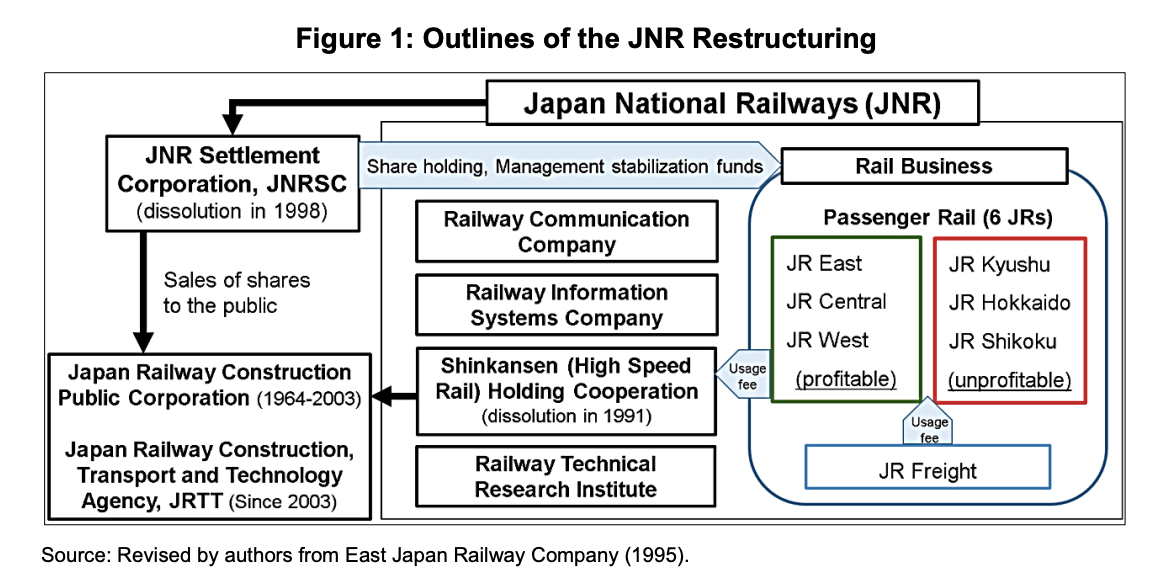
Japanese National Railways was privatised in 1987 and broken into six regional rail companies and a nationwide freight company.
State owned Railway: Prior to Restructuring, Japan’s National Railway (JNR) was a State owned railway. There was constant government intervention at every level. The government approved the matters related to allocation of budgeting, operation plans, fares etc.
The huge organization: JNR was spanned the entire country with a large number of employees, resulting in inflexible budget formulation, and a lag in satisfying customer needs. In particular, a lack of a clear understanding of the actual management conditions by region or division made it difficult to implement strong corporate strategies.
The large organisations could not respond flexibly to satisfy customers’ changing needs.
Ineffective management: JNR’s unified nationwide management was ineffective to understand respond to the local needs. The labour union failed to see the worsening finances and refused to cooperate with the management.
Competition with other transport modes: Increasing competition from other modes of transport eventually led to massive financial failures for JNR.
Huge Debt & High Operating Ratio: JNRs share in passenger transport volume dropped sharply from 55% in 1955 to 23% in 1985. The share of freight transport volume dropped more drastically from 52% to 5% over this same period. Abnormally high personnel expenses (amounting to 78% of total revenues at their peak, compared with about 40% for private railways) and JNR’s consistent policy was to continue to cover its deficits by borrowing led to annual loss in 1985.
By 1987, JNR’s debt was over ¥27 trillion ($280 billion at 2009 exchange rates) and the company was spending ¥147 for every ¥100 earned.
Means, JNR was making huge losses for operation of Trains.
The aims of privatization of a state owned JNR was to- • Eliminate external interference • Clarify management responsibility • Normalize labor-management relations • Diversify business fields • Create manageable scales • Strengthen regionalized management and collaboration • Remove irrational interdependence • Promote incentives for competition and marketization
How privatised: Restructuring of Japanese Railways
The main problem with JNR was two-fold:
The company was too large an organization to be managed properly and
it had to operate under political influence as evidenced by its operation of even unprofitable lines built only for political purposes.
Thus, the Japan’s National Railway was privatised and restructured on the Geographical and Functional basis.
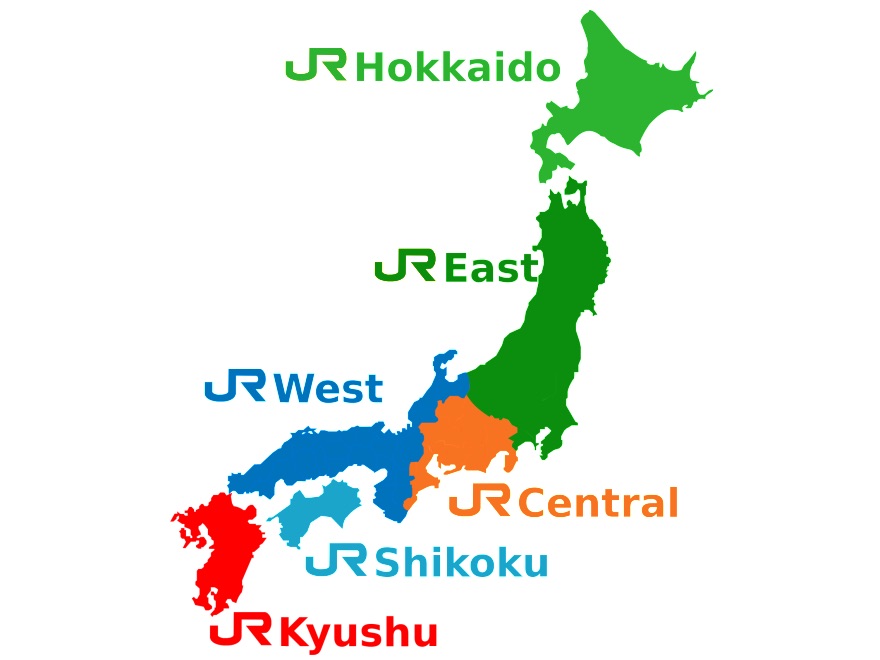
The Japanese Railway privatisation divided JNR into six private regional passenger companies (JRs) and a nationwide freight carrier; JR Freight.
The Japanese Railway privatisation of 1987 led to the Regional subdivision by geographical demand upon six regional passenger railway companies, and each company would gain control over decisions about which lines to operate and which lines to close.
• Hokkaido Railway Company (JR Hokkaido) • East Japan Railway Company (JR East) • West Japan Railway Company (JR West) • Central Japan Railway Company (JR Tokai) • Shikoku Railway Company (JR Shikoku) • Kyushu Railway Company (JR Kyushu) • Japan Freight Railway Company (JR Freight)
Horizontal separation (or regional subdivision): Three on the main island of Honshu and one each on the three islands of Hokkaido, Shikoku, and Kyushu.
Functional distinction (or passenger-freight distinction): functional distinction of freight and passenger market was made. The JR freight was separated from the JR passenger and allowed to borrow tracks from infrastructure-holding passenger JRs, instead of holding the infrastructure itself.
Vertical integration (or operation and infrastructure integration); Each JR company owns the rolling stock and infrastructure. If a rail operator needs access to another company’s tracks for operation is allowed based on negotiation between infrastructures providing company and the operator.
lump-sum subsidies for low-density JRs: Management Stability Fund (MSF) was established for passenger trains in Hokkaido, Shikoku, and Kyushu islands, where the population was low.
Unique about privatisation of Japan Railways
In Japan, the former Japan National Railways was split up along regional lines and then everything was sold together. For example, JR East, centred on the city of Tokyo, owns its tracks, its trains and its stations outright. A private JR Central operates from Nagoya and JR West from Osaka, but the unprofitable JR Hokkaido, which operates many rural lines on Japan’s northernmost island, is still 100 per cent publicly owned.
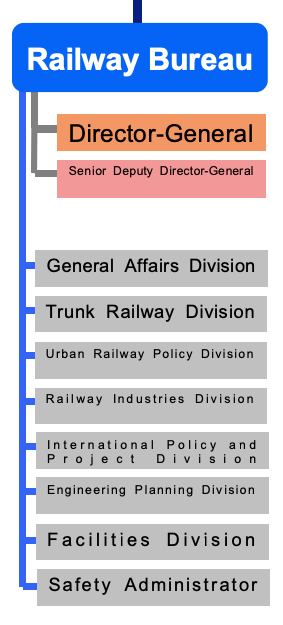
In India, the Ministry of Railways is responsible for the country’s rail transport. Similarly, in Japan, Ministry of Land, Infrastructure, Transport and Tourism is having Rail Bureau for managing the rail transport.
Railway Bureau of Japan is having following sub-divisions.
What do you think of the privatisation of Indian Railways? Would it be successful in India, if Railway privatised? Let us know in the comments section below.
Group ‘B’ Final seniority list as on 01.04.2018 & 01.01.2019
Railway Board, vide letter No. E(GP)2013/1/31 dated 23.12.2019, asked Zonal Railways/PUs’ for seniority lists of Group ‘B’ officers of organised services as on 01.04.2018 & 01.01.2019 for promotion to Group ‘A’. But, required seniority list of railway officers have not yet been furnished from most of the Railways so far.
Page updated on 08.10.2020…
As on date, Final seniority list of railway officers has been issued only for Traffic, Accounts, Personnel and S&T departments.
Based on these seniority lists Group ‘B’ officers are promoted to Group ‘A’ services. Group ‘A’ officers are directly recruited by the Union Public Service Commission (UPSC), and Group ‘B’ officer are promotee officers from Group ‘C’ staff.
S&T Department: Final seniority list of Group ‘B’ officers of Indian Railway
The provisional integrated seniority lists of Group ‘B’ officers of Signal & Telecom department of Indian Railways as on 01.04.2018 and 01.01.2019 were issued by Railway Board on date 11.08.2020. In response thereto, several representations were received which were examined. Also certain discrepancies have been pointed by some of the Railways. Accordingly, necessary corrections have been carried out.
The final seniority list as on 01.04.2018 (Annexure-I) and 01.01 2019 (Annexure-II) are enclosed for immediate circulation.
Traffic Department: Final seniority list of Group ‘B’ officers of Indian Railway
The provisional integrated seniority lists of Group ‘B’ officers of Traffic Department of Indian Railways as on 01.04.2018 and 01.01.2019 were issued by Railway Board on date 23.07.2020. In response thereto, several representations were received which were examined. Also certain discrepancies have been pointed by some of the Railways. Accordingly, necessary corrections have been carried out.
The final seniority list as on 01.04.2018 (Annexure-I) and 01.01 2019 (Annexure-II) are enclosed for immediate circulation.
Accounts Department: Final seniority list of Group ‘B’ officers of Indian Railway
The provisional integrated seniority lists of Group ‘B’ officers of Accounts Department of Indian Railways as on 01.04.2018 and 01.01.2019 were issued by Railway Board on date 22.06.2020. In response thereto, several representations were received which were examined. Also certain discrepancies have been pointed by some of the Railways. Accordingly, necessary corrections have been carried out.
The final seniority list as on 01.04.2018 (Annexure-I) and 1.01.2019 (Annexure-II) are enclosed for immediate circulation.
Personnel Department: Final seniority list of Group ‘B’ officers of Indian Railway
The provisional integrated seniority lists of Group ‘B’ officers of Accounts Department of Indian Railways as on 01.04.2018 and 01.01.2019 were issued by Railway Board on date 04.06.2020. In response thereto, several representations were received which were examined. Also certain discrepancies have been pointed by some of the Railways. Accordingly, necessary corrections have been carried out.
The final seniority list as on 01.04.2018 (Annexure-I) and 01.01.2019 (Annexure-II) are enclosed for immediate circulation.
Electrical Department: Provisional seniority list of Group ‘B’ officers of Indian Railway
On the basis of Group ‘B’ seniority lists of Electrical Engineering Department as on 1.4.2018 and 1.1.2019 furnished by different Railways /PUs, provisional integrated Group ‘B’ seniority Lists of Electrical Engineering Department of Indian Railways on All India basis as on 1.4.2018 and 1.1.2019 have been prepared and are enclosed at Annexure-l and Annexure-II.
Stores Department: Provisional seniority list of Group ‘B’ officers of Indian Railway
On the basis of Group ‘B’ seniority lists of Stores Department as on 1.4.2018 and 1.1.2019 furnished by different Railways /PUs, provisional integrated Group ‘B’ seniority Lists of Electrical Engineering Department of Indian Railways on All India basis as on 1.4.2018 and 1.1.2019 have been prepared and are enclosed at Annexure-l and Annexure-II.
As on date 30.09.2020, seniority lists for Mechanical and Engineering departments has not been issued for 01.04.2018 & 01.01.2019. These seniority lists are still have to be sent by Zonal railways to Railway Board.
Eligibility for promotion from Group ‘C’ to Group ‘B’ posts in Railways
The eligibility criteria for appearing in the Selections/LDCEs for promotion to Group ‘B’ posts in the Departments having organised services has been laid down in terms of Board’s letters no. E(GP) 99/2/22 dated 29.03.2010 and 06.05.2014. Consequent upon implementation of the pay structures recommended by the VII Pay Commission, the said eligibility conditions have since been reviewed by the Railway Board and it has been decided to make following changes therein:
i)For Group ‘B’ selections (70% quota), Group ‘C’ employees working in Level 6 and above in Pay Matrix with 3 years of non-fortuitous service in Level 6 and above in Pay Matrix (including non-fortuitous service rendered in the corresponding pre-revised grade pay) will be eligible.
Group ‘C’ employee working in Level 6 and above, and
3 years of non-fortuitous service in Level 6 and above
ii) For Group ‘B’ selections (30% LDCE quota), Group ‘C’ employees working in Level 6 and above in Pay Matrix with 5 years of non-fortuitous service in Level 6 and above in Pay Matrix (including non-fortuitous service rendered in the corresponding pre-revised grade pay) will be eligible.
Group ‘C’ employee working in Level 6 and above, and
5 years of non-fortuitous service in Level 6 and above
(iii) However, for Selections/LDCEs for promotion to Group ‘B’ posts in Accounts department, Group ‘C’ employees fulfilling the above mentioned conditions should also have qualified the Appendix-3 IREM Examination.
For Accounts Department employee should also have qualified Appendix-3 IREM Examination additionally.
iv) In the integrated seniority of Group ‘C’ employees eligible for Group ‘B’ selections (70% quota) in all departments having organised services except Accounts department, employees in Level 7 of the Pay Matrix will be placed above those in Level 6 of the Pay Matrix. In either category, the relative seniority of employees coming from different streams will be determined with reference to length of non-fortuitous service in Level 7 or Level 6 in the Pay Matrix, as the case may be.
v) In the integrated seniority of Group ‘C’ employees eligible for Group ‘B’ selections (70% quota) in Accounts Department, employees in Level 8 in Pay Matrix will be placed above those in Level 6 in Pay Matrix. In either category, the relative seniority of employees coming from different streams will be determined with reference to length of non-fortuitous service in Level 8 or Level 6 in Pay Matrix, as the case may be.
NHSRCL opens Technical bids for 28 Steel bridges and 88 km of viaduct between Vadodara and Ahmedabad for MAHSR corridor
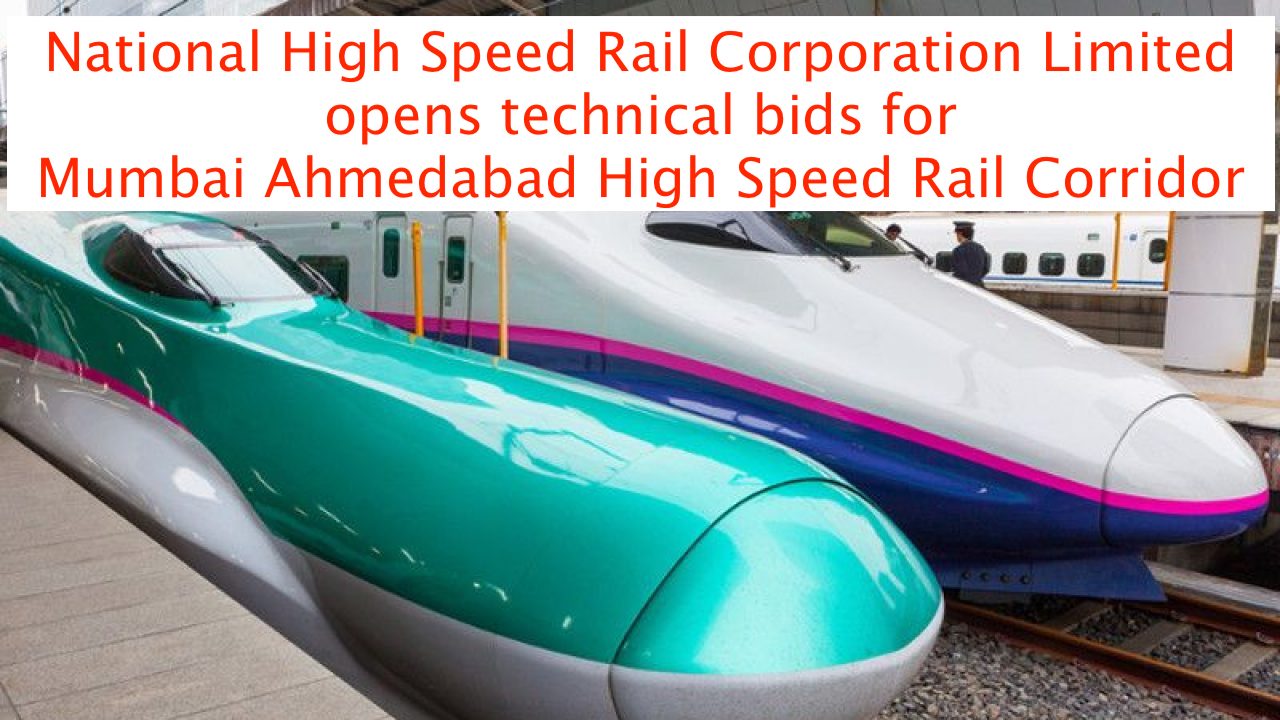
National High Speed Rail Corporation Limited (NHSRCL) opens technical bids for two packages today for Mumbai Ahmedabad High Speed Rail (MAHSR) Corridor.
Tender invited for Two Packages
Procurement and Fabrication of 28 steel bridges for crossing over railway lines, rivers, highways, road crossings and other structures (P-4)
Design and Construction of 88 km (Approx) of viaduct between Vadodara and Ahmedabad in Gujarat including construction of elevated HSR station at Anand/Nadiad.(C-6), 5 Bridges and 25 crossings.
8 Bidders participated for Procurement and Fabrication of 28 steel bridges
Out of 8 bidders, 7 are Indian companies and 1 is a consortium between Indian and Japanese company.
Following 7 Indian Companies participated in bid…
Tata Projects Ltd.
Afcons Infrastructure Ltd.
Braithwaite & Co. Ltd.Consortium
Bridge & Roof Co. (India) Ltd.
NCC Ltd.
JMC Projects(India) Ltd. &RaheeInfratech Ltd.
ISGEC Heavy Engineering Ltd. – M & B Engineering Ltd. Consortium
A consortium between Indian and Japanese company participated in bid…
8. Larsen & Toubro – IHI Infrastructure Systems Consortium
It is estimated that about 70,000 MT of Steel will be used for the fabrication of 28 steel bridges. NHSRCL has already sensitized the steel industries to cater such a huge demand for the India’s first High Speed Rail corridor.
3 Bidders participated for Design and Construction of 88 Kms viaduct and Anand/Nadiad station
For this package, all 3 were indian companies.
Afcons Infrastructure Limited – IRCON International Limited – JMC Projects India Ltd- Consortium
NCC Limited – Tata Project Ltd.- J. Kumar Infra Projects Ltd. – HSR Consortium
Larsen & Toubro Ltd.
With the opening of these bids, the technical bids covering 64% (325 km out of 508 km) of the total MAHSR alignment including five (5) HSR stations (Vapi, Billimora, Surat, Bharuch and Anand/Nadiad) out of 12 stations and one Train depot at Surat are under consideration.
Do You Know?
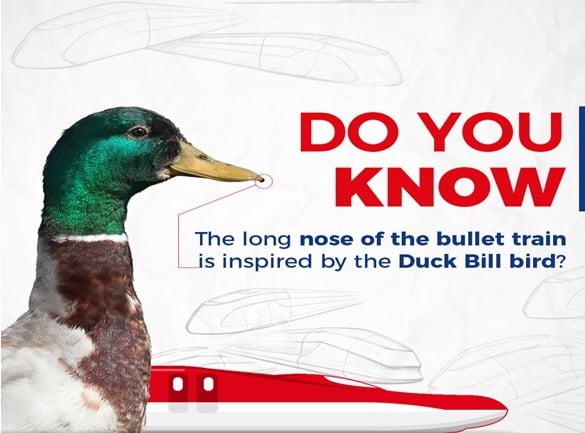
The unique front profile of E5 series of Shinkansen Train is inspired by a bird called #DuckBill. It has been done to combat the side effects of ‘piston effect’ which is caused by trains pushing air through tunnels as they enter & exit them.
Earlier this week, NHSRCL has opened the technical bids for 237 km of viaduct between Vapi and Vadodara in Gujarat including 4 elevated HSR stations and one Train depot at Surat where all the three bidders comprising seven (7) leading Indian infrastructure companies had participated.
The Indian Steel and Cement industries and their allied supply chains will get a big boost from these tenders.
Mumbai–Ahmedabad High Speed Rail Corridor (MAHSR)
The first Bullet Train between Mumbai to Ahmedabad to be run in India, with the technical and financial assistance of Government of Japan. With total 12 stations in the States of Maharashtra, Gujarat and Union Territory of Dadra and Nagar Haveli, the corridor will have a length of 508.17 Km.
Where high speed rail will cover 155.76 kms in the state of Maharashtra (7.04 Kms in Mumbai sub-urban, 39.66 kms in Thane district & 109.06 kms in Palghar district), 4.3 kms in union territory of Dadra & Nagar Haveli and 348.04 kms in the state of Gujarat.
Main highlights of Mumbai-Ahmedabad High Speed Train in India
First Bullet Train in India
High Speed Train between Mumbai to Ahmedabad
Highest Speed of Bullet Train 320 Km/hr.
12 Stations between Mumbai- Ahmedabad
508.17 Km long distance
1 hr. 58 min. Fast Bullet train time from Mumbai to Ahmedabad
2 hr. 57 min. Slow Bullet Train from Mumbai to Ahmedabad
Fast Bullet train stoppage at Surat & Vadodara only
Slow bullet train will stop at all stations
92% elevated track
Bullet Train service will start by year 2023
High speed rail will cover total 12 stations
First 4 stations are in Maharashtra and remaining 8 stations will be in Gujarat.
Mumbai
Thane
Virar
Boisar
Vapi
Bilimora
Surat
Bharuch
Vadodara
Anand
Ahmedabad, and
Sabarmati.
A Fast Bullet Train service limited stop (in Surat & Vadodara) service will cover complete distance in 1 hr. and 58 mins and will stop at Surat and Vadodara stations only.
A Slow Bullet Train service will stop at all 12 stations and will take 2 hr. 57 min to cover the complete distance from Mumbai to Ahmedabad.
High speed rail will be operating at a speed of 320 Km/hr at an elevated (10 to 15 m) track above the ground on a viaduct all along except 26 kms in Mumbai, which will be underground.
All stations will be elevated except Bandra Kurla Complex station (Mumbai), which will be underground.
Operational Plan of MAHSR Bullet Train
Operational control centre will be at Sabarmati.
Initially, trains will have total 10 coaches with a seating capacity of 750 passengers, which will be further increased to 16 coaches and seating capacity of 1250 passengers.
There will be 35 trains per day/one direction.
1 train every 20 mins in peak hours, and
1 train every 30 mins in non-peak hours.
Train frequency will be further increased one train every 8 mins in future.
Mumbai-Ahmedabad High Speed rail will be equipped to handle 17,900 passengers one way daily which will be increased up to 92,900 passengers in future.
National High Speed Rail Corporation Limited (NHSRCL)
National High Speed Rail Corporation Limited (NHSRCL), a separate Special Purpose Vehicle has been set up to implement the Mumbai-Ahmedabad High Speed Rail Project.
High speed rail training center in Vadodara
High Speed Rail Training Institute, Vadodara is being set up alongside National academy of Indian Railways (NAIR), Vadodara. This training institute will be the training ground for all NHSRCL staff.
It is aimed that High-Speed Rail Training Institute, Vadodara will serve as a back bone for future development of other High-Speed Corridors in India.
The construction of the High Speed Rail Training Institute at Vadodara has commenced as also pre-construction activities like land acquisition, geo-technical investigation, etc. have been taken on hand.
Training institute is expected to start working in Dec 2020. Officers/staff trained in Japan along with Japanese experts will impart training at this institute.
High Speed Rail Corridors in Indian Railways
The Railways is continuously making efforts for improving speed of both passenger and freight trains. Improvement in average speed of trains is a continuous exercise for Railways.
A Memorandum of Cooperation has been signed with Government of Japan for Mumbai-Ahmedabad High Speed Rail (MAHSR) project which includes transfer of technology and Make in India.
At present, Mumbai-Ahmedabad High Speed Rail (MAHSR) corridor is the only HSR Project which is sanctioned and the same is under execution with the technical & financial cooperation from Government of Japan. This project is targeted for completion by the year 2023.
Further, Ministry of Railways has decided to undertake Detailed Project Report (DPR) for the following six High Speed Rail (HSR) corridors:
About Indian Railway Institute of Civil Engineering, Pune
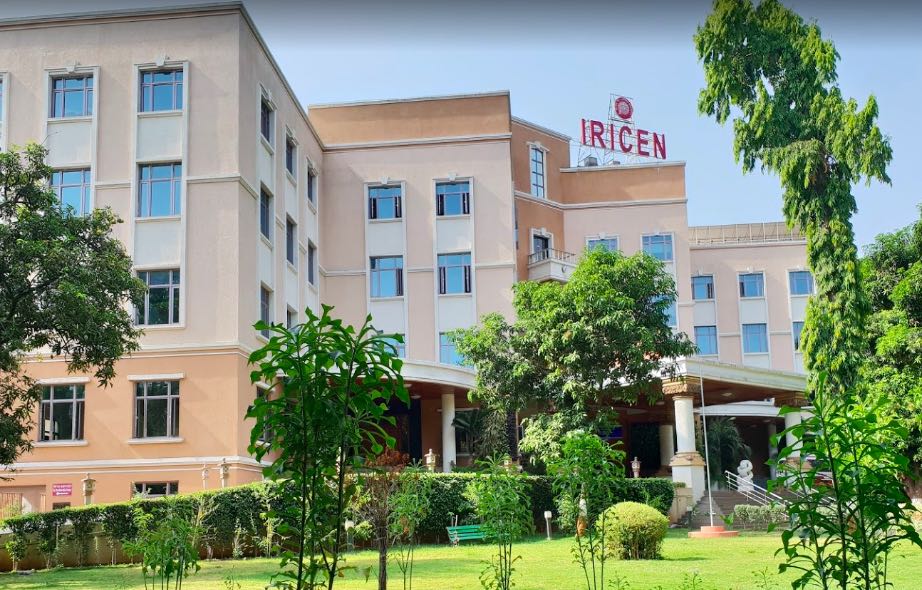
Indian Railway Institute of Civil Engineering (IRICEN) is the Centralised Training Institute for the IRSE officers of the Indian Railway. IRSE officers are mainly Civil Engineers and they are recruited through the Engineering Service Examination (ESE), conducted every year by the UPSC.
IRICEN started in 1959 as the Permanent Way Training School for the entry level Civil Engineers. In year 2003, the institute is certified as ISO 9001-2000 training institute.
Indian Railway Institute of Civil Engineering, Pune, Maharashtra
The institute is responsible for most of the training courses for the officers of the Indian Railway Service of Engineers (IRSE).
After Recruitment, the IRSE probationers are given 18 months’ intensive training in various training institutes of Indian Railways.
Most of the training for IRSE officers is imparted by the Indian Railway Institute of Civil Engineering (IRICEN), Pune.
The institute also imparts training for the engineers from various railways of the developing countries as well as other government departments, private organisations.
How to Reach IRICEN, Pune
IRICEN is located in the historical and cultural city of Pune, Maharashtra. It is within 3 km of Pune Railway Station and can be reached within 8 minutes by road.
Contact:
Address: 11-B, South Main Road, Koregaon Park, Pune, Maharashtra 411001.
IRICEN is most advanced training institute in its infrastructure, which includes a well-stocked technical library, technology enabled smart class rooms, advanced computer centre, material testing laboratory, model room and rail museum. Most of the classrooms on IRICEN’s campus are technology enabled and they are smart class rooms.
The institute is having most well maintained hostels. The mess and recreational facilities for the trainee officers are also world class.
(1) Green Building at Koregaon Park:-
Classrooms – 5 Nos; capacity -190,
Conference Hall – capacity-36
Committee Room – capacity- 25
Auditorium – capacity- 220
Library – About 40,000 Books, 60 Periodicals and Journals (National & International), IRICEN Journals and Publications
Reading room – seating capacity- 64
Hostel – 120 rooms
Sports Complex and Swimming Pool
PRS for Railway pass reservation (Non cash transaction)
(2) Laboratory in IRICEN
Soil testing lab (28 parameters),
Cement and Concrete testing lab (19 parameters),
Ultra Sonic Flaw Detection (USFD),
Ballast Testing lab (5 parameters),
ND Testing (9 tests),
SURVEY equipment’s and hands on (4 parameters)
(3) Senior Supervisor Training Wing near Pune Railway Station (SSTW):
Classrooms – 3 Nos; Total Capacity-120 (one room with computers),
Conference hall -30 capacity
Auditorium – 100 capacity
Library with Reading room of seating capacity- 25
Hostel – 60 rooms
Calendar of Training Courses at IRICEN
You can check and enroll here for various ongoing and future training programs planned by IRICEN, the Indian Railway Institute of Civil Engineering.
How to get admission in Indian Railway Institute of Civil Engineering?
IRICEN is not a normal degree college or university. It imparts training for the officers’ of the Indian Railways and engineers of the other organisations and countries.
Only Railway officers and staff can get training in this institute. Most of training courses are for Railway Track, Bridges, Tunnels, Level Crossings, Buildings, Water Supply, Drainages, P-Way Material and civil engineering related topics.
Main training areas for civil engineers
Bridges & Structures
Geo-Technical Engineering
Quality Assurance (Civil)
Track Design
Track Machines and Monitoring
P-way Works
Railway officers are recruited through Engineering Service Examination (ESE) and Civil Service Examination (CSE) by Union Public Service Commission (UPSC). And Railway staffs are recruited through various Railway Recruitment Boards (RRB).
Training Resources’ for IRSE Officers at IRICEN
For all the Codes, Manuals & Guidelines… Click Here
Layout calculations 2013 For calculating the lengths and other details required for layouts. This programme has been written in visual basic 2008 and require .Net Framework & Chart. User should read the installation instructions before installing the program.
Program on Realignment of Curves Note: Please use any angle between 10 degrees to 45 degrees for the initial station inclination to get the proper plot of the curve
Policy of Appointment of TADK on the Railways: 01/12/2020
RBE 102/2020: Vide Railway Board Letter No. E(NG)II/2020/SB/5, dated 01.12.2020, Railway Board has issued policy letter for appointment of TADK on the Railways.
Engagement of fresh face substitute as TADK is discontinued with effect from 06.08.2020.
Existing posts and incumbent TADKs will continue…
TADK posts may be filled by regular Railway employees…
In reply of an un-starred question in Lok Sabha, the Minister of Railways submitted that The Ministry of Railways has stopped appointment of TADK with immediate effect vide its order dated 06.08.2020.
Now, officers of Indian Railways will not have facility of appointing Telephone Attendant-cum-Dak Khalasis (TADKs).
Reply submitted by the Railway Minister in Lok Sabha
Un-starred question no. 1645 of Lok Sabha, answered by Minister of Railways on 21.09.2020 as follows…
(a). Q. The number of khalasis or bungalow peons working at the residence of senior officials as on date along-with the criteria for appointment as khalasis and their nature of duties and emoluments paid;
Ans. There are 4227 Telephone Attendant cum Dak Khalasis (TADK)/Bungalow peons working in Indian Railways as on date. Initial engagement of bungalow peons/TADK is made as fresh face substitute with the personal approval of the General Manager on verification and recommendation by the concerned officer. These candidates are required to meet educational qualification, age and medical fitness criteria for appointment prescribed for direct recruitment of Level-1 (erstwhile Group D) employees. These appointees are paid in Pay Level-1 of Seventh Central Pay Commission’s pay matrix starting at ₹18000 and allowances as admissible. TADKs assist officials to whom they are attached. Their duties include attending to calls, recording movement of dak/files, assisting an officer in camp office, and doing official duties related to breakdowns, disaster management, field inspections and other line duties.
(b). Q. Whether the Government has received complaints of abuse and ill treatment of these khalasis by officers;
Ans. No complaints of abuse or ill treatment of bungalow peons/TADK by the officers have been reported. However, few instances of grievances of TADKs have been reported by the Zonal Railways which are examined and redressed according to departmental rules and procedure.
(c). Q. If so, whether the Government had formed a Joint Secretary level committee to review the policy and if so, its outcome thereof;
Ans. Yes, Sir. A committee of Executive Directors was constituted to examine alternative mechanisms in place of existing one for appointment of TADK. The committee has since submitted its report and it has been considered by the Ministry of Railways.
(d). Q. Whether the Government is now considering to bar new appointments to the post of khalasis; and
Ans. The Ministry of Railways has stopped appointment of fresh face substitute as TADK with immediate effect vide its order dated 06.08.2020.
(e). Q. if so, the details thereof?
Ans. The Ministry of Railways has stopped appointment of fresh face substitute as TADK with immediate effect vide its order dated 06.08.2020.
Railway officers have to work round the clock i.e. 24 X 7 X 365 days, hence assistance is required like personal assistant, helper and caretaker.
TADKs assist officials to whom they are attached.
Their duties include attending to calls,
recording movement of dak/files,
assisting an officer in camp office, and
doing official duties related to breakdowns, disaster management, field inspections and other line duties
To attend the telephones of officers at their residence.
To work as Dak khalasi for delivering letters and parcel posts to other offices.
Assisting officers in various office works at home.
Managing the camp offices at officer’s residence.
The TADK assists him in not only sorting out the papers, but also run to control offices to deliver positions. They deliver the control positions on time to the houses of other officers & supervisors also.
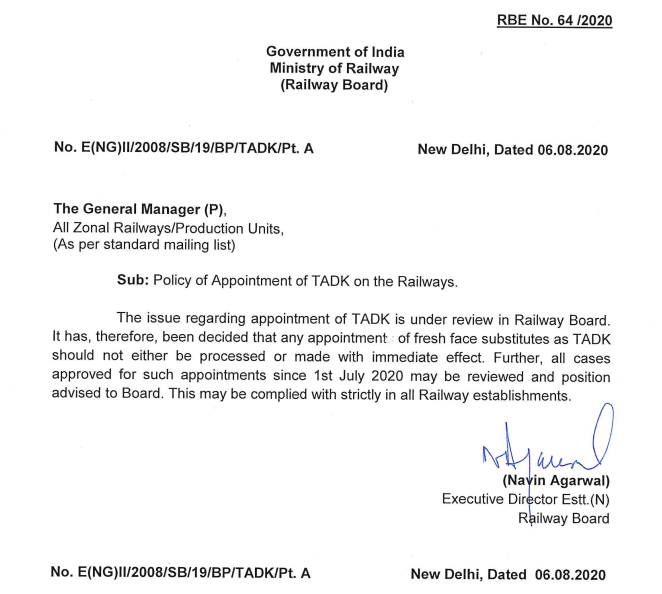
Policy of Appointment of TADK: RBE No. 64/2020
Vide Railway Board’s letter No. E(NG)II/2008/SB/19/BP/TADK/Pt. A, dated 06.08.2020, Railway board issued order on “Policy of Appointment of TADK on the Railways”. This order was to completely ban the appointment of bungalow peons in railways in future.
As per RBE No. 64/2020: The issue regarding appointment of TADK is under review in Railway Board. It has, therefore, been decided that any appointment of fresh face substitutes as TADK should not either be processed or made with immediate effect. Further, all cases approved for such appointments since 1st July 2020 may be reviewed and position advised to Board. This may be complied with strictly in all Railway establishments.
Officer associations represented against the ban on Bungalow peons. And requested Railway board to restore the facility of TADK as per existing practice.
FACT:As on date.There are 4227 Telephone Attendant cum Dak Khalasis (TADK)/Bungalow peons working in Indian Railways
FROA wrote to CEO & CRB for Retention of TADK/ Bungalow Peon
The proposed review of the present selection process of TADK has led to sense of anguish and apprehension amongst the officers fraternity. Zonal federations have requested to continue with the existing system
FROA in its letter to CEO & CRB, requested that the present system of selection of TADKs has been in vogue since long and has several inherent advantages. A TADK selected through the officer concerned imparts a sense of safety, confidence, trust and privacy for the families of the officers.
FROA further mentioned that, this issue should hence be seen not only from the point of view of officers, but also of the welfare and security of their families during course of discharge of officers duties. Moreover, similar selection procedure already exists in several Judicial and Civil administrations.
Representation submitted by South Central Railway officer’s Association
SCROA wrote letter to Chairman of Railway Board to withdraw the letter dated 06.08.2020. Association further requested to restore the facility without making any changes in the engagement process of TADK.
SUB: Policy on appointment of TADK facility attached to the Railway officers.
Ref: No. RBE No.64/2020: letter no-E (NG)II/2008/SB/19/BP/TADK/Pt. A dt. 06.08.2020.
With reference to above, Railway officers are deeply shocked and anguished over the sudden decision of Railway Board stopping the facility of TADK/Bungalow peon. In this regard, a virtual meeting was held on 07.08.2020 and officers associations have passed the following resolution.
Railway officers, due to the nature of their duties, have to work round the clock i.e. 24 X 7 X 365 days and most of the times, they have to be in the field, i.e. away from their family, either for restoration of works, which are related to safety of the train operations or for commissioning of new projects/works.
Due to round the clock duties, they are not in a position to provide adequate support at their home front. To mitigate the officer’s sufferings to some extent, the facility of TADK has been provided and the system is functioning very smoothly to the satisfaction of the officer availing the facility.
Strong misconceptions exist among various persons regarding TADK facility for the Railway officers with the thoughts of British legacy and luxury etc., A Proper understanding of Railway working system can only enable person to appreciate and understand the real necessity of extending this facility.
The present policy of engagement of TADK is also quite streamlined. Since the officers are away from the family members, especially children, a person, with whom the officer is having the trust & confidence only, can be engaged and any change in the existing system will definitely have devastating effect on the family members of the officers.
Besides this, TADK (Bungalow peons) are SSC qualified and being selected after due verification process of personnel branch and also being inducted in the main stream i.e various departments of Railways in safety category. These TADKs will have at least 4 to 5 yrs of general experience in railway working. Past experience shows that These TADKs are more loyal towards Railway and having feeling of Railway family.
Already, one major decision of merging the cadre of all the Railway services has been taken as a part of ambitious transformation to bring all the services under one umbrella .i.e. Indian Railways Management Service (IRMS) amidst many apprehensions and officers have not come back to normalcy. That being reality, another decision has been taken unilaterally, without understanding the field necessity of the officers, to abolish the practice of engaging TADK, which is highly demoralising and dampening the working spirit of the officer’s fraternity.
The facility of the TADK is a minor one when comparing the sacrifices being made by the Railway officers. In fact, there is a demand to extend this facility to all the officers, including Assistant /Junior & Senior scale also, since they also sacrifice similarly.
Every Railway official understands the dire need of the austerity measures in view the financial conditions arisen owing to Covid-19 pandemic and they are sweating a lot to bring the system out of the dire straits. At this stage, stopping this kind of trivial things not only paralyses the officers which will have impact on the administration.
Revenue enhancement and expenditure control can be brought into the system by adopting right suggestions emanating from field, streamlining the procedures and right sizing of the organisation. But, taking up such paltry and unilateral measures have deep impact on officer’s performance and eventually have adverse impact on train working.
The nature of TADK job involves the close interaction with family members of the officer concerned. Hence, the selection process should involve the respective officer as the selected candidate should be loyal and trust worthy while discharging his duties.
Misuse of TADK facilities like other facilities not only by the Railway officials but by other officials is a matter of concern, and is individual choice. Such instances flared up in past in Railways, and for this concern officials have been suitably punished under well established DAR rules. This type of act by some individual officials cannot be cited as a reason to curtail the privilege to entire fraternity. Most importantly, rules can be further formed or strengthen to curb such type of wrong practices by the wrong doers. In this regard suggestions may be sought from the officer fraternity.
Finally, Railway services are provided with meagre privilege/facilities like Bungalow peon/TADK service and Pass. These are only minor privileges where talented aspirants in the market are looking at joining in the Railway services.
Delayed date of Joining of Direct officers effecting DITS and Future Promotion Aspects
Under the circumstances, Railway Board is requested to restore the facility without making any changes in the engagement process of TADK, which will boost the morale of the officer’s fraternity, who are always dedicating their life and services to the betterment of the Railway Organisation.
Submitted for the kind consideration please.
President/SCROA
REPRESENTATION SUBMITTED BY EAST CENTRAL RAILWAY OFFICERS ASSOCIATION
Vide letter No. ECROA/2020/Aug-1, Dated: 07.08.2020, ECROA, Hajipur wrote letter to the Chairmen of Railway Board for continuation of existing appointment policy of TADK.
Sub: Continuation of existing appointment policy of TADK on the Railways.
Officers of ECR have represented and protested against unilateral change in subject matter circulated vide above referred letter. The issues in details are as below:-
Unlike other Central Government offices, nature of the job in Railways warrants availability of officers 24x7x365 & they are required to be on toe on most of the time. It can be illustrated as below:
Review of previous day’s performance is presented to the Railway officer in the form of morning position.
Co- ordination has to be done with control, officers in the field, supervisors in the frontline and colleagues for the residual problems of the previous day and to plan for the present day otherwise train operations will come to a grinding halt in a matter of days. This entire activity is performed on Railway Telephone, DOT Telephone and now also on the Mobile & may last well above two hours on a normal day.
The TADK assists him in all this except in the use of mobile phones. In no other service such a requirement exists on a regular basis. Hence, TADK acts as a substitute to the requirements of camp office set-up.
The TADK assists him in not only sorting out the papers, but also run to control office for delivering and fetching papers & to the houses of other officers and supervisors for this purpose. He often serves the duties of errand for the officers.
Railway operations are round the clock and need to be monitored accordingly. The TADK is an unavoidable help to the officer in this entire stretch of back-breaking work. That is the reason the TADK’s working hours are essentially intermittent, i.e. he is available for twelve hours during the day with the officer in the morning, in the afternoon and again in the evening with extended breaks in between. The railway officer, however, continues his work without any rest.
Railway officer has to perform several duties in the night including inspections of stations, workshops, yards and trains along with travel on the footplate of a locomotive or on trolleys frequently as a specified assigned duty. He needs an assistant to carry his papers, measuring instruments and implements.
A Railway Officer is required to attend to accidents and mishaps including traffic disruptions caused by natural calamities and social unrests for which he often has to move at night and remain at site for days without a break, even foregoing sleep and rest. A TADK needs to travel with him to attend to not only the officer’s needs, but to act as a messenger on the spot, carry his papers and implements etc.
As illustrated above, such sudden and unilateral decisions without due consultation with the officer’s bodies, severely affects the morale and motivation of officers at the field level. Moreover, if this facility is withdrawn or nature changed, it may have adverse effect to the serving as well as bright prospective candidates to the Railway service.
The present appointment policy regarding TADK is quite streamlined. Since TADK has to be with the officer all the time, hence element of personal choice is inevitable for the sake of trust. In case, other mode of selection is adopted then the assigned person may not be having trust of officer and may interfere officer’s work as well as personal affairs. Moreover, the existing system of absorption also renders TADK loyal as it instills sense of secure future for him, thereby maintaining his devotion for the system.
The selection of TADK is subject to official scrutiny at various levels in the Personnel Department and due care is always being taken before personal approval & sanction of GM.
Appointment of TADK is a completely transparent system, if any malpractice is noticed, the same is investigated by Vigilance and there are instances when officers have been punished.
The policy is in prevalence since a long time and serving well. Changing the policy at this time when COVID-19 pandemic is spreading gives a feeling of helplessness among officers. Therefore, it is requested to kindly recall the above mentioned letter and restore the previous practice. In case of any change, Officers’ Bodies and Association must be taken into confidence.
Submitted for kind consideration please.
(K.D. Ralh)
President/ECROA & PCE/ECR
Representation submitted by other officer associations
NWROA mentioned in his representation that, the decision taken vide letter referred above is a retrograde step. If this facility is withdrawn or mode of selection is changed then it shall have adverse impact on 24* 7 availability and efficient discharge of the duty by the officers which in turn shall affect the performance of Railways.
The nature of the Job of a TADK spreads into the most private space of the officer. Personal selection ensures that the officer and his family are most comfortable with the individual who has been appointed.
Any previously unknown appointee may not be in concordance with the concerned officer and may not extend the sense of safety and security of the family. As such it would ultimately lose the very functional utility of the TADK. It is also a time verified fact that the TADKs who have been absorbed after their tenure are highly sought after in the field as they are more disciplined, productive and assimilating. This is because they are chosen after due scrutiny based on their most sincere psychological attitude for their duties and rigorously trained for their future job personally by the officer concerned and therefore well acquainted to discharge Railway duties.
It is pertinent to mention that selection of TADK is not an arbitrary procedure, rather there are clearly laid down guidelines including eligibility criteria with completely transparent system.
Representations submitted by RDSO officer association
Officers of RDSO are agitated on this unilateral change in above mentioned policy. A meeting of Officers’ Association of RDSO was held today and issues regarding TADK were discussed in detail. The following resolution has been passed:
Such sudden and unilateral decisions without due consultation with the officer’s bodies, severely affects the morale and motivation of officers. Moreover, it is one of the attractions of the aspirants to join Railway services on preference. If this facility is withdrawn or nature changes, it may have adverse effects on the serving as well as bright prospective candidates to the Railway service.
The present policy regarding TADK is quite streamlined. The person of officer’s choice is being kept at the house. In case, another mode of selection is adopted then the assigned person may not be having trust of the officer and may interfere with the officers work as well as personal affairs and there is a huge chance of the officers family getting suffered.
The selection of TADK is subject to official scrutiny at various levels in the Personnel Department and due care is always being taken before personal approval and sanction of GM.
It is a completely transparent system, if any malpractice is noticed, same are being investigated by Vigilance and there are instances when officers are punished.
The policy has been in prevalence since a long time and serves well, changing the policy at this time when COVID-19 pandemic is spreading is giving a kind of helplessness among officers. Therefore, it is requested to kindly recall the above mentioned letter and restore the previous practice. In case of any change, Officers’ Bodies and Association must be taken into confidence.
As confirmed by your good self that the entitlement of TADK will continue ‘as it is’ through whatsapp message, course correction of the wrong perception created in general public by publicity of above in Newspaper and Social Media, is needed and necessary rejoinder in this regard may also be issued at Railway Board level.
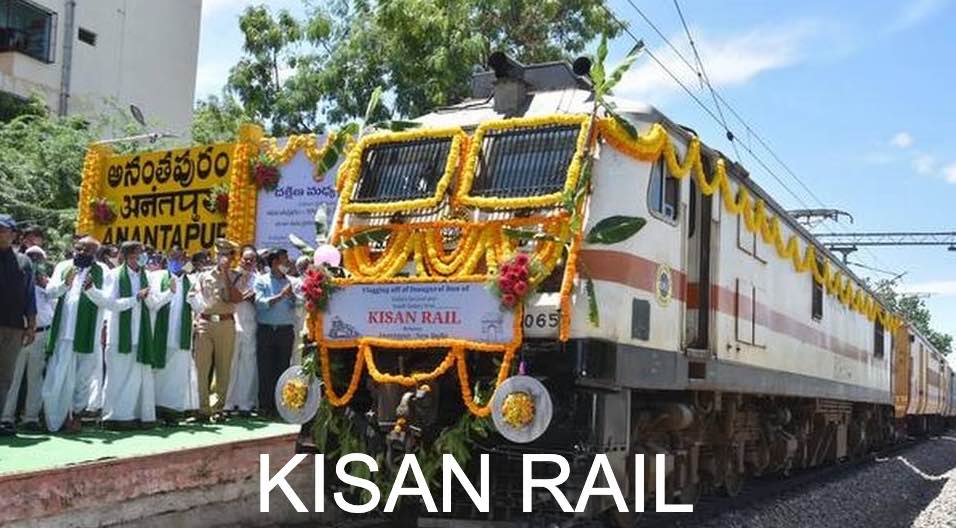
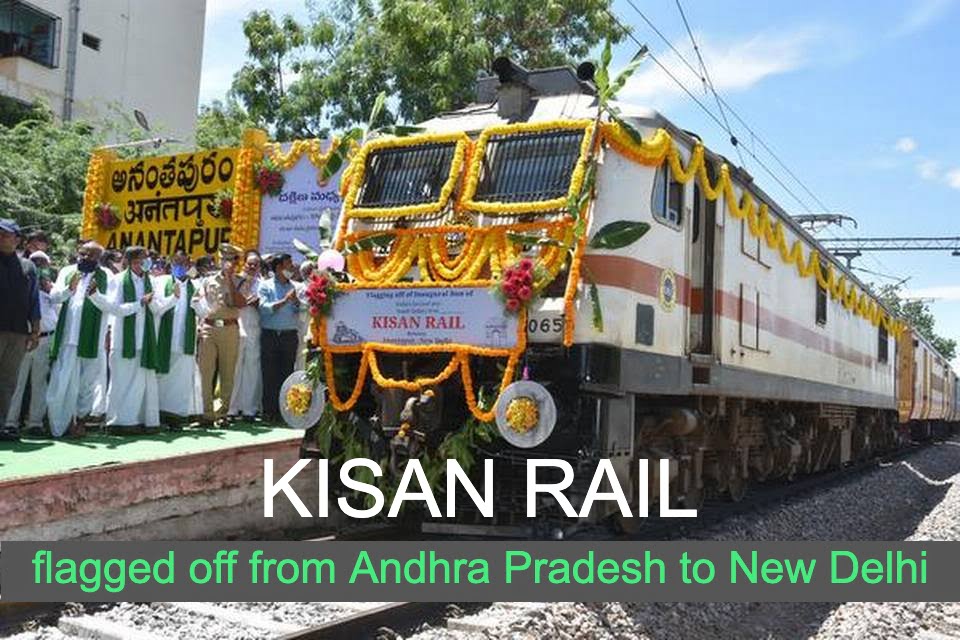
South India’s First “Kisan Rail” flagged off from Anantapur (Andhra Pradesh) to Adarsh Nagar (New Delhi)
Kisan Rails are the first ever multi commodity trains. Kisan Rail will ensure that agro products reach from one corner to another corner of the country. The Indian Railways has introduced the first “Kisan Rail” from Devlali (Maharashtra) to Danapur (Bihar).
It is the first Kisan Rail from South India connecting to National capital for the benefit of the farmers. The Indian Railways have started Kisan Rail with a motive to encourage the villages and farmers. It is a great day for farmers. Kisan Rail was announced in the budget. Agriculture produce needs best possible distribution and returns. Indian farmers have proved that they would never be deterred by any calamity or challenge. Kisan Rail will ensure that agro products reach from one corner to another corner of the country.
Highlights
The Inaugural Run of Anantapur – New Delhi Kisan Rail was Flagged off through Video Link today i.e. 9th September, 2020.
First Kisan Rail from South India connecting to National capital.
The rake is loaded with 14 parcel vans.
04 vans load meant for Nagpur and another 10 Vans load for Adarsh Nagar.
Totalling 332 tonnes of agro products.
The inaugural train loaded with Tomato, Bananas, Sweet Orange, Papaya, Muskmelons and Mangoes.
The train provides fast transport connectivity between Anantapur to New Delhi.
Distance of 2150 Km being covered in approximately 40 hours.
Anantapur is fast becoming the Fruit Bowl of Andhra Pradesh. More than 80% of the 58 lakh MT of fruits & vegetables in the district is marketed out of the state, particularly to the north Indian States of Delhi, UP, Punjab and Haryana among others. Earlier this was being transported by roadways which was not only time taking but also leading to reduction in price realisation of the farmers due to enroute damages.
Transportation by railway provides a safe, reliable and fast transportation which will aid in better price realisation for the farmers and thereby helping in better incomes for the farmers and traders.
The Railway team at Guntakal (particularly the newly set up Business Development Unit) along with the cooperation of the District Administration and State Government Officials have played a crucial role in making the farmers/traders aware of the benefits in loading by railways, which led to today’s inaugural rail.