Notice: Function WP_Scripts::localize was called incorrectly. The $l10n parameter must be an array. To pass arbitrary data to scripts, use the wp_add_inline_script() function instead. Please see Debugging in WordPress for more information. (This message was added in version 5.7.0.) in /home4/railmu7v/public_html/wp-includes/functions.php on line 6170
Notice: Function WP_Scripts::localize was called incorrectly. The $l10n parameter must be an array. To pass arbitrary data to scripts, use the wp_add_inline_script() function instead. Please see Debugging in WordPress for more information. (This message was added in version 5.7.0.) in /home4/railmu7v/public_html/wp-includes/functions.php on line 6170
Notice: Function WP_Scripts::localize was called incorrectly. The $l10n parameter must be an array. To pass arbitrary data to scripts, use the wp_add_inline_script() function instead. Please see Debugging in WordPress for more information. (This message was added in version 5.7.0.) in /home4/railmu7v/public_html/wp-includes/functions.php on line 6170
Notice: Function WP_Scripts::localize was called incorrectly. The $l10n parameter must be an array. To pass arbitrary data to scripts, use the wp_add_inline_script() function instead. Please see Debugging in WordPress for more information. (This message was added in version 5.7.0.) in /home4/railmu7v/public_html/wp-includes/functions.php on line 6170
Skip to content
Indian Railways have issued a Policy on Development of Goods-sheds at small/road-side stations through Private Investment.
The Policy aims at augmenting terminal capacity through private participation by allowing setting up of new goods-shed facilities and developing existing goods-sheds.
Salient features of the Policy are as under:-
Private parties permitted to develop goods wharf, loading/unloading facilities, facilities for labour (resting space with shade, drinking water, bathing facilities, etc) approach road, covered shed and other related infrastructure. The facilities are to be created/developed by the private party through its own investment.
All developments for the proposed facility will be as per approved Railway designs, and constructed to approved Railway standards and specifications.
Railways shall not levy any departmental or any other charges for the construction.
The facilities created by the private party shall be used as common user facility, and no preference or priority will be granted to the traffic of the party over the traffic of other customers.
Responsibility for maintenance of assets and facilities created shall be vested with the party during the agreement period.
Incentives under the scheme: Share in the Terminal Charges (TC) and Terminal Access Charges (TAC), as the case may be, for all the inward and outward traffic dealt at the goods-shed for five (05) years, from the date of completion of the work.
The party seeking the least share (TC/TAC) shall be selected through competitive bidding, to be done At Divisional Level.
Additional revenue for party through – utilization of available space for establishing small canteen/tea-shop, advertisements, etc.
This policy for Development of Goods-sheds at small/road side stations will surely benefit the economic activities for small industries all over the country.
Good-sheds are provided at the stations where Goods are loaded, unloaded in the Goods trains. Sometimes, before loading or unloading goods are also required to stored in the goods-sheds provided at the station.
Goods-sheds are provided connectivity through railway track (siding) from the railway station of Indian Railways.
50% Subsidy on transportation of fruits & vegetables
In a massive incentive to the farmers, Kisan Rail Freight transportation of notified fruits and vegetables subsidized by 50%.
As a further support and incentive for the farmers using the services of Kisan Rail, Ministry of Railways and Ministry of Food Processing Industries have decided that the 50% subsidy on transportation of notified fruits and vegetables (under ‘Operation Greens – TOP to Total’ scheme of MoFPI) shall be granted directly to Kisan Rail – for which MoFPI will provide necessary funds to Ministry of Railways.
Kisan Rail ensures agro products reach from one corner to another corner of the country in a quick time by faster transportation benefitting both the farmers and the consumers.
Kisan Rail is surely changing the lives of farmers with the assurance of better price with faster & cheaper transportation, providing seamless supply chain, preventing the destruction of perishable farm produce thereby opening up the scope to increase the income of farmers.
The Kisan Rail catering to the requirements of small farmers and small traders is proving to be not only a game changer but also a life changer as it fulfils the endeavour of increasing the income of farmers.
Status of Kisan Rails:
The first Kisan Railon07.08.2020: ex Devlali (Nashik, Maharashtra) to Danapur (Patna, Bihar), was inaugurated on 07.08.2020 – as a weekly train. Subsequently on popular demand the train has been extended to Muzaffarpur (Bihar), and has also been made bi-weekly. In addition, link coaches – from Sangla and Pune – have also been introduced which joins this Kisan Rail at Manmad.
Third Kisan Railon09.09.2020:– from Bengaluru (Karnataka) to Hazrat Nizamuddin (Delhi) – was inaugurated on 09.09.2020, as a weekly train.
Fourth Kisan Railon14.10.2020:– from Nagpur & Warud Orange City (Maharashtra) to Adarsh Nagar Delhi – was inaugurated on 14.10.2020.
It is worth mentioning that Indian Railways is continuously making efforts to move the agro products through freight trains. Even during the lockdown, the freight trains of Indian Railways were moving to ensure continuous supply of essential commodities so that no part in the country should face any hardship. There has been significant improvement in loading of crops like wheat, pulses, fruits, vegetables with more rakes.
About Operation Greens (TOP to TOTAL) -MoFPI
Scheme approved on 10.06.2020, Scheme guidelines notified on 11.06.2020
Ministry of Food Processing Industries (MoFPI) has recently extended the Operation Greens Scheme from Tomato, Onion and Potato (TOP) to all fruits & vegetables (TOTAL) for a period of six months on pilot basis as part of Aatmanirbhar Bharat Abhiyan.
The salient features of the guidelines are as below:
Objective:- The objective of intervention is to protect the growers of fruits and vegetables from making distress sale due to lockdown and reduce the post – harvest losses.
Vegetables: – French beans, Bitter Gourd, Brinjal, Capsicum, Carrot, Cauliflower, Chillies (Green), Okra, Onion, Potato and Tomato.
Any other fruit/vegetable can be added in future on the basis of recommendation by Ministry of Agriculture or State Government (List of eligible crops, selected surplus production clusters and trigger price for intervention under the scheme – Please (Click Here).
Duration of Scheme:- for the period of six months from the date of notification i.e., 11/06/2020.
Eligible Entities:- Food Processors, FPO/FPC, Co-operative Societies, Individual farmers, Licensed Commission Agent, Exporters, State Marketing/Co- operative Federation, Retailers etc. engaged in processing/ marketing of fruits and vegetables.
Pattern of Assistance:- Ministry will provide subsidy @ 50 % of the cost of the following two components, subject to the cost norms:
Transportation of eligible crops from surplus production cluster to consumption centre; and/or
Hiring of appropriate storage facilities for eligible crops (for maximum period of 3 months);
Submission of claim for subsidy – Eligible entities, who comply with the aforesaid essential criteria may undertake the transportation and/or storage of notified crops from notified surplus production cluster, without any prior approval from MoFPI and thereafter submit their claim on online portal https://www.sampada-mofpi.gov.in/Login.aspx.
The applicant should register on the portal before carrying out transportation/storage of fruits and vegetables. For Registration, please (Click Here).
For list of districts of each crops mentioned in Serial No. 7.5 of Horticulture Statistics at Glance 2018 published by Ministry of Agriculture, which will be taken as eligible production clusters subject to meeting of the criterion of essential conditions, please (Click Here).
These festival special services will be run to clear the festive rush, in addition to already running more than 300 mail/express trains.
Travellers to Kolkata, Patna, Varanasi and Lucknow will have more festival trains to cater the anticipated festive rush of Durga Puja, Dussehra, Diwali and Chhatt puja.
Guidelines issued by Railway administration for prevention of spread of corona virus:
Railway Protection Force has issued guidelines for travellers as the festive season is approaching.
The general public is has to desist from the following acts or omission while being in railway stations, train or other railway area:
1) Not wearing a mask or wearing a mask improperly.
2) Not maintaining social distancing.
3) Coming to railway area or station or boarding a train after having declared Covid Positive.
4) Coming to railway area or station or boarding a train after giving samples for testing of corona virus and awaiting result.
5) Boarding a train after having been denied to undertake travel by the health check up team at the railway station.
6) Spitting or wilful ejection of body fluid/waste in public area.
7) Activities which may create unclean or unhygienic conditions or affect public health and safety in railway stations and trains.
8) Not adhering to any of the guidelines issued by Railway administration for prevention of spread of corona virus.
9) Any other act or omission likely to aid in spread of corona virus.
Since these acts or omissions are likely to aid in the spread of corona virus, they will tantamount to interference with passenger amenities provided by the railway administration.
Wilful omission or neglect endangering or causing to be endangered the safety of any person may be punished with imprisonment and/or fine under section 145, 153 and 154 of Railway Act 1989.
So plan your journey carefully and follow the guidelines issued by the Indian Railways. Happy Journey and best wishes for Festive Season.
Does writing excite you? Do you have interesting ideas for articles? Do you wish to be a writer and would like to see your articles/blogs featured on a website visited by thousands of people? Or looking to add some weight to your resume? Here is your golden chance! We invite you to send us your articles/blogs which we will feature on our website if we find your content interesting enough!
Email: railministry1@gmail.com
A snapshot!
Some of the categories under which you can submit your articles and blogs are Indian Railways, Trains, Railway Services, IRCTC, Technology in Indian Railways, Career in Railways, Railway board, Ministry of Railways, Departmentalisation in Railways, Foreign Railways and any other topic related to Railways. You can also write about your experiences with Railways. The very purpose of our website is to create value in reader’s life, to make a positive difference in their thoughts, to bring happiness, to give them interesting information and so on. If you think your write-ups can also do the same then let’s get started!
Basic submission guidelines
Depending on the quality of your article/blog, we will accept it and the word limit can range from 500 to 1000 words. And if we find your article too interesting then we can even create special space for your article in our website.
Make sure there is something interesting, catchy or different in your write-up for it to get published.
Make sure the write-up you submit to us has never been featured before on our website.
The write-up should be original and should have no copied content from anywhere. Before even going through it, we check for its originality.
Write-ups should be genuine.
Benefits of writing for our website
You will get a by-line writer’s name and a link to your bio for your featured article.
You can become a member of our editorial team.
Accessibility to thousands of readers.
Receive valuable writing tips from our expert editorial team from time to time
What are we looking for?
Writing is surely an art and it does take efforts to write a good article/blog. Just knowing the perfect grammar is not enough, one has to have some creativity, a fine balance of sensitivity, flair, wit etc to write something which is a good read. So what we expect is quality.
Worth your consideration
Before you send us your article just think if it is really interesting or will make a good read and will interest people. If your article or blog is not just information taken from the internet? Have you contributed something to the existing information and can tell more than what the facts are telling? Just think about all such things before you approach a topic for an article/blog and write on it. It will not only help us choose your article but will also help you carve out a nice for yourself as a writer!
What to keep in mind!
• Go through few article/blogs already featured on our website so that you can get an idea of what our readers enjoy reading and what kind of writing style we appreciate. • Never lose sight of the audience. The important thing is to help others grow and it would be great if you can contribute to it. • And at the end of the day you yourself should be proud of what you have written. • And not to forget about perfect grammar, clarity in the content and well organised- that’s what your article/blog should not fail to reflect.
Selection process
After you submit your article/blog to us, our editorial team will review it and that might take maximum a week. Your article /blog will go through a screening process and hence we hold no promises of publishing it. If its quality matches the benchmark we have set for ourselves, then we will publish it for sure. After its approval, we will inform you. Note: After your article has been featured on our website, then we will become the owner of that article. No further copyright will be acceptable.
How to submit your article?
Make sure you submit your articles/blogs in a word document. Your write should have a separate title. And if you wish to send us the images complementing your article, make sure they are original pictures and have not been taken from the internet. Attach your word document in your email and sent it to us on railministry1@gmail.com.
All the best for your articles! We look forward to your contribution to our website!
Privatisation of Railways is controversial elsewhere, but many of Japan’s privatised rail operators are profitable and efficient. What did they do differently? Has privatisation of the railways really been a success in Japan?
Privatization of state-owned enterprises has been globally prevalent since the 1980s with a primary objective of improving their performance in profitability and provision of better service through the ownership change.
Japanese National Railways was privatised in 1987 and broken into six regional rail companies and a nationwide freight company.
State owned Railway: Prior to Restructuring, Japan’s National Railway (JNR) was a State owned railway. There was constant government intervention at every level. The government approved the matters related to allocation of budgeting, operation plans, fares etc.
The huge organization: JNR was spanned the entire country with a large number of employees, resulting in inflexible budget formulation, and a lag in satisfying customer needs. In particular, a lack of a clear understanding of the actual management conditions by region or division made it difficult to implement strong corporate strategies.
The large organisations could not respond flexibly to satisfy customers’ changing needs.
Ineffective management: JNR’s unified nationwide management was ineffective to understand respond to the local needs. The labour union failed to see the worsening finances and refused to cooperate with the management.
Competition with other transport modes: Increasing competition from other modes of transport eventually led to massive financial failures for JNR.
Huge Debt & High Operating Ratio: JNRs share in passenger transport volume dropped sharply from 55% in 1955 to 23% in 1985. The share of freight transport volume dropped more drastically from 52% to 5% over this same period. Abnormally high personnel expenses (amounting to 78% of total revenues at their peak, compared with about 40% for private railways) and JNR’s consistent policy was to continue to cover its deficits by borrowing led to annual loss in 1985.
By 1987, JNR’s debt was over ¥27 trillion ($280 billion at 2009 exchange rates) and the company was spending ¥147 for every ¥100 earned.
Means, JNR was making huge losses for operation of Trains.
The aims of privatization of a state owned JNR was to- • Eliminate external interference • Clarify management responsibility • Normalize labor-management relations • Diversify business fields • Create manageable scales • Strengthen regionalized management and collaboration • Remove irrational interdependence • Promote incentives for competition and marketization
How privatised: Restructuring of Japanese Railways
The main problem with JNR was two-fold:
The company was too large an organization to be managed properly and
it had to operate under political influence as evidenced by its operation of even unprofitable lines built only for political purposes.
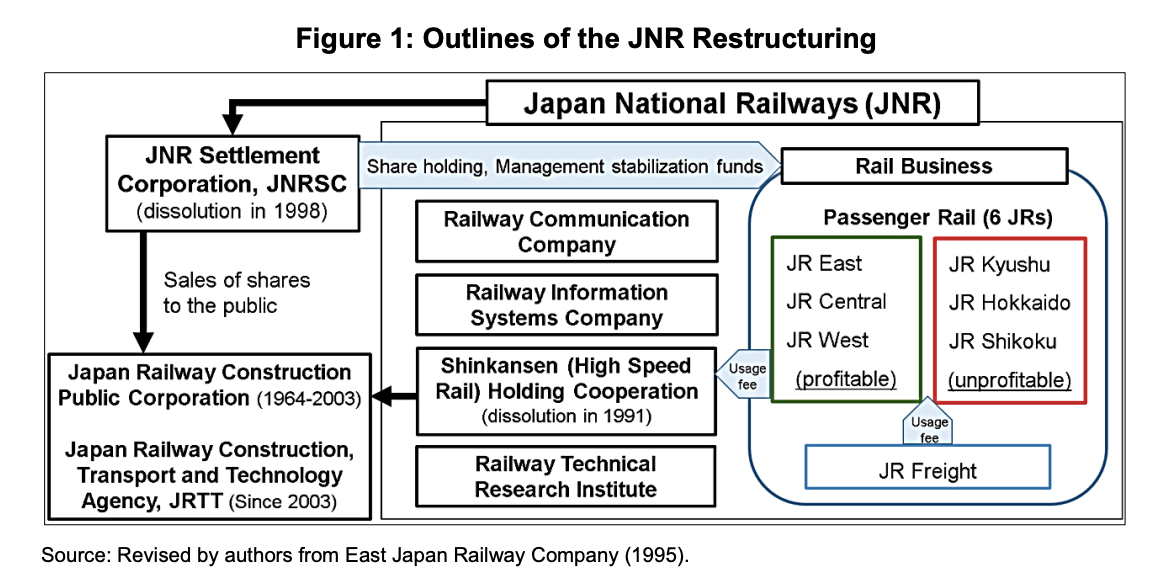
Thus, the Japan’s National Railway was privatised and restructured on the Geographical and Functional basis.
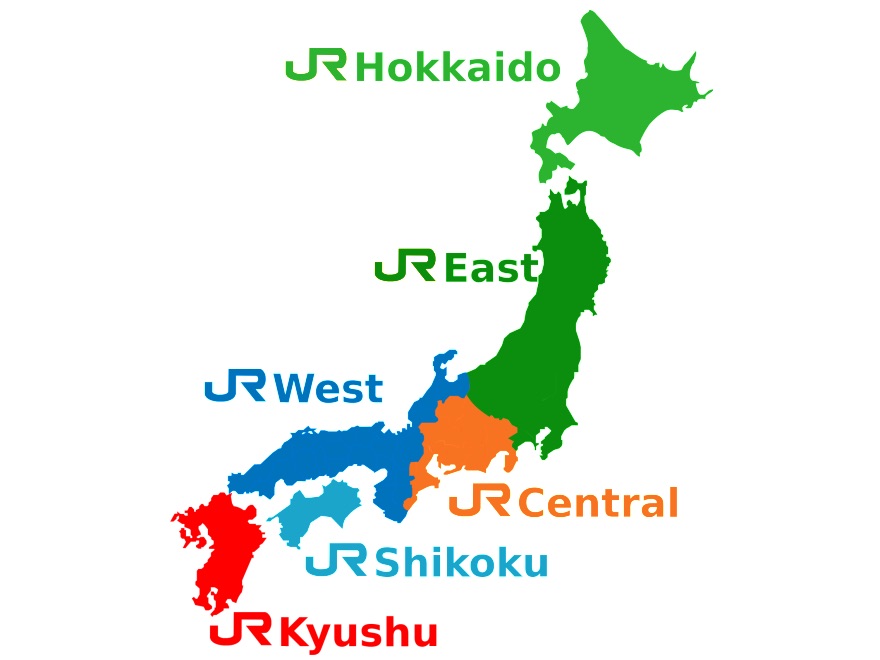
The Japanese Railway privatisation divided JNR into six private regional passenger companies (JRs) and a nationwide freight carrier; JR Freight.
The Japanese Railway privatisation of 1987 led to the Regional subdivision by geographical demand upon six regional passenger railway companies, and each company would gain control over decisions about which lines to operate and which lines to close.
• Hokkaido Railway Company (JR Hokkaido) • East Japan Railway Company (JR East) • West Japan Railway Company (JR West) • Central Japan Railway Company (JR Tokai) • Shikoku Railway Company (JR Shikoku) • Kyushu Railway Company (JR Kyushu) • Japan Freight Railway Company (JR Freight)
Horizontal separation (or regional subdivision): Three on the main island of Honshu and one each on the three islands of Hokkaido, Shikoku, and Kyushu.
Functional distinction (or passenger-freight distinction): functional distinction of freight and passenger market was made. The JR freight was separated from the JR passenger and allowed to borrow tracks from infrastructure-holding passenger JRs, instead of holding the infrastructure itself.
Vertical integration (or operation and infrastructure integration); Each JR company owns the rolling stock and infrastructure. If a rail operator needs access to another company’s tracks for operation is allowed based on negotiation between infrastructures providing company and the operator.
lump-sum subsidies for low-density JRs: Management Stability Fund (MSF) was established for passenger trains in Hokkaido, Shikoku, and Kyushu islands, where the population was low.
Unique about privatisation of Japan Railways
In Japan, the former Japan National Railways was split up along regional lines and then everything was sold together. For example, JR East, centred on the city of Tokyo, owns its tracks, its trains and its stations outright. A private JR Central operates from Nagoya and JR West from Osaka, but the unprofitable JR Hokkaido, which operates many rural lines on Japan’s northernmost island, is still 100 per cent publicly owned.
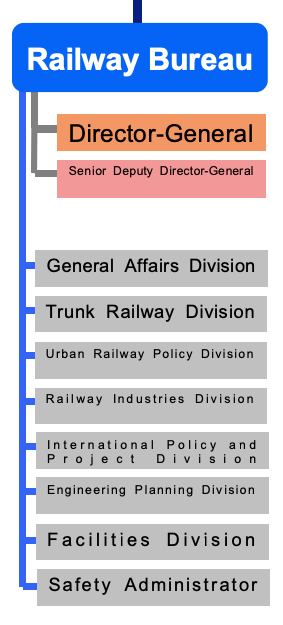
In India, the Ministry of Railways is responsible for the country’s rail transport. Similarly, in Japan, Ministry of Land, Infrastructure, Transport and Tourism is having Rail Bureau for managing the rail transport.
Railway Bureau of Japan is having following sub-divisions.
What do you think of the privatisation of Indian Railways? Would it be successful in India, if Railway privatised? Let us know in the comments section below.
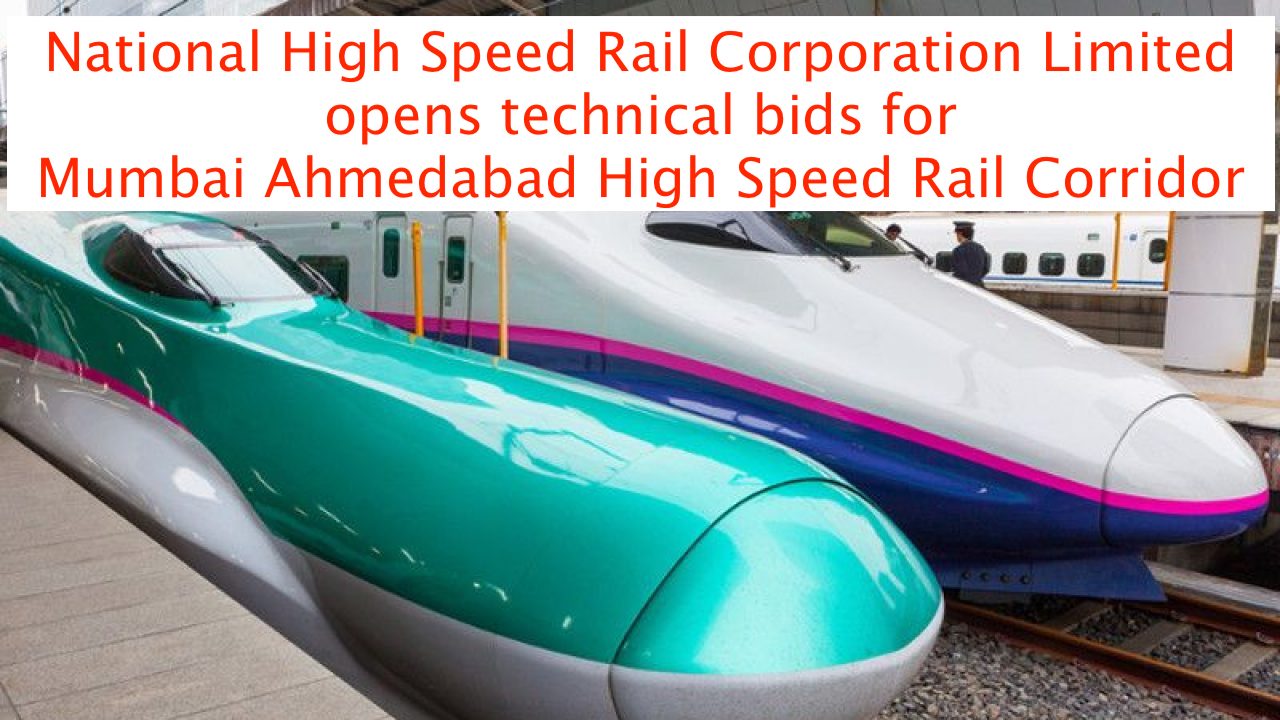
NHSRCL opens Technical bids for 28 Steel bridges and 88 km of viaduct between Vadodara and Ahmedabad for MAHSR corridor
National High Speed Rail Corporation Limited (NHSRCL) opens technical bids for two packages today for Mumbai Ahmedabad High Speed Rail (MAHSR) Corridor.
Tender invited for Two Packages
Procurement and Fabrication of 28 steel bridges for crossing over railway lines, rivers, highways, road crossings and other structures (P-4)
Design and Construction of 88 km (Approx) of viaduct between Vadodara and Ahmedabad in Gujarat including construction of elevated HSR station at Anand/Nadiad.(C-6), 5 Bridges and 25 crossings.
8 Bidders participated for Procurement and Fabrication of 28 steel bridges
Out of 8 bidders, 7 are Indian companies and 1 is a consortium between Indian and Japanese company.
Following 7 Indian Companies participated in bid…
Tata Projects Ltd.
Afcons Infrastructure Ltd.
Braithwaite & Co. Ltd.Consortium
Bridge & Roof Co. (India) Ltd.
NCC Ltd.
JMC Projects(India) Ltd. &RaheeInfratech Ltd.
ISGEC Heavy Engineering Ltd. – M & B Engineering Ltd. Consortium
A consortium between Indian and Japanese company participated in bid…
8. Larsen & Toubro – IHI Infrastructure Systems Consortium
It is estimated that about 70,000 MT of Steel will be used for the fabrication of 28 steel bridges. NHSRCL has already sensitized the steel industries to cater such a huge demand for the India’s first High Speed Rail corridor.
3 Bidders participated for Design and Construction of 88 Kms viaduct and Anand/Nadiad station
For this package, all 3 were indian companies.
Afcons Infrastructure Limited – IRCON International Limited – JMC Projects India Ltd- Consortium
NCC Limited – Tata Project Ltd.- J. Kumar Infra Projects Ltd. – HSR Consortium
Larsen & Toubro Ltd.
With the opening of these bids, the technical bids covering 64% (325 km out of 508 km) of the total MAHSR alignment including five (5) HSR stations (Vapi, Billimora, Surat, Bharuch and Anand/Nadiad) out of 12 stations and one Train depot at Surat are under consideration.
Do You Know?
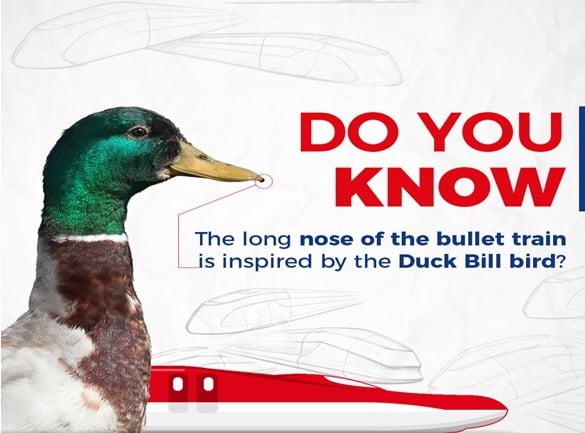
The unique front profile of E5 series of Shinkansen Train is inspired by a bird called #DuckBill. It has been done to combat the side effects of ‘piston effect’ which is caused by trains pushing air through tunnels as they enter & exit them.
Earlier this week, NHSRCL has opened the technical bids for 237 km of viaduct between Vapi and Vadodara in Gujarat including 4 elevated HSR stations and one Train depot at Surat where all the three bidders comprising seven (7) leading Indian infrastructure companies had participated.
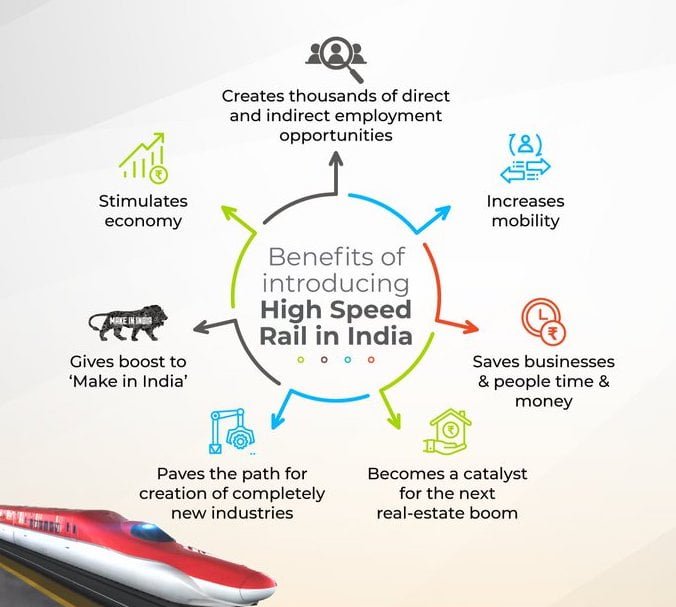
The Indian Steel and Cement industries and their allied supply chains will get a big boost from these tenders.
Mumbai–Ahmedabad High Speed Rail Corridor (MAHSR)
The first Bullet Train between Mumbai to Ahmedabad to be run in India, with the technical and financial assistance of Government of Japan. With total 12 stations in the States of Maharashtra, Gujarat and Union Territory of Dadra and Nagar Haveli, the corridor will have a length of 508.17 Km.
Where high speed rail will cover 155.76 kms in the state of Maharashtra (7.04 Kms in Mumbai sub-urban, 39.66 kms in Thane district & 109.06 kms in Palghar district), 4.3 kms in union territory of Dadra & Nagar Haveli and 348.04 kms in the state of Gujarat.
Main highlights of Mumbai-Ahmedabad High Speed Train in India
First Bullet Train in India
High Speed Train between Mumbai to Ahmedabad
Highest Speed of Bullet Train 320 Km/hr.
12 Stations between Mumbai- Ahmedabad
508.17 Km long distance
1 hr. 58 min. Fast Bullet train time from Mumbai to Ahmedabad
2 hr. 57 min. Slow Bullet Train from Mumbai to Ahmedabad
Fast Bullet train stoppage at Surat & Vadodara only
Slow bullet train will stop at all stations
92% elevated track
Bullet Train service will start by year 2023
High speed rail will cover total 12 stations
First 4 stations are in Maharashtra and remaining 8 stations will be in Gujarat.
Mumbai
Thane
Virar
Boisar
Vapi
Bilimora
Surat
Bharuch
Vadodara
Anand
Ahmedabad, and
Sabarmati.
A Fast Bullet Train service limited stop (in Surat & Vadodara) service will cover complete distance in 1 hr. and 58 mins and will stop at Surat and Vadodara stations only.
A Slow Bullet Train service will stop at all 12 stations and will take 2 hr. 57 min to cover the complete distance from Mumbai to Ahmedabad.
High speed rail will be operating at a speed of 320 Km/hr at an elevated (10 to 15 m) track above the ground on a viaduct all along except 26 kms in Mumbai, which will be underground.
All stations will be elevated except Bandra Kurla Complex station (Mumbai), which will be underground.
Operational Plan of MAHSR Bullet Train
Operational control centre will be at Sabarmati.
Initially, trains will have total 10 coaches with a seating capacity of 750 passengers, which will be further increased to 16 coaches and seating capacity of 1250 passengers.
There will be 35 trains per day/one direction.
1 train every 20 mins in peak hours, and
1 train every 30 mins in non-peak hours.
Train frequency will be further increased one train every 8 mins in future.
Mumbai-Ahmedabad High Speed rail will be equipped to handle 17,900 passengers one way daily which will be increased up to 92,900 passengers in future.
National High Speed Rail Corporation Limited (NHSRCL)
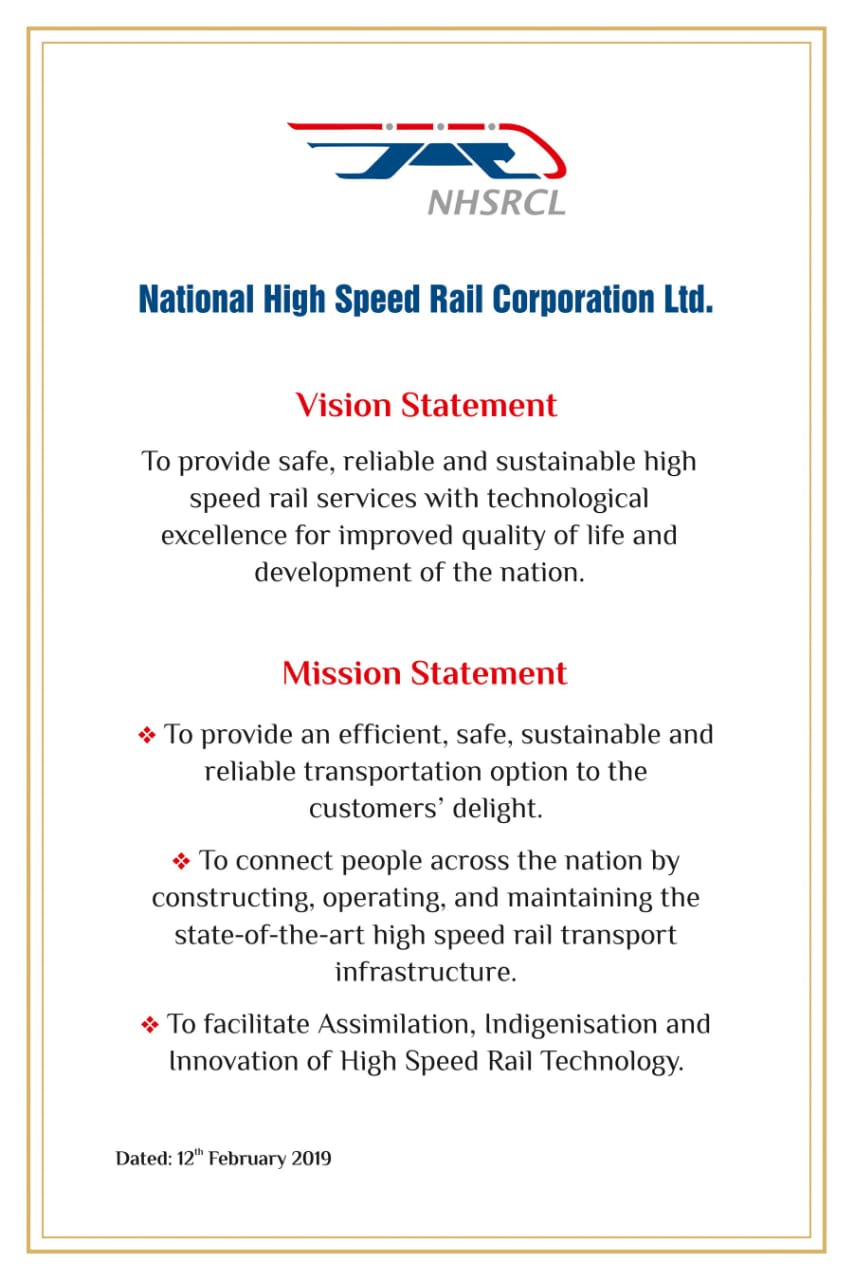
National High Speed Rail Corporation Limited (NHSRCL), a separate Special Purpose Vehicle has been set up to implement the Mumbai-Ahmedabad High Speed Rail Project.
High speed rail training center in Vadodara
High Speed Rail Training Institute, Vadodara is being set up alongside National academy of Indian Railways (NAIR), Vadodara. This training institute will be the training ground for all NHSRCL staff.
It is aimed that High-Speed Rail Training Institute, Vadodara will serve as a back bone for future development of other High-Speed Corridors in India.
The construction of the High Speed Rail Training Institute at Vadodara has commenced as also pre-construction activities like land acquisition, geo-technical investigation, etc. have been taken on hand.
Training institute is expected to start working in Dec 2020. Officers/staff trained in Japan along with Japanese experts will impart training at this institute.
High Speed Rail Corridors in Indian Railways
The Railways is continuously making efforts for improving speed of both passenger and freight trains. Improvement in average speed of trains is a continuous exercise for Railways.
A Memorandum of Cooperation has been signed with Government of Japan for Mumbai-Ahmedabad High Speed Rail (MAHSR) project which includes transfer of technology and Make in India.
At present, Mumbai-Ahmedabad High Speed Rail (MAHSR) corridor is the only HSR Project which is sanctioned and the same is under execution with the technical & financial cooperation from Government of Japan. This project is targeted for completion by the year 2023.
Further, Ministry of Railways has decided to undertake Detailed Project Report (DPR) for the following six High Speed Rail (HSR) corridors:
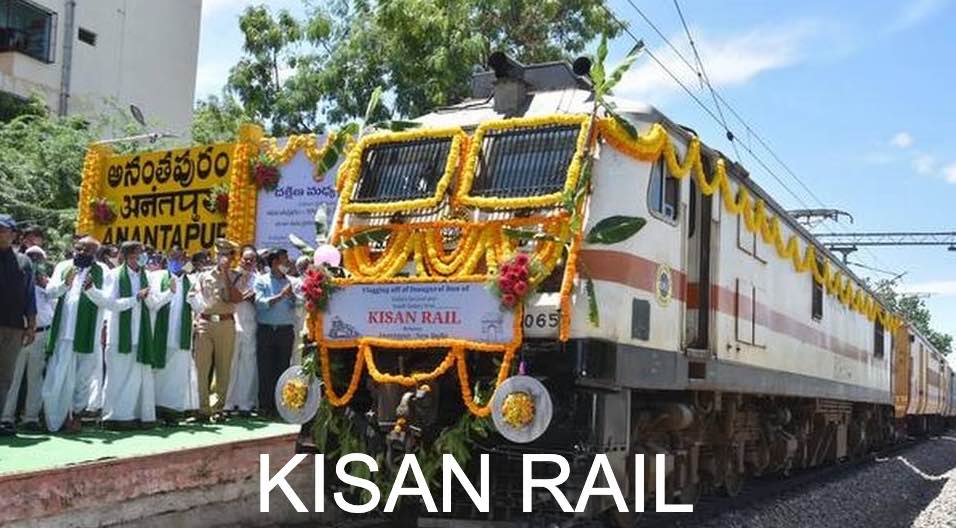
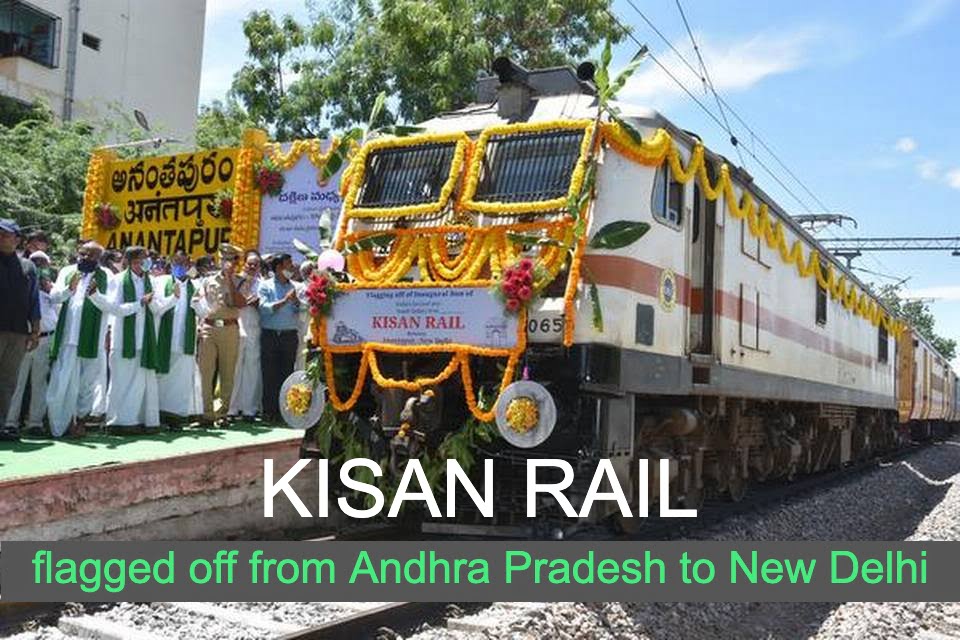
South India’s First “Kisan Rail” flagged off from Anantapur (Andhra Pradesh) to Adarsh Nagar (New Delhi)
Kisan Rails are the first ever multi commodity trains. Kisan Rail will ensure that agro products reach from one corner to another corner of the country. The Indian Railways has introduced the first “Kisan Rail” from Devlali (Maharashtra) to Danapur (Bihar).
It is the first Kisan Rail from South India connecting to National capital for the benefit of the farmers. The Indian Railways have started Kisan Rail with a motive to encourage the villages and farmers. It is a great day for farmers. Kisan Rail was announced in the budget. Agriculture produce needs best possible distribution and returns. Indian farmers have proved that they would never be deterred by any calamity or challenge. Kisan Rail will ensure that agro products reach from one corner to another corner of the country.
Highlights
The Inaugural Run of Anantapur – New Delhi Kisan Rail was Flagged off through Video Link today i.e. 9th September, 2020.
First Kisan Rail from South India connecting to National capital.
The rake is loaded with 14 parcel vans.
04 vans load meant for Nagpur and another 10 Vans load for Adarsh Nagar.
Totalling 332 tonnes of agro products.
The inaugural train loaded with Tomato, Bananas, Sweet Orange, Papaya, Muskmelons and Mangoes.
The train provides fast transport connectivity between Anantapur to New Delhi.
Distance of 2150 Km being covered in approximately 40 hours.
Anantapur is fast becoming the Fruit Bowl of Andhra Pradesh. More than 80% of the 58 lakh MT of fruits & vegetables in the district is marketed out of the state, particularly to the north Indian States of Delhi, UP, Punjab and Haryana among others. Earlier this was being transported by roadways which was not only time taking but also leading to reduction in price realisation of the farmers due to enroute damages.
Transportation by railway provides a safe, reliable and fast transportation which will aid in better price realisation for the farmers and thereby helping in better incomes for the farmers and traders.
The Railway team at Guntakal (particularly the newly set up Business Development Unit) along with the cooperation of the District Administration and State Government Officials have played a crucial role in making the farmers/traders aware of the benefits in loading by railways, which led to today’s inaugural rail.
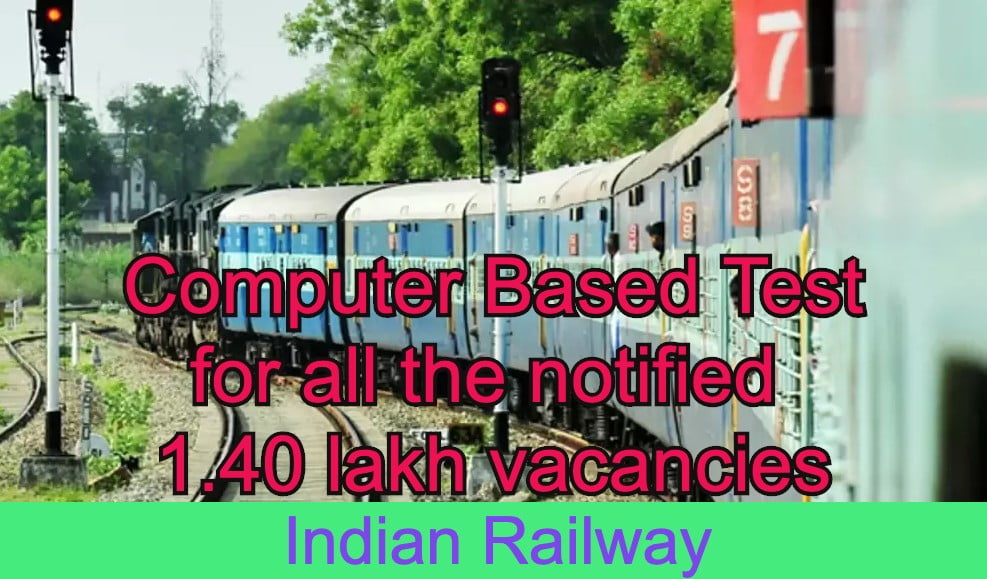
Indian Railways is going to start computer based tests for notified vacancies from 15th December 2020.
Indian Railways had notified 3 types of vacancies, these all vacancies will have computer based test …
For NTPC (non technical popular categories like guards, office clerks, commercial clerks etc)- 35208 vacancies.
For Isolated & Ministerial categories (Steno & Teaches etc)-1663 Vacancies.
For Level 1 vacancies (track maintainers, pointsman etc)-103769 vacancies.
1.40 Lakh vacancies, 2.40 Crore applicants
In all RRBs had notified a total of 1.40 lakh such vacancies for NTPC categories, Level-1 Posts and isolated and miscellaneous categories. Against the above vacancies, RRBs had received more than 2.40 crore applications. The Computer Based Test (CBT) for above vacancies had to be deferred due to Covid-19 pandemic and resultant lockdown which was imposed throughout country.
Scrutiny of the applications had been completed but the process of further examination had got delayed due to covid related restrictions.
1st stage online computer based tests will start from 15 December, 2020
Railway now proposes to commence 1st stage online computer based tests from 15 December, 2020 and necessary action has been initiated in this regard.
RRBs of Railways are committed to hold the Computer Based Test (CBT) for all the notified vacancies and have been actively assessing the ground situation imposed due to pandemic. Now that experience of conduct examination for the JEE for IITs and NEET is there, it was felt that Railways too can start the process which had to be stopped due to Covid pandemic.
SOPs for conduct of examination of this magnitude are being framed. Norms of social distancing and other protocols prescribed by the various Central and State authorities need to be followed which are essential in the interest of safety of candidates.
क्या हो जायेगा रेलवे का निजीकरण, हाल ही में लिए गए रेलवे बोर्ड के निर्णयों से लगता है तो यही है की अब रेलवे का निजीकरण शुरू हो चुका है।
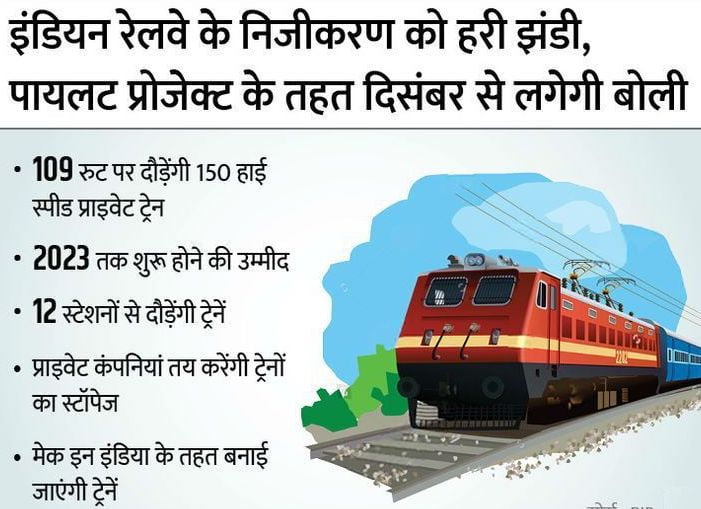
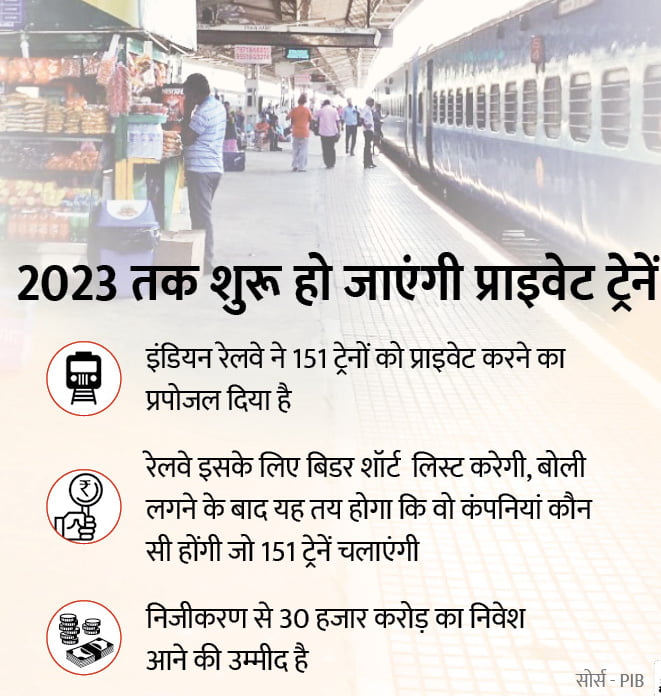
तीन साल में दौड़ेंगी 151 प्राइवेट ट्रेनें
109 व्यस्ततम रूट पर दौड़ेंगी प्राइवेट ट्रेनें
रेलवे के सभी प्रमुख स्टेशन होंगे प्राइवेट
प्राइवेट कम्पनियाँ तय करेंगी ट्रेनों का स्टॉपेज
रेलवे की सभी प्रोडक्शन यूनिट्स एवं वर्कशॉप्स बनेंगी सार्वजनिक क्षेत्र के उपक्रम (PSU)
डेडिकेटेड फ्रेट कॉरिडोर (DFC) में चलेंगी प्राइवेट मालगाड़ियाँ
बुलेट ट्रैन भी होगी प्राइवेट
प्राइवेट गाड़ियों का, स्टेशनों का संचालन किसके हाथों में होगा?
मेरी भारतीय रेल, जिसको Life Line of the Nation भी कहते हैं, बदलावों के दौर से गुजर रही है। पता नहीं इसका भविष्य BSNL जैसा होगा या, जापान रेल जैसा होगा। भारतीय रेल जो अपनों को मिलाती है, लाखों लोगों को रोजगार देती है, और करोड़ों के जीवन को संवारती है।
भारतीय रेल में हो रहे बदलाव दिनों दिन रेलवे के निजीकरण की कहानी लिख रहे हैं। रेलवे के सभी स्टेशनों को डेवलपमेंट के नाम पर निजी हाथों में दिया जा रहा है। रेलगाड़ियों को स्पीड व सुविधाओं के नाम पर निजी लोगों को बेच दिया गया है। रेलवे के सभी कारखानों को PSU बनाकर, उनको भी बेचने की तैयारी लगभग पूरी कर ली गयी है। निजी स्टेशनों, रेलगाड़ियों, एवं कारखानों को चलाने वाले लोग भी निजी कंपनियों के हाथों में होंगे।
तीन साल में दौड़ेंगी 151 प्राइवेट ट्रेनें- रेलवे का निजीकरण
अगले तीन साल में, 2023 तक 151 प्राइवेट ट्रैन चलाने के लिए सरकार ने हरी झंडी दे दी है। ये रेलगाड़ियाँ प्रमुख शहरों के बीच चलाई जाएँगी। ये कहाँ रुकेंगी, इसका निर्णय प्राइवेट लोग करेंगे। इनकी रफ़्तार तेज होगी, ये समय से चलेंगी। इनको चलाने के लिए निजी कंपनियों के ड्राइवर, गार्ड होंगे। इनमें यात्रियों के लिए अधिक सुविधाएँ उपलब्ध करायी जाएँगी, जिसके लिए अधिक किराया वसूला जायेगा। ये एक शुरुआत है, आगे और भी प्राइवेट ट्रैन चलायी जाएँगी। ये ट्रेनें, वर्तमान में चल रही तेजस ट्रेनों के अतिरिक्त चलायी जाएँगी।
109 व्यस्ततम रूट पर दौड़ेंगी प्राइवेट ट्रेनें- रेलवे का निजीकरण
इन प्राइवेट ट्रेनों को प्रमुख शहरों के बीच चलाया जायेगा। आज चल रही प्रमुख ट्रेनों का स्थान, ये प्राइवेट ट्रेनें ले लेंगी। इसलिए ये पहले से सुनिश्चित किया जायेगा की इनको किसी प्रकार का कोई घाटा न हो। प्रमुख शहरों के बीच, प्रमुख समयों पर, हाई रफ़्तार से चलने वाली इन प्राइवेट ट्रेनों को प्रमुखता से चलाया जायेगा।
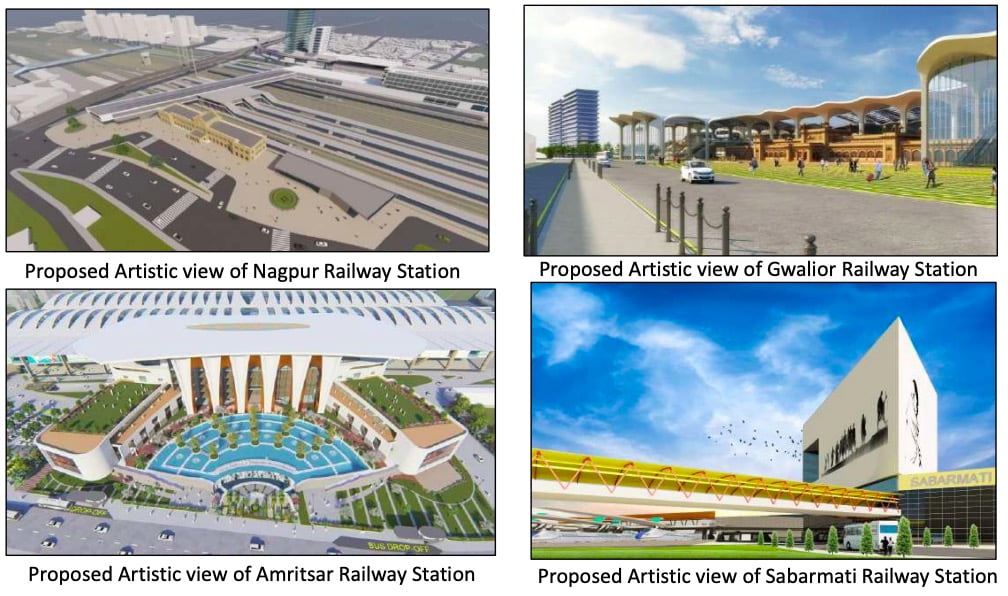
IRSDC will develop self-sustainable railway stations in the country with high standards of safety, comfort, user friendly passenger amenities, value added services and efficiency by adopting the best technological practices, sound financial strategy and optimum utilization of resources.
इन स्टेशनों का संचालन पूर्ण रूप से निजी कंपनियों के पास होगा। इन स्टेशनों पर बड़े बड़े मॉल्स, होटल्स, रेस्टोरेंट्स बनेंगे। प्लेटफार्म टिकट से लेकर, सभी गतिविधियों/सुविधा शुल्कों का निर्धारण प्राइवेट कम्पनियाँ करेंगी। इन स्टेशनों के प्रबंधन का सम्पूर्ण जिम्मा निजी लोगों के हाथों में होगा।
रेलवे की सभी प्रोडक्शन यूनिट्स एवं वर्कशॉप्स बनेंगी सार्वजनिक क्षेत्र के उपक्रम (PSU)
प्रोडक्शन यूनिट्स को PSU में बदलने के लिए पिछले साल ही योजना बना ली थी। PSU में बदलने के पश्चात इनको निजी हाथों में देना आसान हो जायेगा।
अन्य देशों में रेलवे के निजीकरण का इतिहास –
विश्व के कई अन्य देशों में भी रेलवे का निजीकरण हो चुका है जैसे- यूनाइटेड किंगडम, जापान, कनाडा, स्वेडन, ऑस्ट्रेलिया, न्यूजीलैंड आदि। इजिप्ट में भी शुरुआत हो चुकी है।भारतीय रेलवे का आने वाले दिनों में सफर कैसा रहेगा, ये देखने वाली बात होगी। लेकिन देश में बेरोजगारी, गरीबी जैसी समस्याएं कब तक बनी रहेंगी, इसके बारे में कुछ नहीं कहा जा सकता है।
Indian Railways takes series of Initiatives in Tariff and Non-Tariff field to boost Freight Operations
The initiatives taken in Tariff field includes discount on loaded containers, Pond ash/ Moisturised ash (Open wagon), Withdrawal of surcharge of two point/mini rakes (for Cement, Iron and steel, Food grains, Fertilizers), Round trip Traffic (RTT) policy, Long lead concession & Short lead concession.
On mission mode, Indian Railways has taken a number of initiatives to boost Freight Operations inspite of COVID 19 related challenges. Because of these initiatives, the freight loading in the month of August 2020(till 27th August 2020) is 4.3% higher, compare to last year for the same month. In the month of August 2020 (till 27th August 2020) the total freight loading was 81.33 million tonnes which is higher than last year for the same month (77.97 million tonnes).
Utilizing Covid period as an opportunity Indian Railways substantially increase the speed of Freight Trains. 72 % increase in average speed of Freight Trains in the year 2020-21 as compared to last year. 94 % increase took place in speed of Freight Trains in August 2020 compared to August 2019.
[poll id=”4″]
Indian Railways has taken a series of initiatives in Tariff and Non-Tariff field.
Latest Tariff Rationalisation initiatives (measures) taken to boost Freight Operations:
5% discount on loaded containers ( addition to 25% on empty ) for Containers from 03.08.2020.
Discount for Pond ash/ Moisturised ash – Open wagon – 40% for Power plants, Cement from 03.08.2020.
Revision in classification of Industrial salt from 120 to 100A for Chemical Industry from 03.08.2020.
Stabling charges for private Container and Automobile trains waived off till 31st October 2020 for Containers and Automobile from 03.08.2020.
Some other Tariff Rationalisation initiatives (measures) taken by Indian Railways
Withdrawal of Busy Season charge – 15% for All sectors Except Coal, Iron ore and containers from 1.10.2019.
Withdrawal of 5 % surcharge of two point/mini rakes for Cement, Iron and steel, Food grains, Fertilizers, Bulk BOG from 1.10.2019.
Discount for Fly ash – Bagged in open wagon – 40% for Power plants, Cement from 10.05.2020.
Alternate terminal scheme – Rs 56,000 to Rs 80,000 per rake for All sector from 27.06.2020.
Round trip Traffic (RTT) policy – charging of lower class for All sectors from 01.07.2020.
Long lead concession – 15 to 20% for Coal, Iron ore and Iron and steel from 01.07.2020.
Short lead concession – 10 to 50 % for All sector (except coal and iron ore ) from 01.07.2020.
Latest Non-Tariff initiatives (measures) taken by Indian Railways to boost transportation of goods
Two point unloading permitted for Automobile traffic for Automobiles sector from 05.08.2020.
Limit on number of Co-users in Private siding removed for All sectors from 18.08.2020.
All private sidings / Good sheds / Private freight terminals opened up for Parcel traffic for Parcels from 18.08.2020.
Reduced composition for Indented parcels extended till 31.03.202 for Parcels from 18.08.2020.
Extension of time tabled parcel express till 31.12.2020 for Parcels from 19.06.2020.
Application fee for Greenfield PFT reduced from Rs 10 Lakh to Rs 20,000 and completely waived off for conversion of siding to Brownfield PFT for All Sectors from 24.08.2020.
23 more two point combinations opened for steel traffic for Steel sector from 25.08.2020.
Freight and parcel helpline through 13 for All sectors from 26.08.2020.
Distance restriction on Mini rakes of 1500 km removed with a small surcharge for Cement, Iron and steel , Food grains , Fertilizers, Bulk BOG from 27.08.2020.
Inspite of Covid related restrictive challenges, Freight loading in the month of August 2020 (till 27th August 2020) is 4.3% higher, compare to last year for the same month
Other Measures taken by Indian Railways to boost Freight Operations:
Business Development Units (BDUs) set up – Divisions, Zones and Board level.
Restrictions on co-use of private sidings removed – 1,079 private sidings allowed to become private freight terminals effectively.
405 Major Good sheds being improved – Concrete surface, bright LED lighting, better roads & labour facilities – To enable 3 shift operations.
Time tabled parcel trains.
Opening up of export traffic to Bangladesh for Parcels, Containers & Automobile.
Kisan rail introduced from Devlali (Nashik) to Danapur (Patna) on 07.08.2020– Multiple stoppages, Multiple commodities, Multiple parties – Now extended to Muzaffarpur.
Link train from Kolhapur to Manmad also added. Now Bi-weekly from 24.08.2020. Total 04 trips have been completed till Now.