Category Archives: Indian Railway

Indian Railways is the fourth largest Railway in the world and mass transporter of freight and passenger. Know more about the Life line of the nation…

Indian Railway rolls out User Depot Module (UDM) for Stores Management

Digitization of complete Supply Chain of Railway Stores

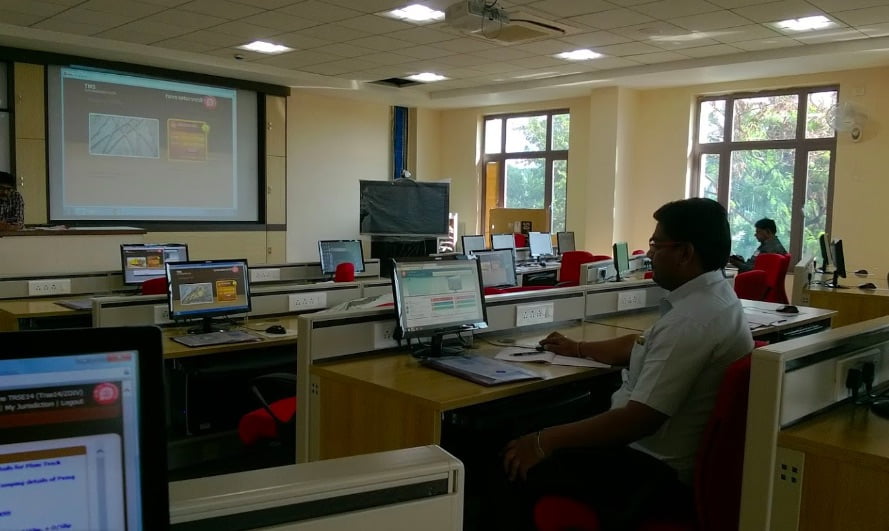
User Depot Module (UDM) developed by CRIS (Centre for Railway Information Systems) was rolled out digitally across all User Depots of Western Railway by Sri P. C. Sharma, Member(T&RS) on 28.09.2020.

Transformation from Manual working to Digital Working…

This system will be implemented shortly across all Zones of Indian Railways. Railway’s supply chain up to Stores Depots has already been digitized, however activities at user end are being done manually.

Implementation of UDM system will bring in transformational changes from manual working to digital working with real time transactions and online information exchange among all stakeholders. This will ensure digitization of complete supply chain, including user depots.

The system will facilitate economy, efficiency and transparency besides improved asset management. It will ensure improved service level and satisfaction to customers.

Intended benefits of UDM:
  • Computerization of the entire Supply Chain i.e. Consignee End / User Depots will also included in Digital Supply Chain (Stores Depots are already there)
  • Optimization of material procurement leading to cost reduction & economy
  • Improved Level of Service to internal as well as external customers
  • Traceability of material usage leading to improved Asset Maintenance
  • Transformational changes from manual working to digital working
  • Real time information exchange among various stake-holders
  • Enhanced efficiency, economy & transparency

On Western Railway, there are around 450 user depot (Stores Depot) which will be o­n-boarded with User Depot Module (UDM) by December 2020. Thereafter, the UDM will be implemented across all Zones of Indian Railways in Mission Mode approach.

Know more about
Indian Railway Stores Service (Stores Department of Indian Railways)

Mahalaxmi Workshop of Western Railway, is the First workshop over entire Indian Railway to implement UDM.

Some of the capabilities of UDM:
  • Creation of Computerized Ledgers
  • Receipt of material:
    • Directly from Vendors or Contractors against Stores Purchase Orders/ GeM Orders / Works Contracts / Cash Purchase / Imprest / Other
    • From Workshops / Other User Depots / Consignees / Field Units
    • From Stores Depots against S-1313 (Combined Requisition-cum-Issue Note) / S-1830 (Imprest) / Non-Stock R-Notes / Sale Issue Notes
    • Against Book Transfer within same User Depot
    • As Unconnected Receipts
  • Generation of digitally signed Consignee Receipt Note (CRN) / Consignee Receipt Certificate (CRC)
  • Issue of material:
    • To End User i.e. Ultimate User
    • To other User Depots/Consignees
    • To Contractors
    • On Book Transfer within same User Depot
    • To Stores Depots on Advice Note
    • To Purchasers as Scrap Deliveries against Auction Sale
  • Placement of Demands on Stores Depots [S-1313 (Combined Requisitioncum-Issue Note) / S-1830 (Imprest Issues)]
  • Provision for Receipt & Issue on Loan & Assistance basis
  • Placement of Demands on User Depots & Demand Management
  • SMS alert to Stock Holder when stock falls below Threshold Limit
  • Issue of material on FIFO basis (First In First Out)
  • Generation of Gate Pass for the material issued
  • Integration with RITES & RDSO Inspection Database
  • Linkage with IRPSM Work ID while issuing material
  • Rejection Handling both Initial Rejection as well as Warranty Rejection
  • Stock Verification (Accounts / Departmental) & Stock Sheet Management
  • Transactions with Non-Computerized User Depots/Consignees
  • Generation of Adjustment Memos for raising Debits on Other User Depots
  • Generation of Daily Material Transaction Report (DMTR)
  • Inventory Management, Consumption Analysis, Shelf-Life based Analysis
  • Provision of various types of MIS/Exception Reports which can be downloaded in MS-Excel by User for further Analysis
  • Real time Stock availability in User Depots & Stores Depots

Additional Capabilities planned:
  • Facility for processing of Non-Stock Demands in UDM (activity presently being done in iMMS).
  • Integration of payment activities on IPAS with digitally signed Consignee Receipt Note (CRN) / Consignment Receipt Certificate (CRC) being generated in UDM once the Module gets stabilized.
  • UDM data will be made available to other applications like Track
  • Management System (TMS) & SLAM (Software for Loco Asset Mgt.) etc.

Requirements at User End:
  • PC / Laptop / Printer / Internet Connectivity
  • Minimum Class-2 Digital Signature Certificate (DSC)
  • Basic knowledge of Computer
  • Consignee Code / email ID / Mobile No. of User

Source: PIB

Also Read

  1. Introduction: User Manual for “User Depot Module” (UDM)
  2. Getting Started: User Manual for User Depot Module (UDM)

More to Read…

RRB NTPC 2020: Exam Pattern, Syllabus, CBT Date & Admit Card

RRB NTPC 2020: Vacancies

Indian Railways had notified a total of 1.40 lakh vacancies for 3 categories.

  • 35208 for NTPC (non technical popular categories like guards, office clerks, commercial clerks etc),
  • 1663 for Isolated & Ministerial categories (Steno & Teaches etc) and
  • 103769 for Level 1 vacancies (track maintainers, pointsman etc).

Against the above 1.40 lakh vacancies, RRBs had received more than 2.40 crore applications.

RRB NTPC 2020 Notification

Railway Board had released Official Notification for RRB NTPC Recruitment 2019-2020 exam on 28th February 2019. Through this recruitment process, various RRBs will recruit 35,208 vacancies for the posts of NTPC (Non-Technical Popular Categories).

Railway RRB NTPC Exam Date 2020 is out to recruit 35,208 vacancies of NTPC for the posts of Non-Technical Popular Categories…

  • Junior Clerk cum Typist,
  • Accounts Clerk cum Typist,
  • Junior Time Keeper,
  • Trains Clerk,
  • Commercial cum Ticket Clerk,
  • Traffic Assistant,
  • Goods Guard,
  • Senior Commercial cum Ticket Clerk,
  • Senior Clerk cum Typist,
  • Junior Account Assistant cum Typist,
  • Senior Time Keeper,
  • Commercial Apprentice and
  • Station Master.
RRB NTPC Exam Date 2020 Declared

Railway Recruitment Board (RRBs) has declared dates for RRB NTPC Exam. RRBs will conduct all railway exams like RRB NTPC, RRC Group-D and RRB Ministerial And Isolated Categories from 15th Of December 2020. A complete exam schedule for RRB NTPC 2020 exam will be announced very soon.

Important dates for RRB NTPC 2020 Exam.

EventsDates
RRB NTPC Notification Release Date28th February 2019
Start Date To Apply Online for RRB NTPC01st March 2019
Last Date To Apply Online31st March 2019
Closing Date & Time for Payment of Application Fee05/04/2019 at 23.59 PM
Final submission of Applications12/04/2019 at 23.59 PM
RRB NTPC Application Status21/09/2020
RRB NTPC Stage-1 Admit Card4 day before the exam
RRB NTPC Exam Dates15/12/2020 (tentative) for Stage-1
RRB NTPC 2020: Admit Card

Admit Card of RRB NTPC can be downloaded once the link has been activated on the official website of RRB. The admit card / hall ticket will be available zone-wise on the Regional Recruitment Boards (RRBs).

The Admit Card for the first stage CBT will tentatively be released in December 2020, one week before the exam dates. After the official releasing of the Admit cards, candidates should follow the instructions mentioned below to download the Admit Card:

How to download RRB NTPC Admit Card 2020?

  • Visit the official websites of respective RRBs
  • Click the admit card download link on the home page
  • Candidates need to enter the user ID (registration number) and password (date of birth)
  • The admit card will appear on the screen
  • Download the admit card
  • Take printouts for future use.
RRB NTPC 2020: Exam Pattern

RRB NTPC 2020 Recruitment Process will have following stages…

  • First Stage Computer Based Test (CBT)
  • Second Stage Computer Based Test (CBT)
  • Typing Skill Test/Computer Based Aptitude Test (as applicable)
  • Medical Examination.
  • Document Verification

Note: 

  1. The Skill Test is applicable for those candidates who apply for the post of Junior Accountant Assistant, Senior Clerk cum Typist and Senior Time Keeper.
  2. The Aptitude Test is for those who have applied for the post of Traffic Assistant and Assistant Station Master.

RRB NTPC Exam Pattern: 1st Stage Computer Based Test (CBT)

  • The 1st Stage CBT is conducted for screening the candidates.
  • The standard of questions for the CBT will be generally in conformity with the educational standards prescribed for the posts.
  • There will be a negative marking of 0.25 Marks for every question, attempted wrong.
  • No marks will be deducted if a question is left unanswered.
  • The exam duration for PWD candidates is 120 Minutes.
  • The normalized score of 1st Stage CBT shall be used for shortlisting of candidates for 2nd Stage CBT as per their merit.

Exam Date for 1st Stage CBT Exam

Railway Board is likely to conduct the NTPC recruitment exam after December 15th, 2020. All candidates who have registered themself for this exam are advised to keep on checking for detailed exam schedule of RRB NTPC 2020 Exam.

Exam NameExam Date
RRB NTPC 2019 (CEN 01/2019)December 15th, 2020 (Tentatively)
RRB Group D Level 1 Posts- RRB CEN 01/2019December 15th , 2020 (Tentatively)

Candidates are advised to visit this page regularly to get latest updates about the RRB NTPC Exam Date for 2019-20 exam.


Stage-1 RRB NTPC Exam, Computer Based Test will have 100 questions:
SectionsNumber of QuestionsTotal MarksDuration
Mathematics303090 minutes
General Intelligence and Reasoning3030
General awareness4040
Total 100100


Minimum percentage of marks for eligibility in various categories:
EligibilityCategoryMinimum Marks
 
Minimum Percentage of Marks required for Eligibility in RRB NTPC examUR40%
EWS40%
OBC (Non creamy layer)30%
SC30%
ST25%
  • These percentages of marks for eligibility may be relaxed by 2% for PwBD candidates in case of shortage of PwBD candidates against vacancies reserved for them.

RRB NTPC Exam Pattern: 2nd Stage Computer Based Test (CBT):

  • There will be 120 questions making a total of 120 marks.
  • The time will not be divided sections-wise.
  • 1/3 of the marks assigned to each question will be deducted for every wrong answer, as negative marking.
  • Normalization of marks will be done.
  • The difficulty of the question level will vary depending on the different level of posts.
Stage-2 RRB NTPC Exam, Computer Based Test will have 120 questions:
SectionsNumber of QuestionsTotal MarksDuration
Mathematics353590 minutes
General Intelligence and Reasoning3535
General awareness5050
Total 120120
RRB NTPC 2020 : Syllabus

The Railway Recruitment Boards (RRBs) has prescribed the syllabus:

SectionsTopics
MathematicsNumber system, Decimals, Fractions, LCM, HCF, Ratio and Proportions, Mensuration, Time and Work, Time and Distance, Simple and Compound Interest, Profit and Loss, Elementary Algebra, Geometry and Trigonometry, Elementary Statistics
General Intelligence and ReasoningAnalogies, and Decoding, Similarities and Differences, Analytical Reasoning, Jumbling, Puzzle, Statement-Conclusion, Decision Making, Completion of number and alphabetical series, Mathematical Operations, Relationships, Syllogism, Venn Diagrams, Data Sufficiency, Statement- Courses of Action, Maps, Interpretation of Graphs. 
General AwarenessArt and Culture of India, Current Events of National and International Importance, Monuments and Places of India, Games and Sports, Indian Literature, General Science and Life Science, History of India and Freedom Struggle, Physical, Social and Economic Geography of India and World, Indian Polity and Governance, General Scientific and Technological Developments, UN and Other important World Organizations, Environmental Issues, Basics of Computers and Computer Applications, Common Abbreviations, Indian Economy, Transport Systems in India, Famous Personalities, Flora and Fauna of India, Famous Personalities, Flagship Government Programs, etc. 
RRB NTPC 2020 Vacancies: 35,208

As per the latest notice of RRB, Railway will recruit 35,208 vacancies for the posts of NTPC (Non-Technical Popular Categories) through Railway NTPC 2019-2020 Exam.

1. Under Graduate Posts :-

  • Minimum Educational Qualification of 12th (+2 Stage) or its equivalent examination, and
  • Age between 18 to 30 Years as on 01.07.2019.
S. No.Name of the postLevel in 7th CPCInitial pay (Rs.)Medical StandardTotal Vacancies(All RRBs)
1Junior Clerk cum Typist219900C-24300
2Accounts Clerk cum Typist219900C-2760
3Junior Time Keeper219900C-211
4Trains Clerk219900A-3592
5Commercial cum Ticket Clerk321700B-24940
Grand Total10603

2. Graduate Posts :-

  • Minimum Educational Qualification of a University Degree or its equivalent, and
  • Age between 18 to 33 Years as on 01.07.2019.
S. No.Name of the postLevel in 7th CPCInitial pay (Rs.)Medical StandardTotal Vacancies(All RRBs)
1Traffic Assistant425500A-288
2Goods Guard529200A-25748
3Senior Commercial cum Ticket Clerk529200B-25638
4Senior Clerk cum Typist529200C-22854
5Junior Account Assistant cum Typist529200C-23147
6Senior Time Keeper529200C-26
7Commercial Apprentice635400B-2259
8Station Master635400A-26865
Grand Total24605
RRB NTPC 2020 Salary

RRB NTPC posts are categorized into two categories, namely Graduate Posts and Undergraduate Posts.

Salary for RRB NTPC: Undergraduate Posts

Junior Clerk cum Typist: Rs 19,900
Accounts Clerk cum Typist: Rs 19,900
Junior Time Keeper: Rs 19,900
Trains Clerk: Rs 19,900
Commercial cum Ticket Clerk: Rs 21,700

Salary for RRB NTPC: Graduate Posts

Traffic Assistant: Rs 25,000
Goods Guard: Rs 29,200
Senior Commercial cum Ticket Clerk: Rs Rs 29,200
Senior Clerk cum Typist: Rs 29,200
Junior Account Assistant cum Typist: Rs 29,200
Senior Time Keeper: Rs 29,200
Commercial Apprentice: Rs 35,400
Station Master: Rs 35,400

RRB NTPC 2020 Eligibility Criteria

The eligibility criteria for the candidates writing the RRB NTPC is as follows:

  1. Nationality / Citizenship: Candidates must be nationals of India, Nepal, Bhutan.
  2. Age: Candidates must be between the age group of 18 years to 30 years.
  3. Education: Candidates must have a Bachelor’s degree from a recognized university and for certain posts, should have at least passed the 12th Std.
  4. Physical Fitness: Candidates should pass certain medical standards as prescribed by the RRB.

Age Limit:

The minimum age of the candidates must be 18 years and the maximum age limit is 33 years as of 1st January 2019, to be eligible for the upcoming RRB NTPC 2020 Exam.

For Age Group 18-30

Age groupUpper LimitLower Limit
UROBC-Non Creamy LayerSC/STFor All Community or Categories
18-3002.07.198902.07.198602.07.198401.07.2001

Age Relaxation

Age Relaxation will be as per official notification issued by RRB.

RRB NTPC 2020: Educational Qualification:

PostsEducational Qualification
Commercial Apprentice (CA)Degree from recognized university and equivalent
Senior Clerk-Cum-typistDegree from recognized university and equivalent
Typing proficiency in Hindi/English on computer
Traffic Apprentice (TA)Degree from recognized university and equivalent
Enquiry-Cum-Reservation-ClerkDegree from recognized university and equivalent
Asst Station Master (ASM)Degree from recognized university and equivalent
Junior Accounts Assistant Cum TypistDegree from recognized university and equivalent
Typing proficiency in Hindi/English on computer
Goods Guard SelectionDegree from recognized university and equivalent
Traffic AssistantDegree from recognized university and equivalent
Senior Time KeeperDegree from recognized university and equivalent
Typing proficiency in Hindi/English on computer

RRB NTPC 2020: Medical Standards

Candidates must ensure that they fulfil the prescribed Medical Standards for the post(s) for which they have applied. For this, they should refer to the medical standards for each post. Candidates found medically unsuitable for the applied post(s) shall not be given any alternative appointment.

Post NameLevel in 7th CPCMedical Standards
Commercial Apprentice (CA)6B2
Station Master6A2
Goods Guard5A2
Junior Accounts Assistant Cum Typist5C2
Senior Clerk-Cum-typist5C2
Senior Commercial cum Ticket Clerk5B2
Senior Time Keeper5C2
Traffic Assistant4A2
Commercial cum Ticket Clerk3B2
Accounts Clerk Cum Typist2C2
Junior Clerk Cum Typist2C2
Junior Time Keeper2C2
Trains Clerk2A3

Details of Physical Standards:

Medical StandardsGeneral fitnessVision Standards
A-2Physically fit in all respectsDistance Vision: 6/9, 6/9 with or without glasses ((No fogging test),
Near Vision: Sn: 0.6, 0.6 with or without glasses and Must pass test for Colour Vision, Binocular Vision, Night Vision and Myopic vision
A-3Physically fit in all respectsDistance Vision: 6/9, 6/9 with or without glasses (power of lenses not to exceed 2D),
Near Vision: Sn: 0.6, 0.6 with or without glasses and Must pass the test for Colour Vision, Binocular Vision, Night Vision and Myopic vision
B-2Physically fit in all respectsDistance Vision: 6/9, 6/12 with or without glasses (power of lenses not to exceed 4D).
Near Vision: Sn: 0.6, 0.6 with or without glasses when reading or close work is required and must pass the test for Field of Vision (Binocular Vision), etc.
C-2Physically fit in all respectsDistance Vision: 6/12, 6/18 with or without glasses.
Near Vision: Sn: 0.6 with or without glasses when reading or close work is required.

RRB NTPC 2020: Document Verification

Candidates equal to the number of vacancies will be called for Document Verification.

  • Based on the performance of candidates in CBT 2 and
  • Based on the performance of candidates in Typing Skill Test/Computer Based Aptitude Test (CBAT) (if applicable)

Candidates equal to 50% (may increase or decrease at the sole discretion of RRBs) of the number of vacancies for various posts.

RRB NTPC – Regional RRB Official Links

Candidates can directly fill the NTPC Application Form from the official links of Regional RRBs given below.

RRB Railway ZonesRRB Website Links To Apply For RRB NTPC
Jammu-Srinagarwww.rrbjammu.nic.in.
Kolkatawww.rrbkolkata.gov.in.
Allahabadwww.rrbald.nic.in.
Bangalorewww.rrbbnc.gov.in.
Thiruvananthapuramwww.rrbthiruvananthapuram.gov.in.
Guwahatiwww.rrbguwahati.gov.in.
Bilaspurwww.rrbbilaspur.gov.in.
Chandigarhwww.rrbcdg.gov.in.
Muzaffarpurwww.rrbmuzaffarpur.gov.in.
Chennaiwww.rrbchennai.gov.in.
Bhopalwww.rrbbhopal.gov.in.
Siliguriwww.rrbsiliguri.org
Ajmerwww.rrbajmer.org.
Secunderabadrrbsecunderabad.nic.in.
Mumbaiwww.rrbmumbai.gov.in.
Bhubaneshwarwww.rrbbbs.gov.in.
Patnawww.rrbpatna.gov.in.
Ranchiwww.rrbranchi.org.
Ahmedabadwww.rrbahmedabad.gov.in.
Maldawww.rrbmalda.gov.in.
Gorakhpurwww.rrbgkp.gov.in.
Important Documents required At the RRB NTPC Exam

The important documents to be carried at the time of RRB NTPC 2019 exam are given below:

  • ID Proof (with Photo)
  • Pass Size Photograph
  • Copy of the RRB NTPC Admit Card

Candidates are not allowed to enter the examination hall without the RRB NTPC admit card.

RRB NTPC 2020 Result

RRB NTPC Result will be available here once it has been declared by RRB at the official websites. Candidates can visit the official website and look for the respective result by filling in the log in details used at the time of registration such as registration number and password.

RRB NTPC Cut-Off (Previous Year)

Here, we are providing region wise RRB NTPC Cut-Off for Previous Year 2015.

No. Of Candidates Shortlisted For 2nd Stage CBT were approximately 15 Times.

SNZoneGeneralOBCSCSTNo. Of Candidates Shortlisted
1Ahmedabad72.8664.9157.2348.117748
2Ajmer77.3970.9362.1359.7416321
3Allahabad77.4970.4762.8547.0242972
4Bangalore64.9757.2830.1299088
5Bhopal72.966.3158.6151.1617271
6Bhubaneshwar71.9165.7653.0948.7911551
7Bilaspur68.7960.751.4950.074530
8Chandigarh82.2771.4771.8746.714567
9Chennai72.1469.1157.6746.8414642
10Gorakhpur77.4369.0156.6347.674756
11Guwahati66.4457.1152.5352.916136
12Jammu68.7250.8852.2738.052565
13Kolkata79.571.5367.0752.9221123
14Malda61.8748.4243.1131.894170
15Mumbai77.0570.2163.654.9534019
16Muzaffarpur57.9745.5730.06256873
17Patna63.0353.5738.5526.6910710
18Ranchi63.7557.2945.4848.588431
19Secunderabad77.7272.8763.7359.1324271
20Siliguri67.5256.2654.3145.94185
21Thiruvananthapuram79.7575.156.1436.457321

RRB NTPC 2020 – FAQs

Q.1. What is RRB NTPC?

The RRB NTPC is a competitive exam conducted by Railway Recruitment Board (RRBs) for the non-technical posts. The full form of NTPC is Non-Technical Popular Categories.

Q.2. What is the selection process of RRB NTPC 2019-20?

The selection process of RRB NTPC 2019-20 includes the following stages:
1st Stage Computer Based Test (CBT),
2nd Stage Computer Based Test (CBT),
Typing Skill Test/Computer Based Aptitude Test (as applicable)
Medical Examination, &
Document Verification

Q.3. What is there in the RRB NTPC Syllabus?

RRB NTPC exam is conducted for the non-technical group in the Indian Railways. The computer-based tests that comprise questions from General Intelligence & Reasoning, General Awareness, and Quantitative Aptitude. The topics are basically of Class 12 and graduation level. The other three level of the RRB NTPC exam comprises of typing tests, medical tests, and final selection.

Q.4. What are the minimum educational qualifications required for NTPC 2019-20?

For Minimum educational qualification, please visit the official notification

Q.5. What is the maximum age to appear for RRB NTPC examination?

As per the latest notification of RRB NTPC, a candidate must be minimum 18 years of age and must not be more than 33 years to appear for the RRB NTPC exam. Age Relaxation will be applicable as per official notification for RRB NTPC Exam.

Q.6. Does a 12th pass candidate fulfils RRB NTPC eligibility?

Yes, a candidate who is 12th pass is eligible to apply RRB NTPC exam vacancies for the undergraduate posts such as accounts clerk, typist, junior clerk positions. But, to apply for the post such as Commercial Apprentice, Station Master, Junior Accounts Assistant, Senior Clerk Cum typist, etc. must have a Graduation degree in any discipline from a government recognised university.

Q.7. When can I download the Admit Card for RRB NTPC exam?

You can download your Admit Card, just one week before the RRB NTPC exam.

Q.8. Does RRB have negative marking in CBT stage 1 and 2?

Yes, RRB will follow negative marking for an incorrect answer in CBTs. 1/3rd of the marks will be deducted for every wrong answer.

Q.9. Will there be normalization of marks?

Yes, RRB will follow normalization at all stages of RRB NTPC exam.

Q.10. What is the RRB NTPC exam date for CBT -1 in the 2019-2020 exam?

As of now, dates are not announced by Railway. However, it is expected that Stage-1, CBT test will be held in the month of December, 2020.

Q.11 What is the difference in the CBT Stage-1 and CBT Stage -2?.

The sections for both the stages of the RRB NTPC CBT Exam are the same. They are as follows:
Mathematics
General Awareness
General Intelligence and Logical Reasoning
The only difference is the number of questions asked in each stage. It is 100 questions in CBT Stage 1, while it is 120 questions in CBT Stage 2. Both stages have a duration of 90 minutes each.

Q.12. Which is the best book to prepare mathematics for the NTPC exam?

For the preparation of RRB NTPC Exam one must have the knowledge of the NCERT books.
NCERT Maths from Grade 6 to Grade 11Magical Books on Quicker Maths by M Tyra
Advance Maths by Rakesh Yadav

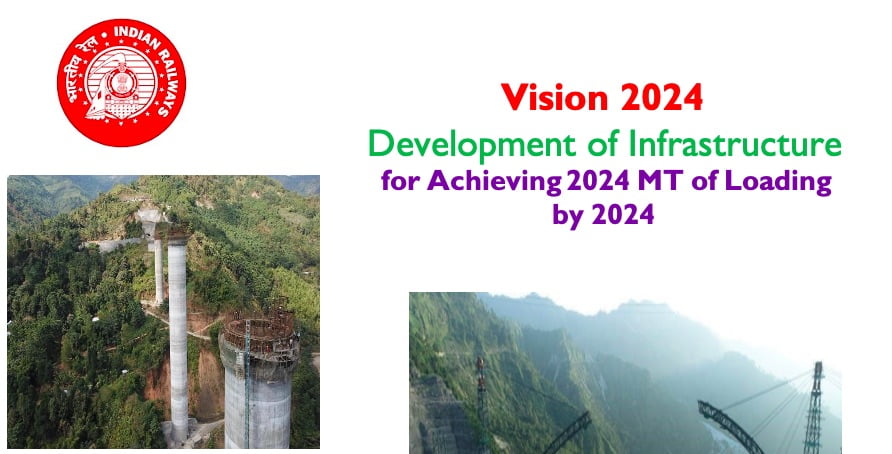
Vision 2024: Indian Railway focuses to complete 513 infra projects by 2024

Development of Infrastructure Projects by 2024

Achieving 2024 MT of Loading by 2024

Indian Railway network comprising of 11000 Route Km High Density Network (HDN) and 23000 Route Km Highly Utilised Network (HUN) carries 96% of traffic.

In order to attract more business on IR network it is necessary to improve mobility on HDN and HUN. For the purpose we need to increase Railway network capacity and increase average speed of passenger/goods trains.

For all these purposes the projects have been identified as Super Critical, Critical and essential. These infrastructure projects have been targeted to be completed before March 2024 with the objective to achieve loading of 2024 MT in 2024, which is Vision 2024.

Targeted Infrastructure projects:
  • Doubling of entire single line on HDN and HUN.
  • Tripling /Quadrup1ing of 3000 RKM on HDN.
  • Upgrading of speed potential of GQ / GD to 130 KMPH by December 21 and entire HDN/HUN before March 2024.
  • Upgrading speed potential of New Delhi-Mumbai & New Delhi-Kolkata to 160 KMPH by March 24.
  • Commissioning of Eastern and Western Dedicated Freight Corridor by June 2022.
  • Identified 105 Traffic Facilities work by March 2024.
  • Identified Signaling Works by March 2024.
  • 51 Coal connectivity and 10 Port connectivity Projects by March 2024.
  • 30 Gauge Conversion Projects of 2322 Km by March 2024.
  • 146 Railway Electrification Projects by December 23

The exercise of prioritizing the works has been done. Execution of these identified priority projects need to be planned meticulously by Zonal Railways.

The funds will not be constraint for these projects, provided the Railways give progress in these works as per target. The fund allotment will be as per performance of Railways vis-a-vis their plan for these projects, which will bring paradigm shift in Railways project execution.

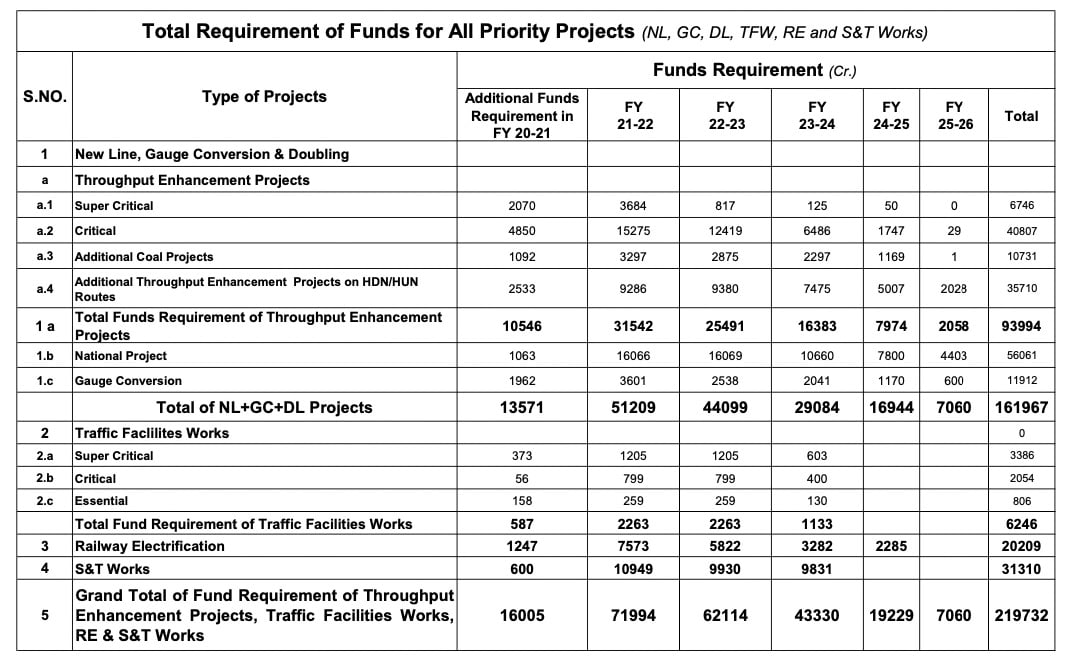
Railway Board has the shared the details of the projects with their target dates and likely allocation of funds.

Average Annual Budget allocation for Infrastructure and Safety works during 2014-19 has increased to Rs. 26,026 crore per year from Rs. 11,527 crore per year (during 2009-14), which is 126% more than Average Annual Budget allocation of 2009-14. The Budget allocation during 2019-20 has further increased to Rs. 39,836 crore which is around 245% more than Average Annual Budget allocation of 2009-14 and is also the highest ever expenditure in any financial year for Infrastructure and Safety works.

Vision 2024: Focus on Infrastructure Projects 

  • Vision 2024 has been envisaged to achieve targets of 2024 MT freight loading by 2024.
  • For the purpose the importance of infrastructure projects in capacity creation, removing the bottlenecks by keeping focus on safety cannot be underestimated.
  • For fast pace execution of projects, New Paradigm shift has taken place in planning of projects, so that, available resources are utilized judiciously for optimum results.
  • 58 Super Critical & 68 Critical projects have been identified for resource allocation for through put enhancement at faster pace.
  • Super critical projects are targeted for completion by Dec’2021 and Critical projects by Mar’2024.
  • As on 01-04-2020, 513 projects are ongoing. 
    • 189 New Line,
    • 55 Gauge Conversion &
    • 270 Doubling projects
Overall fund requirement by 2024:
Doubling:
  • 58 Super Critical projects of total length 3,750 Km (balance length 1471 Km), total cost Rs. 36,700 Cr., throw forward of Rs. 8,100 Cr. has been planned to complete by Dec’2021 except 2 projects which will be completed by Mar’2022
  • 68 Critical projects of total length 6,918 Km (balance length 6075 Km), costing Rs. 69,900 Cr., throw forward of Rs. 45400 Cr. are to be completed by Mar’2024
  • Additional 20 Coal projects of total length 2350 Km (balance length 1508 Km), costing Rs. 29,800 Cr., throw forward Rs. 15000 Cr. are targeted for completion by Mar’2024 (31 Coal projects and 10 Port connectivity projects are covered in Super Critical & Critical projects). The coal projects include 7 new line of total length 619 km(balance length 377 km) costing Rs 12903 Cr (throw forward of Rs 4639 Cr) and 1 gauge conversion project of length 285 km (balance length 24km) costing Rs 2005 Cr (throw forward of Rs 288 Cr.) 
  • In addition, 48 projects on HDN & HUN routes of total length 3,700 Km (balance length 3444 Km), costing Rs. 42,800 Cr., throw forward of Rs. 34463 Cr. are to be completed by Mar’2024.
New Line: Focus will be to complete National Projects
  • 4 National projects falling in NE Region of total length 294 Km (balance length 282 Km) costing of around Rs. 27,500 Cr. and throw forward Rs. 12094 Cr will be completed by Mar’2023. USBRL project of total 272 Km length (balance length 111 Km), costing Rs. 28000 Cr. and throw forward of Rs. 9949 Cr. by Dec’2022. 2 Projects (Rishikesh-Karanprayag and Bhanupalli-Bilaspur) oftotal length 188 Km costing around Rs. 23,000 Cr. throw forward of Rs. 20718 Cr. will be completed by Mar’2025.
Gauge Conversion:
  • 30 Gauge conversion projects of total length 3913 km (balance length 2,292 Km) costing around Rs. 31,200 Cr. and throw forward of Rs 15053 Cr. Total 2146 Km Gauge Conversion will be completed by Mar-2024.
Traffic Facility:
  • 105 Traffic facilities work costing Rs. 10150 Cr. with throw forward of Rs. 6782 Cr. to be completed by Mar’2024.
  • 146 Railway electrification projects of balance length 23800 Km, throw forward of Rs. 20209 Cr. will be completed by Dec’2023.

Signaling & Telecommunication work including provision of TCAS, Automatic Signaling, LTE & CTC on HDN & Freight Dense HUN routes, elimination of electro-mechanical signaling, replacement of overaged signaling gears, interlocking of LC gates & other miscellaneous works costing Rs. 21014 Cr. are to be completed by Mar’2024. Out of this Rs 8871 Cr will be charged to RRSK and Rs. 12143 Cr will be charged to EBR-IF.

Raising of sectional speed:
  • Works for raising  of sectional speed to 160 kmph on New Delhi- Mumbai (incl. Vadodara- Ahmedabad) and New Delhi- Howrah (incl. Kanpur- Lucknow) routes costing Rs. 6804 Cr. and Rs 6684 Cr. respectively will be completed by August’ 2023.
  • Infrastructural works for raising of sectional speed to 130 kmph on balance Golden Quadrilateral and Diagonal routes will be completed and speed will be raised to 130 kmph by December’2021. 
Elimination of Manned level crossings from GQ-GD routes:

To enhance safety and operational speed on Golden Quadrilateral & Golden Diagonal, Manned level crossings (MLCs) are to be removed on priority. 

As on 01.04.2020, 2429 MLC are existing on GQ-GD routes. As per survey done by zonal railways 1186 LCs are to replaced by ROBs, 1223 by RUBs and 20 LCs by diversion at a total approx. cost of Rs. 41200 Cr.  Work is targeted to be completed by March 2025.

Source: PIB

How to Reset HRMS Password for Indian Railway Employees?

First-Time Login With Default Password

If you are a first time user on HRMS portal of Indian Railways, then log in with the Default password “Test@123“. Username will be your HRMS ID. You will be prompted to change your password when you first log in successfully.

HRMS application will be single window communication system between Railway employees and Administration.

Resetting of HRMS Password for Indian Railway Employees

If you are a Railway Employee and a registered user on HRMS portal of Indian Railways and suppose you have forgotten the password for it, then you no need to worry.  HRMS Password can be easily reset by following simple steps. 

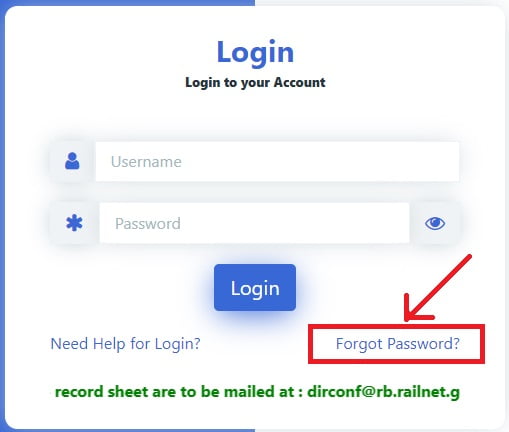
1. Visit the Railway HRMS Website or HRMS Railway Employee App to reset the HRMS password.

Then you will see the forgot password option below the login option out there and click there for resetting the password.

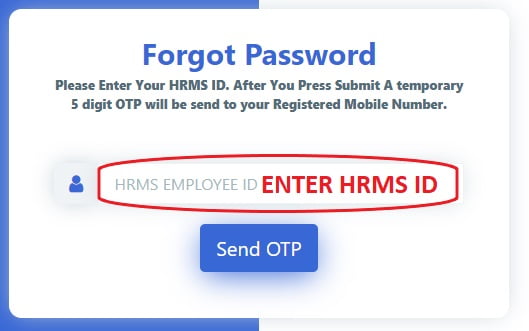
2. After that, Please enter your HRMS ID given by Railway. Then click the button “Send OTP”.

If you don’t know your HRMS ID or have forgotten HRMS ID too, then read How to know HRMS ID and Login on HRMS Railway Employee App.

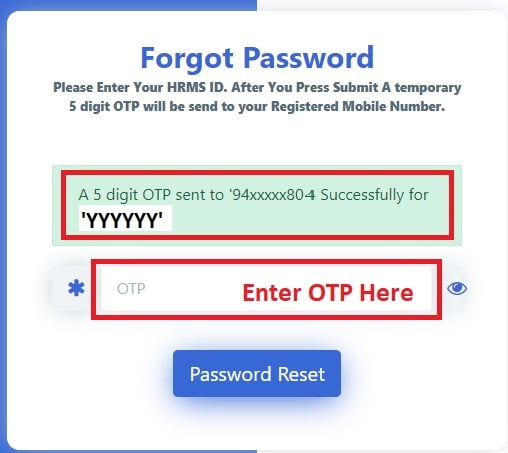
3. This will generate a temporary 5 digit OTP and that will be send on your Registered Mobile Number.

A message like below will be displayed- “A 5 digit OTP sent to ‘9XxxxxxXXX’ Successfully for ‘YYYYYY’. Here ‘9XxxxxxXXX’ will be your Registered Mobile Number, and ‘YYYYYY’ will be HRMS ID of Railway Employee”.

Enter OTP and click the button “Password Reset”.

After successfully verifying the OTP, HRMS will allow to change the password. Now, you can change your password.

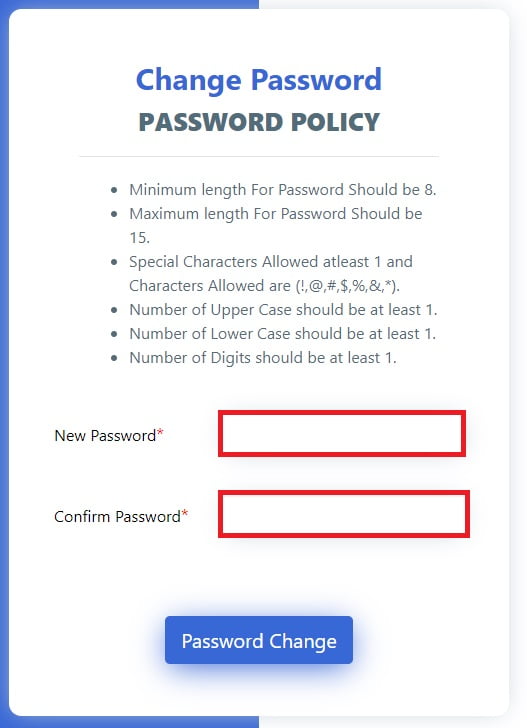
4. Set new Password

New Password should be carefully chosen and It must follow the password policy. New Password must contain Upper Case, Lower Case, Digits and Special Characters.

PASSWORD POLICY
  • Minimum length For Password Should be 8.
  • Maximum length For Password Should be 15.
  • Special Characters Allowed atleast 1 and
  • Characters Allowed are (!,@,#,$,%,&,*).
  • Upper Case letter should be at least 1.
  • Lower Case letter should be at least 1.
  • Number of Digits should be at least 1.

After entering new password, press button “Password Change”.

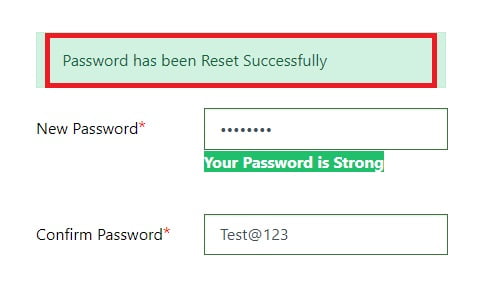
5. Congratulations, you have done it. Your HRMS password has been reset.

A message will appear like below, “Password has been Reset Successfully“.

That’s it for change/reset of password HRMS Railway Employee portal.

>>Step by Step guide for issue of e-Pass on HRMS for Railway Employees

E-Pass Module Guidelines for Railway Employee, Pass Clerk, PIA
  1. e-PASS Guidelines for Railway Employee
    • Declaration of Manual Passes & Pass Family
    • Application for New E-Pass
    • Application for Split Pass
    • e-Pass Cancellation Request
    • Send OTP for ticket Booking
  2. e-PASS Guidelines for Pass Clerk
    • Manual Pass Entry
    • Acceptance of Family Declaration
    • Accept e-PASS Application
    • Accept Split Pass Application
    • Accept Pass Cancellation Request
  3. e-PASS Guidelines for Pass Issuing Authority (PIA)
    • Issue Pass
    • Issue Split Pass
    • Pass Cancellation Request
In case of any issues please reach out to HRMS helpdesk
  • HRMS application related issue @ 7786940452 ,9971535534,7982542883
  • For OTP @ 7267910583,9953780947
  • For ePass related enquiry @ 9891643886,9069161539,9971168228 or
  • Write to us at irhrms@cris.org.in  
User Manuals for other modules of HRMS

Source: HRMS Indian Railways

How to Login on HRMS Railway Employee Mobile App and Website guide

HRMS: One Stop Single Window System for Indian Railway Employees

HRMS application will be single window communication system between Railway employees and Administration.

This Human Resource Management System (HRMS) will allow Railway employees to view their details related to their Increments, Promotions, Awards, Transfers, Postings, Leave, Training, and composition of Family as per records and Nominations for retirement benefits. This information is not readily available to employee at present. It brings transparency to administration.

Scanned copies of their Physical Service Record are also available on HRMS. It is an important milestone in computerization of HR related functionalities in Indian Railways.

Want to Login on HRMS? Here is the complete Step by Step Guide to Login on HRMS module.

Step by Step Guide for first time Login on HRMS module
1. Access the HRMS website or Mobile app with below link
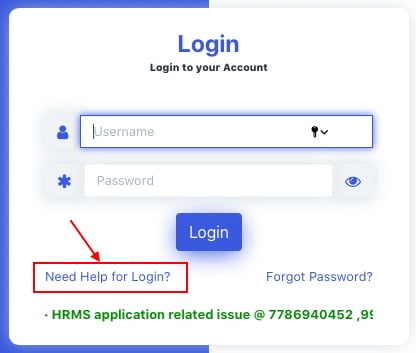
2. For first time login on HRMS, Click on ‘Need Help for Login?’.

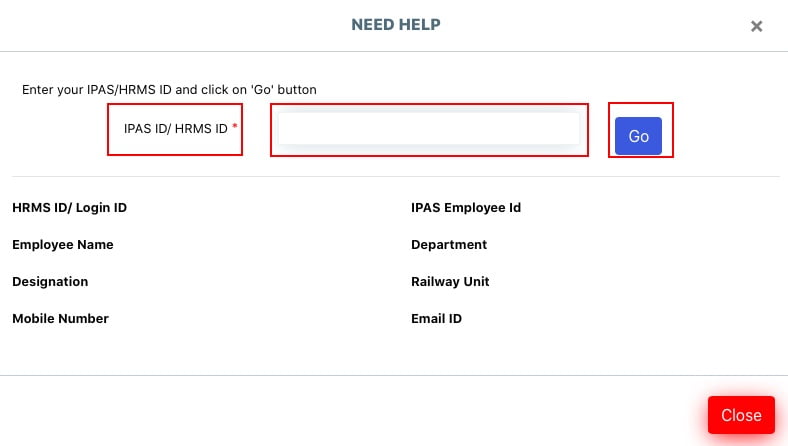
3. Enter 11 digit PF/Employee number as IPAS ID and click ‘Go’.

IPAS ID is your PF number or Employee number, which is available on salary slip. Same can be asked from Account section also.

Enter your IPAS ID in the box, and click on the button “Go“.

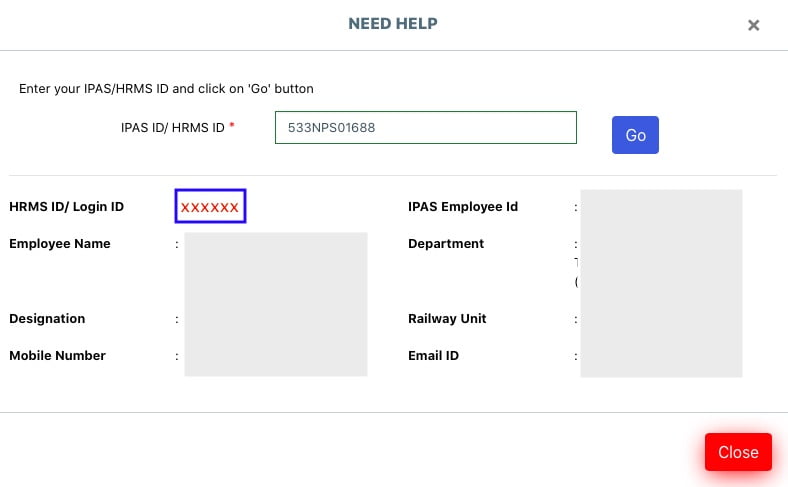
4. Know your HRMS ID and Registered Mobile Number.

After clicking button “Go“, details like HRMS ID, Employee Name, Designation, Registered Mobile Number, Department, Railway Unit and Email ID will be displayed as shown in below image.

Copy or remember the HRMS ID/Login ID, for further use of login as Username.

If your details are not available on HRMS portal, then Contact Personnel Branch Dealing Clerk (DC of Bill Section).

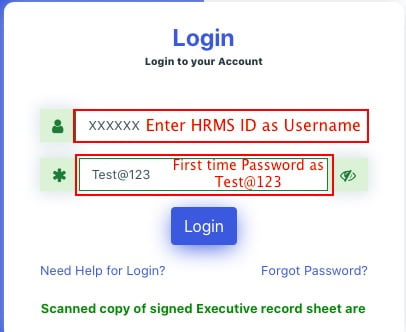
5. Login with HRMS ID as user ID and default password “Test@123”.

Enter HRMS ID as Username, and first time user will have default password as “Test@123“. Enter Username and Password, and click the button “Login“.

On clicking “Login” button, an OTP will be send on Registered mobile number. Received OTP on the registered mobile number will have validity for one week.

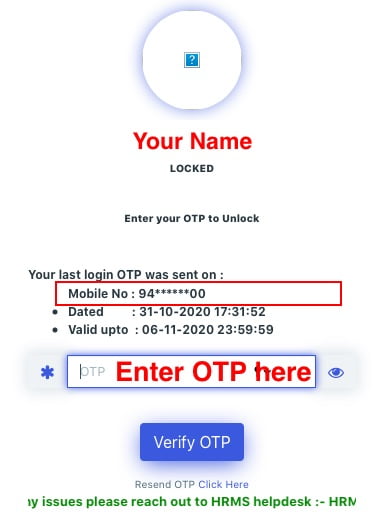
6. Enter the OTP.

If OTP is not received on your mobile number, check the registered mobile number again. If mobile number is correct, then click on the link “Resend OTP Click Here”, below the button ” Verify OTP”.

Hey God, this is also not working for me, please help me, then call HRMS help desk numbers 7267910583, 9953780947 for OTP.

7. After successful verification of OTP, Employees can login to HRMS portal.

Congratulations, You have logged on HRMS portal.

If you know your HRMS ID, and have forgotten HRMS Password, then read…
How to reset HRMS Password for Indian Railway Employees?

Employees will be directed to change the password after first login. Change your password and remember for future use.

In case of any issues please reach out to HRMS helpdesk
  • HRMS application related issue @ 7786940452 ,9971535534,7982542883
  • For OTP @ 7267910583,9953780947
  • For ePass related enquiry @ 9891643886,9069161539,9971168228 or
  • Write to us at irhrms@cris.org.in  
User Manuals for other modules of HRMS

Also read- Online E-Pass & PTO for Railway Employees under HRMS project

Source: HRMS Indian Railways

Step by Step guide for e-Pass on HRMS for Railway Employees

Guidelines for availing e-Passes/PTOs on HRMS

Content:

Indian Railways has launched e-Pass on HRMS Module on the 24th of August 2020 through Human Resource Management System (HRMS) Portal, which has been rolled out all over Indian Railways on 01/10/2020.

Now, the Privilege Passes and PTOs have to be applied and availed online by railway employees. With this facility Railway employee is neither supposed to come to office for applying for Pass nor has to wait for pass being issued.

The guidelines for availing e-Passes/PTOs on HRMS module are as follows:-

1.0 Step-wise instructions Login to the HRMS portal

Login to HRMS module is possible through webpage or mobile app.

>> Jump to next step if you already know how to login on HRMS.

How to use HRMS Employee Mobile Application for Indian Railway?

a) Steps for HRMS ID and login:-

  • Access the following website https://hrms.indianrail.gov.in/HRMS/ Click on ‘Need Help for Login’. Enter 11 digit PF/Employee number as IPAS ID and click ‘Go’. Details will be displayed including HRMS ID and Registered Mobile No.
  • Click on ‘Register Now’ on HRMS Mobile app, then enter 11 digit PF/Employee Number as IPAS ID.
  • Contact Personnel Branch Dealing Clerk (DC of Bill Section).

b) On availability of HRMS ID as user ID and default password “Test@123”, employees can login to HRMS portal. Employees will be directed to change the password after first login.

Congratulations, You have logged on HRMS portal.

If you know your HRMS ID, and have forgotten HRMS Password, then read…
How to reset HRMS Password for Indian Railway Employees?

c) An OTP will be received on the registered mobile number with validity for one week.

d) Enter the OTP.

e) Click ‘e-SR’. Then click on ‘My e-SR’ on the drop down menu. Details may be checked regarding designation, family particulars. If there is any discrepancy, click on ‘Remarks Tab’ and submit the same mentioning correct particulars. On verification of the same, concerned Approving Authority will update the same.

f) If all particulars are correct, following steps may be followed to process e-Pass Application.

Process for online application for e-Pass

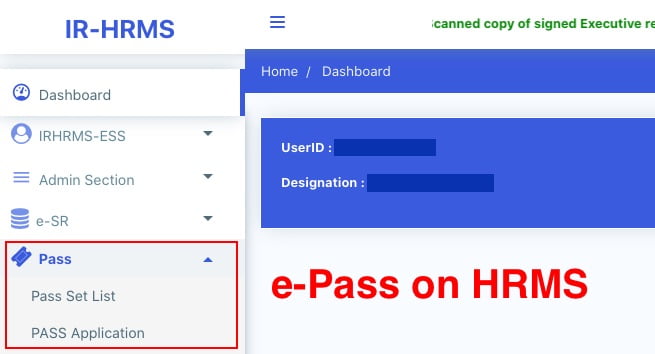
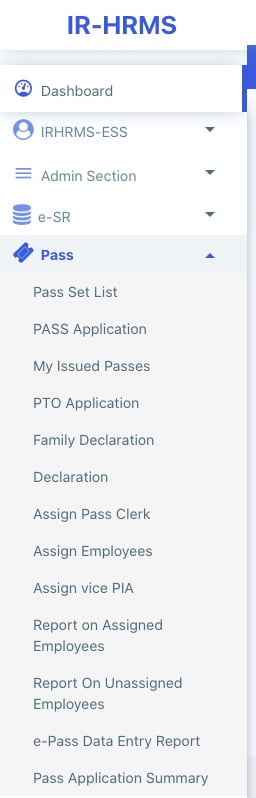
g) Click on the “Pass” tab on the left drop down menu.

h) Select “Pass Set List”. Availed manual passes and PTOs for the years 2020-21 will be displayed.

i) If the pass account details are correct, type OK in the “Remarks” tab and press “Confirm”.

j) If there is any error, type the nature of error in the remarks tab and press “Return to Clerk” tab.

k) Press “Yes” in the pop-up menu.

l) Next check the “Family Declaration” tab on the left drop down menu.

m) The screen containing the list of family members and the dependents will be displayed.

n) If all particulars regarding family and dependents of the employee are correct, tick the declaration and click ‘Submit’.

o) If there are any changes/updation, relevant documents e.g. Bonafide certificate etc.may be uploaded.

p) For uploading a document, click on the “Choose” tab displayed on the screen against the dependents and the upload the same. This will be sent to Dealing clerk/Pass clerk for modification.

q) On verification/approval by the Pass Issuing Authority, the employee will once again verify and submit.

r) On completion of the above steps, it will be construed that the family details and Pass/PTO details have been verified by the employee.

2.0 How to apply for a Digital e-Pass?

1. Click on the Pass Tab, then on “Pass Set List” tab of the drop down menu.

2. Select the ‘Type of Pass’ from drop down menu (privilege pass or PTO) and Click“Go”.

3. Year and entitlement of Passes will be displayed.

4. Click on the number displayed in the Available column for full set (PP) or half set Passes(PP/PTO), as required. You will be redirected to pass application page. If there are any previous existing applications (not submitted yet) for this year, they will appear in the list. They can be edited, clicking edit icon.

5. To create fresh application, Click on the “New Application” tab.

6.Enter STATION FROM and STATION TO. If you are not aware of the station code, mention name of the station in the “Station Description”.

7. Menu containing Family Details will be available on the screen, members may be clicked as and when needed to be included in the Pass.

8. Enter the break journey details(PP), if required.

9. If eligible for an Attendant and intend to take an attendant, then click the Tick box available in the screen for attendants.

10. Click “Submit”. On successful submission, the Pass application shall be forwarded to Pass Clerk. The applicant will receive following message on the registered mobile i.e. ‘Your Application No. xxxx has been forwarded to Pass Clerk.’

11. Open the “Pass Application”or “PTO Application” as applied to know the status of Application.

12. The list of Passes applied and their unique numbers with status will be displayed on approval of the same by Pass Issuing Authority.

13. Click on ‘My Issued Pass’ and click on “Generate OTP”as required.

14. An OTP will be generated.

15. Once the OTP is generated,A Unique Pass number will be received on the registered mobile.

16. Reservations for train travel can be made on online IRCTC portal as well as PRS counters at the Railway Stations using this unique Pass Number or Pass and Employee Identity Card.

3.0 How to cancel e-pass on HRMS?

1. Click on the “My Issued Pass Application” inside Pass tab.

2. List of Passes applied and generated will be displayed.

3. If the Pass has not been yet booked/reserved for journeys, the same can be cancelled.

4. Click on “Cancel the Pass”of the pass required to be cancelled.

5. An OTP is generated.

6. Once the OTP is entered, the Pass cancellation request is submitted.

E-Pass on HRMS application will save time, paper, money and lots of energy of Railway Employees and Railways itself.

In case of any issues please reach out to HRMS helpdesk
  • HRMS application related issue @ 7786940452 ,9971535534,7982542883
  • For OTP @ 7267910583,9953780947
  • For ePass related enquiry @ 9891643886,9069161539,9971168228 or
  • Write to us at irhrms@cris.org.in  
User Manuals for other modules of HRMS

Also read- Online E-Pass & PTO for Railway Employees under HRMS project

Source: HRMS Indian Railways

Pan India implementation of HMIS over Indian Railways

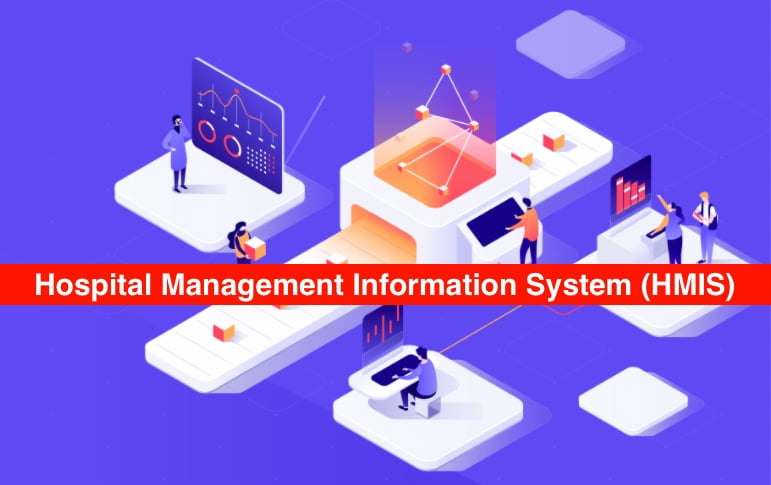
Hospital Management Information System for Indian Railways
Reference:

Indian Railways has approved the implementation of Hospital Management Information System (HMIS) over Indian Railways. This will bring complete hospital management in IR on single architecture.

In the above regard, the work of HMIS has been transferred to RailTel and an MOU has been signed between RailTel, CRIS and Ministry of Railways with regard to modalities for execution of the work.

At a glance-
  • HMIS will bring complete hospital management in IR on single architecture.
  • RailTel will be main executing agency for the HMIS project
  • RailTel to use C-DAC’s software for HMIS project.
  • The software will be integrated with UMID system
  • The Medical Department will be the nodal department for implementation
  • AGM will coordinate the initiative at Zonal level and
  • ADRM/Admin to coordinate at the Divisional level.

Further, Ministry of Railways (Railway Board) had constituted a 3 Members Committee for Pan India implementation of HMIS over Indian Railways and work as a Project Monitoring and Management Unit for the project under AM (Transformation).

Approved Recommendations of the Committee

The committee has submitted its report and Board (Chairman & CEO and MF) in consultation with DG (Health) have approved the following:

RailTel to use C-DAC’s software for HMIS project
  1. To fast track the implementation of HMIS over Indian Railways, it is better not to go for development of any new application. Accordingly, preference needs to be given to the application which is presently available with Govt./ reputed private agencies and is reliable and time tested. With small changes in the software (Customization), it may be made fit for Railway use.
  1. Considering above, C-DAC- a leading software development agency under Ministry of Electronics and Information Technology, Govt of India, have a long experience in HMIS software and have fully developed software with following features:
    • Available in Open Source Technology and is portable across a variety of platforms
    • Customized clinical data according to department and laboratory
    • Multi hospital feature to provide Cross consultation for patients among different health professionals within the State.
    • Interface with Medical Equipments, Barcode, Biometrics, Digital Tablets & integration with other software of Railways like IRPES, IPAS is easier with open source based software.
    • Beneficiary can carry their health record in mobile

Therefore, RailTel to use C-DAC’s software for the HMIS project. The software should cater rollout of HMIS on the entire IR in the present scope and further onboarding of hospitals and health units may be done and payment may be released according to the onboarding. The software will be integrated with UMID system.

  1. Cloud is preferred option for deployment of HMIS software and C-DAC’s cloud/ Data Centre to be utilized for this purpose so that faster rollout of HMIS may be ensured along with optimized cost and better coordination with software and hardware agencies. The C-DAC’s Data Centre may be connected with RailNet on redundant paths, at the nearest point, if required.

The payment to C-DAC may be linked with on boarding of Hospitals and Health Units or on the compute power required.

  1. RailTel to examine the reasonability of rates for the software and cloud/ Data centre hosting.
  1. Pan-IR development of HMIS software and deployment will help in reduction of cost and faster roll out. As per C-DAC’s quotations, the cost of PAN India rollout will not be much high and also payment will be staggered due to link with the deployment. Therefore, in the scope of work, Pan-IR HMIS development and deployment should be considered. For the enhanced scope, estimate will be revised in due course. The revision of estimate will be a parallel exercise with the roll out of HMIS as recommended.
  1. The present system being planned for IR is for bringing complete hospital management on single architecture to prevent pilferage and for making administration of hospital services seamless.
  1. PMJAY system of referral may be integrated with HMIS of IR and the Software agency to do so, as and when PMJAY system is ready.
  1. LAN work in hospitals and dispensaries and connecting to RailNet/Internet (other than in the present scope) will be carried out by Zonal Railways for faster roll out and as per requirements.
  1. Provision of Hardware like computers, printers, bar code readers, etc shall be provided by the Zonal Railways (other than the present scope). Necessary minimum specifications will be circulated by RailTel in consultation with C-DAC.
  1. Medical and diagnostic machines to be connected on this IT platform.
  1. RailTel will proceed ahead to tie-up with C-DAC for HMIS software and cloud/data centre infrastructure and sign MOU with clear cut Service Level Agreements (SLAs) for faster and smooth roll out of HMIS on IR.
  1. The Medical Department will be the nodal department for implementation and concerned CMS/ MD will be Nodal officers for the initiative.
  1. The Committee will continue to work as a Project Monitoring and Management unit at Railway Board to oversee the implementation of HMIS over IR. Any clarifications required on the subject matter may be addressed to the undersigned.

Ministry of Railways (Railway Board) had constituted a Committee comprising ED/E&R/Tele, Railway Board as Convener and ED/F(X)-II, Railway Board & Director/IH, Railway Board as Members for Pan India implementation of HMIS over Indian Railways and work as a Project Monitoring and Management Unit for the project under AM (Transformation).

  1. This issues with the concurrence of Associate Finance of Transformation Cell, Railway Board.
What is UMID ?
UMID is a smart health card system in Indian Railways.

It helps in providing Unique Identity to all medical beneficiaries individually through a unique number as a perpetual entity. This Unique Identity helps in identifying medical beneficiaries across all health units spanning all across Indian Railways.

UMID stands for Unique Medical Identity Card for Indian Railways.

  • Know more about UMID
C-DAC : Hospital Management Information Systems (HMIS)

C-DAC has designed and developed a versatile Hospital Management Information System (HMIS) in various models like conventional stand-alone hospital version and SaaS (Software as a Service) over the cloud infrastructure.

The real time HMIS streamlines the treatment flow of patients and simultaneously empowers the hospital’s workforce to perform their duties effectively and efficiently. It is modelled on the unique combination of a ‘patient centric and medical staff centric’ paradigm, thus providing benefits to both the recipients and the providers of healthcare.

C-DAC has also developed a unique concept of state-wide implementation of HMIS across various government hospitals ranging from super specialty hospitals, medical college hospitals, district hospitals to area hospitals. C-DAC’s HMIS has been deployed in more than 40 hospitals across India.

C-DAC has developed various solutions in this area. These include

  • e-Sushrut – a web based HMIS developed using open source technology and with compliance to various national and international standards. It can be easily integrated with other systems using HL7 messaging
  • eSwasthya – a web based SaaS model HMIS software suite built on open source platform, that facilitates hospitals for delivering effective, patient-centric serviced more efficiently
  • Medical Document Semantic Analyzer – an HL7 compatible tool for unlocking healthcare data from narrative reports
  • Megh Sushrut – an ERP solution for health delivery in SaaS model
  • ONCONET – Cancer care for rural masses
  • Tejhas – an HMIS solution with special features for cancer care

Source: C-DAC

Also read about

Indian Railways: Vision 2024 for Infrastructure Projects, National Rail Plan

National Rail Plan (NRP), 2030

In order to provide long term perspective to planning for augmenting the railway network, in 2016, Ministry of Railways decided to develop National Rail Plan (NRP 2030) in consultation with all the stakeholders including State Governments, public representatives and other relevant Central Ministries.

Long-term Planning

The Indian Railway Network is a key component of the Country’s Transport System. Transporting goods and passengers on a massive scale, the Indian Railways plays a critical role in India’s economic as well as social fabric, not to mention the security and cross-border strategic linkages.

Indian Railways needs to form a concrete plan about its doings in the coming 10-20 years. Therefore, pragmatic development of Indian Railway Network as part of the country’s overall multi-modal transport system is very important.

Seamless multi modal transportation

NRP-2030 will endeavour to harmonise and integrate the rail network with other modes of transport and create synergy for achieving seamless multi modal transportation network across the country.

Railways do not want to beat the other modes of transport by competing but want to work by complementing.

Background:

Present way of planning

So far, the development of the rail network is taken up based on numerous individual requests received from various stakeholders such as State Governments, elected representatives, industries, etc. for sanction of railway projects in different parts of the country. Based upon these representations and based upon infrastructural gaps, operational requirements, bottlenecks strategic requirements, socio-economic considerations and participation by other stakeholders, new railway projects are sanctioned. However, these projects are sanctioned mostly in isolation and may not necessarily take holistic view of railway infrastructural needs of the Country.

· Presently Railway planning is not based on some integrated plan. Surveys are initially done as per demands of Public representatives and the some of these lines are later sanctioned. Railways shall reverse the process.

New way of Planning

· Participation of all stake holders is the key in development of NRP. Suggestions/expectations/inputs from all are needed for deliberation and inclusion in NRP. Railways are open to all ideas including any suggestion regarding how the plan should be prepared and implemented.

· Long term sustainable rail transport system- To take this process to next level, National Rail Plan 2030 has been envisaged which shall not only take care of existing corridors but also the identification and development of new corridors & connections. This will facilitate easy movement of freight and passengers, and access to resources and services with reliability, safety and convenience to secure an environmentally efficient and long term sustainable rail transport system.

· First the network plan should be there and accordingly surveys should be started. The network plan shall take into account connectivity to backward region, Congestion in the existing network and futuristic development of Industrial corridors. Deficits in existing network are to be planned for removal. There are huge regional imbalances. 

· All gaps in railway infrastructure are to be identified and ways to fill them up are to be worked out. There may be surplus infrastructure in some areas whereas deficit in other areas. All gaps are to be identified and balancing of views of all the stake holders in development of plan will be important. Source

Vision 2024: Freight loading of 2024 MT in 2024

As projected in National Rail Plan (NRP), in order to improve mobility on HDN and HUN , enhance Railway network capacity and increase average speed of passenger / goods trains , important infrastructure projects have been targeted to be completed before March 2024 with the objective to achieve loading of 2024 MT in 2024.

Out of more than 68000 total route km of railway network, 34000 Route KM of Railway Network carries 96% of Traffic

High Density Network (HDN)11000 Route KM
Highly Utilised Network (HUN)23000 Route KM

As 34000 Route Km of Railway network comprising of 11000 Route Km High Density Network (HDN) and 23000 Route Km Highly Utilised Network (HUN) carries 96% of traffic.

Vision 2024– targets to complete various infrastructure projects before March 2024 to achieve loading of 2024 MT in 2024

Infrastructure projects to be completed before March 2024

1) Doubling of entire single line on HDN and HUN
2) Tripling /Quadrupling of 3000 RKM on HDN
3) Upgrading of speed potential of GQ / GD to 130 KMPH by December 21 and entire HDN/HUN before March 24 .
4) Upgrading speed potential of New Delhi -Mumbai and New Delhi Kolkata to 160 KMPH by March 24
5) Commissioning of Eastern and Western Dedicated Freight Corridor by June 2022
6) Identified 105 Traffic Facilities work by March 2024
7) Identified Signalling Work by March 2024
8) 51 coal connectivity projects by March 2024
9) 10 Port connectivity Projects by March 2024
10) 30 Gauge Conversion Projects of 2322 Km by March 2024
11) 146 Railway Electrification Projects by December 23.

Assured funding for these projects upto March 2024

Ministry of Railways has assured sufficient funding for these projects for 4 years ( including current year) upto March 2024. All the funding requirements have been worked out .

In due course of time, Works Directorate of Railway Board will issue details of these projects indicating targets and allocation of funds Zone wise, probably by next week.

Indian Railways is planning execution of these projects meticulously so that all these infrastructure projects are commissioned as per target .

Why Modernisation of Railways: Vision 2030

The important areas where developments in Indian Railways are needed that includes high speed trains, safety, track modernization, locomotives, signaling system and development of heavy haul system where axle loads and length of trains and usage of renewable energy for conservation of natural resources. The Government has taken some key initiatives in this direction and is also considering announcing key policy initiatives in the Railway’s network expansion, new infrastructure construction and technological up gradation.

Focus Areas for National Rail Plan: 2030

« Policy and Regulatory updates in Indian Railways
« Effective means for enhancing efficiency & safety in Indian Railways « State of the Art Technology and Joint Ventures
« Participative Models of Rail Connectivity
« Strategies to leverage private capital in Railways
« Capacity Augmentation and Infrastructure

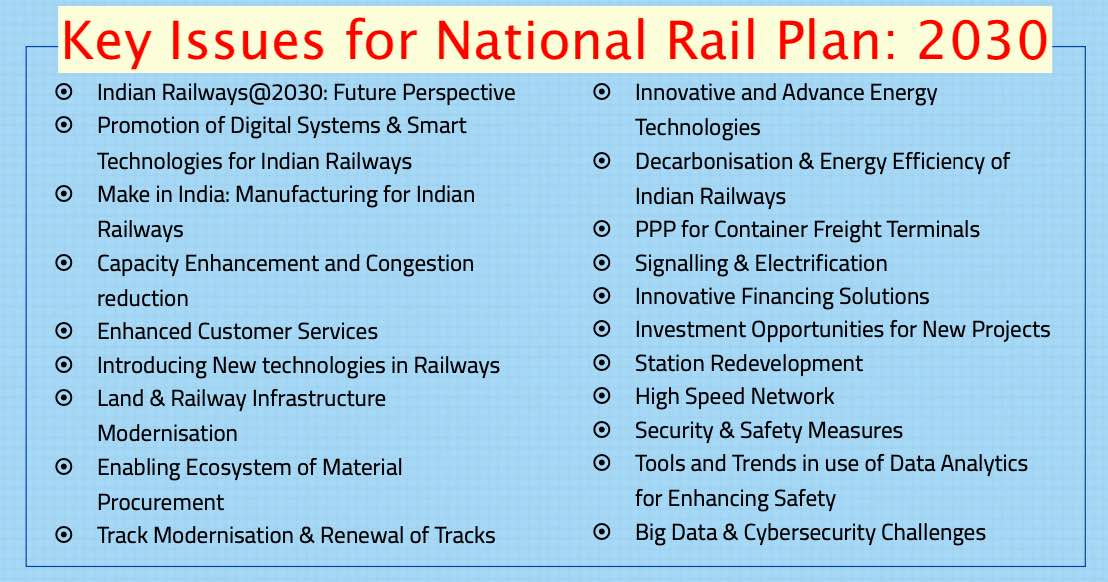
Key issues for discussion with Stake Holders- Things to consider

The growing demand of transportation is directly related to the growth of economy, the mobility of the population and other related factors.

Indian Railways needs to form a concrete plan about its doings in the coming 10-20 years.

NRP-2030 will endeavour to harmonise and integrate the rail network with other modes of transport and create synergy for achieving seamless multi modal transportation network across the country.

  • ¤ Indian Railways@2030: Future Perspective
  • ¤ Promotion of Digital Systems & Smart Technologies for Indian Railways
  • ¤ Make in India: Manufacturing for Indian Railways
  • ¤ Capacity Enhancement and Congestion reduction
  • ¤ Enhanced Customer Services
  • ¤ Introducing New technologies in Railways
  • ¤ Land & Railway Infrastructure Modernisation
  • ¤ Enabling Ecosystem of Material Procurement
  • ¤ Track Modernisation & Renewal of Tracks
  • ¤ Innovative and Advance Energy Technologies
  • ¤ Decarbonisation & Energy Efficiency of Indian Railways
  • ¤ PPP for Container Freight Terminals
  • ¤ Signalling & Electrification
  • ¤ Innovative Financing Solutions
  • ¤ Investment Opportunities for New Projects
  • ¤ Station Redevelopment
  • ¤ Security & Safety Measures
  • ¤ Tools and Trends in use of Data Analytics for Enhancing Safety
  • ¤ Big Data & Cybersecurity Challenges
  • ¤ High Speed Network

Read more about

Railways reserve 20% vacancies for apprentices in level-1 recruitment

Indian Railways has reserved 20% vacancies for apprentices

As per Apprentice Act in 2016, Indian Railways has reserved 20% vacancies (i.e. 20,734 vacancies) for apprentices in 1,03,769 notified vacancies for level-1 recruitment currently under process.

Recently there have been news reports that the trained apprentices at Railway establishments are demanding regular appointment.

Apprentices are demanding this by asking for restoration of the earlier powers given to GMs which was discontinued in Mar 2017.

It may be noted that regular appointment without any open competition as being demanded by the some will be against the Constitutional provisions and GOI rules about regular recruitment. All eligible citizens of country are entitled to compete and apply for the regular jobs. Direct recruitment without any open competition is against the rules.

Provision of regular appointment for Apprentices

As per the amendment made in Apprentice Act in 2016, every employer has to make a policy of appointment of Act Apprentices trained in their establishment. Keeping this in view, Railways has kept 20% vacancies in Level 1 recruitment for such apprentices and give fair opportunity to all.

Position of engagement of Act Apprentices as per extant rule, Railways engages apprentices for providing training in their establishments.

As per Section 22 (i) of Act Apprentices Act, 1961 amended on 22nd Dec, 2014 provides that, ‘Every employer shall formulate its own policy for recruiting any apprentice who has completed the period of apprenticeship training in his establishment’.

In compliance with the above, instructions have been issued vide Railway Board’s letter No.E(NG)II/2016/RR-1/8 dated 21.06.2016, providing that 20% of the vacancies in case of direct recruitment to posts/categories in Level-1 shall be filled by giving preference to Course Completed Act Apprentices (CCAAs) trained in Railway establishments.  During 2018, RRBs have recruited 1288 apprentices in Level-1 posts. Further, 20% vacancies (i.e. 20,734 vacancies) have been kept reserved for apprentices in 1,03,769 notified vacancies for level-1 recruitment currently under process.

Indian Railways is going to start computer based tests for notified vacancies from 15th December 2020.

It may be noted that RRBs has issued three centralized employment notifications (CEN).

  • CEN 01/2019 (NTPC categories),
  • CEN 03/2019 (Isolated and ministerial categories) and
  • RRC-01/2019 (Level-1 categories)

These notifications have been issued for a total of about 1.4 lakh vacancies for various categories of staff by Railway Recruitment Boards (RRBs). Against these employment notifications, more than 2.40 crore candidates have applied.

Ministry of Railways have made requisite preparations for smooth conduct of Computer Based Test (CBT) which is scheduled from 15th Dec. 2020 onwards as notified earlier. The details of schedule of the CBTs will be uploaded on websites of RRBs in due course separately for these employment notifications.

Section 22 in THE APPRENTICES ACT, 1961

22. Offer and acceptance of employment. –

  1. It shall not be obligatory on the part of the employer to offer any employment to any apprentice who has completed the period of his apprenticeship training in his establishment, nor shall it be obligatory on the part of the apprentice to accept an employment under the employer.
  2. Notwithstanding anything in sub-section (1), where there is a condition in a contract of apprenticeship that the apprentice shall, after the successful completion of the apprenticeship training, serve the employer, the employer shall, on such completion, be bound to offer suitable employment to the apprentice, and the apprentice shall be bound to serve the employer in that capacity for such period and on such remuneration as may be specified in the contract: Provided that where such period or remuneration is not, in the opinion of the Apprenticeship Adviser, reasonable, he may revise such period or remuneration so as to make it reasonable, and the period or remuneration so revised shall be deemed to be the period or remuneration agreed to between the apprentice and the employer.

Source: PIB

78 days’ Productivity Linked Bonus (PLB) to railway employees for 2019-20

78 days’ salary Bonus to 11.58 lakh non-gazetted Railway employees

The Union Cabinet in its meeting held on 21.10.2020 accepted the proposal of the Ministry of Railways for payment of Productivity Linked Bonus (PLB) equivalent to 78 days’ wages for the financial year 2019-2020 for all eligible non-gazetted Railway employees (excluding RPF/RPSF personnel). The financial implication of payment of 78 days’ PLB to railway employees has been estimated to be Rs. 2081.68 crores. 

  • Productivity Linked Bonus (PLB) equivalent to 78 days’ wages for the financial year 2019-2020 for all eligible non-gazetted Railway employees
  • The maximum amount payable per eligible railway employee is Rs.17,951 for 78 days.
  • About 11.58 lakh non-gazetted Railway employees are likely to benefit from the decision
  • Payment of 78 days’ PLB to railway employees has been estimated to be Rs. 2081.68 crores

About 11.58 lakh non-gazetted Railway employees have been granted bonus equivalent to 78 days wages for FY 2019-20 .

The wage calculation ceiling prescribed for payment of PLB to the eligible non-gazetted railway employees is Rs.7000/- p.m.  The maximum amount payable per eligible railway employee is Rs.17,951 for 78 days. About 11.58 lakh non-gazetted Railway employees are likely to benefit from the decision.

The Productivity Linked Bonus on Railway covers all non-gazetted railway employees (excluding RPF/RPSF personnel) who are spread over the entire country. Payment of PLB to eligible railway employees is made each year before the Dusshera/ Puja holidays.  The decision of the Cabinet shall be implemented before the holidays for this year as well. 

For the year 2019-20 PLB equivalent to 78 days’ wages will be paid which is expected to motivate the employees for working towards improving the performance of the Railways.

It may be noted that though this payment is being made for last year’s performance i.e. 2019-20 , even this year during COVID period,  a lot of hard work has been put in by Railways employees in movement of Shramik specials, for movement of essential commodities including Food grains, Fertilizers, Coal etc and completion of more than 200 vital maintenance projects  during lock down period  which would boost safety and all round  efficiency in railway operations.

Even on the freight side there has been major improvement post COVID lock down period. Freight speeds have almost doubled now as compared to last year. Freight loading has also increased by 14% for period of October 2020 as compared to similar period last year.

The payment of the PLB for 2019-20 is expected to motivate the employees for working towards improving the performance of the Railways further. The acknowledgement of their work will enhance the sense of inclusiveness and belongingness in Railway families. It is expected to enhance the productivity levels further.

It is also expected to help in consumer spending and boosting demand during the festive times.

Source: PIB

Also Read about